Collaboration
Art of Conversation
Healthy communities are built through conversations. What would happen if we had more of them, getting to know each other better? Let’s work on it.
When we believe we know people and communities better than we do, we make decisions about them, and for them, that are wrong, even dangerous.
A neighborhood in the West End of Boston was demolished in the late 1950’s and was rebuilt with mostly higher-end apartments. The reason for the demolition was that the neighborhood was physically deteriorating and had sanitation and rodent issues. It was a low-income community considered to be “slums,” and the needs were absolutely immense, and something needed to happen. The hard data said it needed to go.
What they didn’t take into consideration was the weave of the community relationships. How the community navigated life together was also torn from the lives of around 12,000 residents. The displacing of relationships and support systems was devastating. How they made ends meet and made sure their elderly neighbors were okay was literally taken down with a wrecking ball.
This isn’t to say that the neighborhood should have been left alone. Something needed to be done. The design of that something could have used more understanding. The researchers and decision-makers saw what was wrong with the neighborhood but missed what was strong about the community. When the ability to be neighborly is lost, community is lost.
Well-intentioned work can go beyond being helpful. When we believe we know people and communities better than we do, we make decisions about them, and for them, that are wrong, even dangerous.
Sometimes the story we believe is wrong because it isn’t the whole story. Wrong isn’t on purpose; it’s just uninformed or misinformed. Misinformation is often because the source isn’t original. Information can come from a source and not the source.
For several years, I was an adjunct professor at a university for a project course. I had cohorts of students for an entire year, teaching them about the process of developing community-impacting work. I absolutely loved working with my students, teaching them to strategically develop and launch ideas that would make a difference in people's lives and in communities.
But there was a problem called an IRB approval, the Institutional Review Board. Before students could engage with people and communities at any level, they had to fully design and describe their project plan for IRB approval. Any change to the plan also had to be approved. The process was slow, cumbersome, and frustrating.
Designing the plan before knowing context was the full opposite of what I wanted to teach and train them for community engagement. Where there are no conversations to truly come to know the people, assumptions fill the vacuum. I wanted to teach them to capture the stories before designing the work. The approach I taught them was highly community conversational.
Danger of Assumptions
An assumption is the acceptance of something as true and certain without any proof. One of the key words here is “acceptance.” That makes an assumption, unlike a thesis or hypothesis, in that there are no more questions. The stating of a thesis or its subsequent hypothesis is within the atmospheric conditions of “We think this is true, but let’s test the idea.”
For example, an assumption can be as simple and blatant as “They are poor so they need to work more.” Whereas it may be true that more work could help solve the problem, is it absolutely true? Is work the only variable to consider, or even the best starting place?
Assumption has no inquisitive nature. It dams up, or poisons the spring of information that is there because the conclusion has been determined. It’s the story you are telling yourself about a person, family, or community instead of hearing their story. Assumptions about what is true of people, places, and situations poison the well of understanding.
An assumption begins with the reason why something is what it is, or a life is in its current state of affairs. The next layer of assumptions moves into what it will take for the situation to change. Sometimes it’s the assumption that a person wants their current storyline to change. We should never impose our will upon a life. As difficult as it may be, the greatest thing you can do is connect through listening, not imposing.
It is easy to slide into assumptions due to:
Immensity of the work,
Difficulty of the work, or for
Sustainability of the work.
Assuming can be the easy, low-resistance way to some answers on the front end, but it’s always at a cost. Sometimes the cost is the poisoning of the waters, making future work even more difficult because trust is lost between the helper and the neighbor in need.
Describing assumptions as dangerous may seem strong, but some assumptions can be like a trajectory. The starting point doesn’t seem that far off the mark, but over time and space you find that you are way off the mark.
Nature of Standardization
Because the work of addressing the needs in our communities can be so overwhelming, we tend to seek out a “one fix fits all” approach. This approach leads to believing that a program is the answer. That idea for a fix can be truthful to a point, but the closer you get to the real-life story, the more contextual details matter.
“Standardized” has a recognized norm, which has layers of stereotype built in. It approaches all who are in a given situation as the same. There is a lot of generalization in standardization, such as standardized testing. Not everyone tests the same because not everyone’s brain works the same. Standardization has also sifted to determine what information matters most to the sifters.
Context brings specificity. Specialized approaches for neighbors are more likely to bring helpful change.
I’m not saying we can’t have standard elements to our approaches. What I am advocating for is awareness that these programs are starting points for unpacking the full story and creating applications that fit their story. Contextualized coaching allows for this perspective.
What if serving neighbors always engaged with them to increasingly tell their story, allowing that additional information to nuance designs and approaches?
Understanding through Story
If you have read any of my other articles or heard me speak, you’ve probably heard the idea that to understand is to stand under, which is a position of humility. Humility is willing to learn more.
Contextual understanding changes the way we serve our neighbors and communities. Sure, it slows things down. I get that. But desiring and seeking “better” will push us to ask different questions and pursue more collaborative pathways.
A key reason for this conversational exploration is that a struggling neighbor's will is found in their why. It can’t be yours. Their why will be in their story. Hear their story, listen for the why behind where they are, and for some possible impetus to move forward.
Context is story.
Story gives clarity.
Clarity guides designs and decisions.
The power of story is that it provides important information for creating the image you work from. From this context, decisions are made about how you will guide and resource the neighbors you serve. One way to frame the idea of seeking stories is to think of yourself as looking through a video camera. What you see through that lens is a point of view.
How do you get yourself to where you can see and hear from their point of view?
We’ll unpack these ideas more in Part 2. Until then, or before you move on to Part 2, maybe invest some time with the following questions to explore how contextual your perspectives and work are.
Do you desire to strengthen your CharityTracker or OasisInsight network and achieve new levels of collaboration and impact? Reach out to Chuck today to schedule your conversation: chuck@simonsolutions.com.
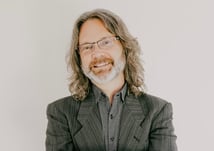 Dr. Chuck Coward serves as Community Impact Specialist for Simon Solutions, Inc. Chuck has invested nearly forty years in fostering human and community development from a variety of places and roles, including as a pastor, non-profit Executive Director, Director of Development, businessman, consultant, university professor, The Struggle Coach, and the founder of Entrusted Foundation. His great passion is to help people and communities grow stronger. Chuck is the proud husband of Anita, dad to four, and granddaddy to nine.
Healthy communities are built through conversations. What would happen if we had more of them, getting to know each other better? Let’s work on it.
Purposefully disrupt the norm and then design something for your community’s good that will leave them celebrating and shaking their heads in...
The expansiveness of solution possibilities can be a powerful source of ideas. But you have to see them to unleash them. Cultivate seeing a new way.
Sign up for the latest updates delivered straight to your inbox.