Many nonprofits and government agencies live this reality daily: long-term case tracking one moment, urgent incident response the next. Organizations still relying on spreadsheets or paper files often can't handle both. Case notes get lost. Incident reports never make it into the client's file. Duplicate assistance slips through the cracks.
"Case" and "incident" management are related, but they're not the same discipline. This article breaks down what each term means, how they differ, and what to look for in a system built to handle both.
Key Takeaways
- Case management tracks a client or matter continuously, from intake through resolution.
- Incident management handles discrete, urgent events like safety issues or disasters.
- A single case can include multiple incidents; a serious incident can also open a new case.
- Combined systems let agencies document daily services and handle emergencies in one place.
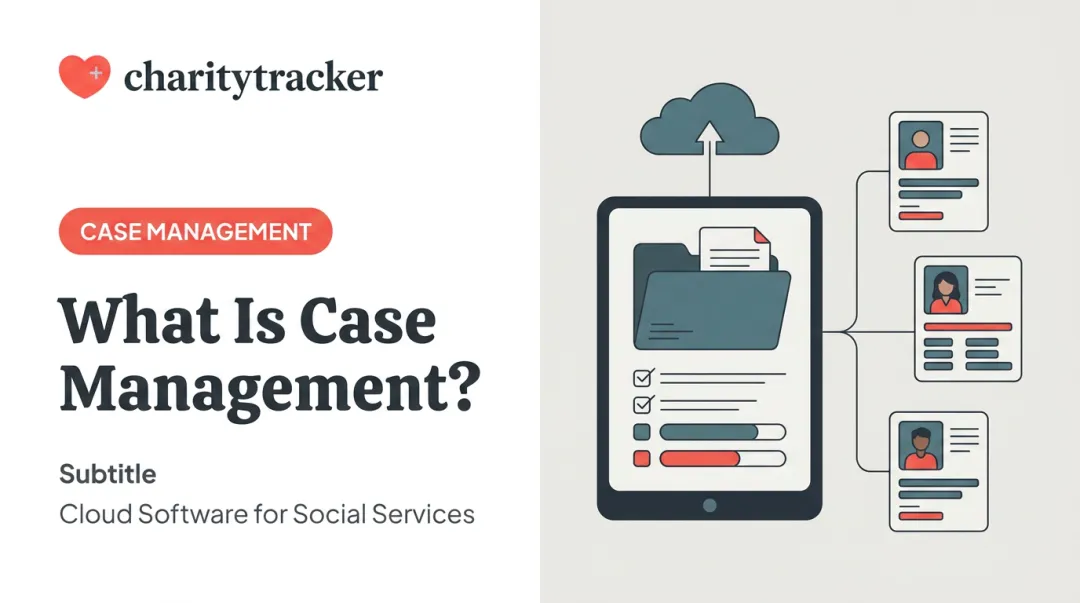
What Is a Case Management System?
A case management system is the software or structured process organizations use to track an individual, family, or matter from intake through resolution. The National Association of Social Workers defines case management as planning, seeking, advocating for, and monitoring services a client receives across different social-service or health care providers and staff.
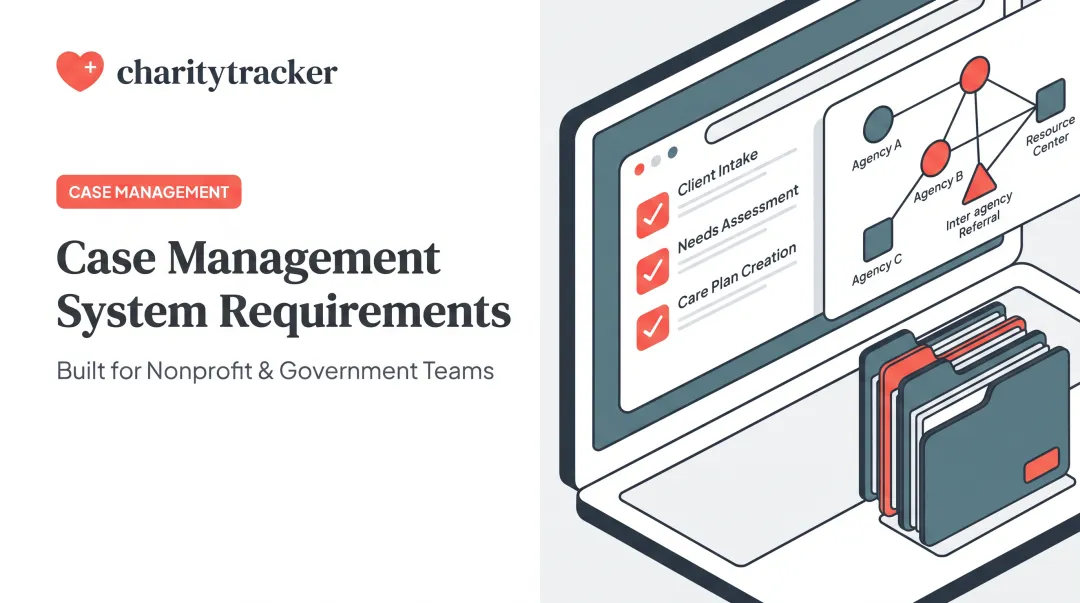
In practice, a case moves through stages: engagement, assessment, care planning, service delivery, monitoring, and eventually closure or transition. Caseworkers reassess along the way as needs and goals change.
Core Functions of a Case Management System
Most case management systems need to perform five core functions:
- Client intake – capturing information at first contact, whether in person, online, or by referral
- Centralized client records – one file per client instead of scattered notes across departments
- Service and referral tracking – documenting what assistance was provided and by whom
- Goal setting – recording objectives, milestones, and follow-up dates tied to progress
- Reporting – turning case data into reports funders, boards, and compliance bodies can use

Who Uses Case Management Systems
Case management shows up across sectors:
- Nonprofits and social service agencies
- Healthcare organizations coordinating patient care
- Government programs, including disaster case management
- Legal departments, including federal courts
- HR and compliance teams managing internal workplace cases
CharityTracker is one example built specifically for nonprofits and community organizations. The platform centralizes client data, tracks financial and in-kind assistance, and generates the reports agencies need for funders, boards, and HUD or HMIS compliance.
What a Case File Actually Contains
Across these settings, a typical case file includes:
- Demographic and household information collected at intake
- Situational details gathered through needs assessments
- A record of assistance requested and provided
- Case notes documenting each interaction
- Uploaded documents, releases, or signed forms
- Goals, milestones, and progress toward stability or program completion
That level of detail lets a caseworker pick up where a colleague left off, or pull together a year's worth of outcomes for a grant report, without digging through file cabinets.
What Is an Incident Management System?
An incident management system covers the protocols and tools organizations use to identify, respond to, and resolve unexpected events that disrupt normal operations. That can mean a safety incident at a shelter, a data breach, or a natural disaster.
ICS vs. IMS: Two Different Things
People often confuse two similar acronyms:
- ICS (Incident Command System) is FEMA's standardized structure for coordinating on-scene emergency response. It's what firefighters, police, and public safety agencies use during a hurricane, wildfire, or mass-casualty event.
- IMS (Incident Management System) is broader. It's the day-to-day software or process an organization uses to log, categorize, and resolve incidents, whether that's a cybersecurity breach or a client complaint.
ICS is built for the scene. IMS is built for the ongoing record.
The Building Blocks of Incident Handling
Most incident-handling processes across industries follow a similar sequence:
- Identification – recognizing that something has happened
- Categorization – sorting the incident by type and severity
- Investigation – gathering facts about what happened and why
- Resolution – taking action to fix or contain the issue
- Monitoring and assessment – reviewing the incident afterward for patterns

Even a minor incident, such as a missed check-in call or a small data entry error, deserves a log entry. Small issues, tracked over time, reveal risk patterns before they become major problems.
A Simple Framework: The 5 C's
Many teams use a five-step shorthand to keep incident handling consistent:
- Capture the details as soon as possible
- Classify the incident by type and urgency
- Communicate with the people who need to know
- Correct the underlying issue
- Confirm the fix actually worked
Who Relies on Incident Management
Incident management isn't only an IT function anymore. Organizations that rely on it include:
- Security and IT teams spotting vulnerabilities and responding to breaches
- Emergency management agencies coordinating multi-organization response under ICS
- Community and disaster-relief organizations logging incidents alongside regular casework
Case Management vs. Incident Management: What's the Difference?
The core distinction is simple: a case is an ongoing, structured record of a person or matter. An incident is a discrete, often urgent event that requires immediate response, even if the response spans multiple days.
The two aren't separate universes, though. They're nested:
- An incident can trigger a brand-new case. A client safety incident during a routine visit might open a full protective services case.
- A single case can contain multiple incidents over time. A domestic violence survivor's case file might log several safety incidents across months of service.
Here's how the two disciplines compare side by side:
| Dimension | Case Management | Incident Management |
|---|---|---|
| Focus | A client and a coordinated package of services, goals, and outcomes | Stabilizing a specific event and protecting people, property, or data |
| Timeframe | Ongoing: assessment, planning, monitoring, and eventual closure | Bounded to the event, though response may span multiple operational periods |
| Documentation | Assessments, care plans, service notes, and outcome records | Situation reports and action plans capturing what happened and how it was resolved |
| Access/Permissions | Governed by client confidentiality and written authorization | Governed by privacy law, need-to-know access, and incident severity |
What a Combined System Actually Does
A combined case and incident management system unifies both sides of the work. Caseworkers can log urgent first-response details, then fold that information into the long-term client record, collaboration history, and funder reporting.
Without that link, agencies end up with two disconnected stories: the crisis nobody attaches to a client's file, or the routine case notes that never flag repeated safety concerns.
Why Nonprofits and Community Organizations Need a Combined System
Community organizations sit at a unique intersection. They need ongoing case tracking for housing assistance, food aid, or utility help. They also need to respond fast when something goes wrong: a client safety concern, a data issue, or a disaster that displaces an entire caseload overnight.
CharityTracker's own history shows why this matters. The platform was founded in 2026, born out of Hurricane Katrina relief efforts in Florence, Alabama.
Community leaders and relief organizations couldn't easily tell whether a family had already received help from another agency. Duplication of services was rampant, with no shared way to track it. That gap led directly to CharityTracker's development.
Federal numbers from that era back up the scale of the problem. After Hurricanes Katrina and Rita, federal agencies spent more than $209 million on disaster case management, yet incompatible databases made it difficult to track clients across programs.
Investigators found serious gaps:
- Invalid or outdated contact information for nearly 20% of eligible households in one state
- Likely duplicate services because case managers couldn't see across systems
That lesson still applies nearly two decades later. According to internal client data, organizations using CharityTracker report an average 91% reduction in duplicate client entries and service delivery, plus paperwork time cut in half. Disasters, safety concerns, and routine casework don't happen on separate schedules, so the systems tracking them shouldn't be separate either.

Key Features to Look for in a Case and Incident Management System
Not every case management platform is built to handle both ongoing casework and urgent incidents. Here's what actually matters when evaluating one.
Secure, Role-Based Documentation
Sensitive case and incident details shouldn't be visible to every staff member. Look for platforms that:
- Assign unique login credentials per user, not shared passwords
- Limit agencies to editing only the clients within their jurisdiction
- Mark records private so partner agencies see only anonymized information
- Require a signed release of information before confidential details are shared
Remote and Mobile Intake
Field staff, shelter workers, and disaster responders need to log information in real time—not after they're back at a desk.
CharityTracker's Kiosk/Remote Intake, for example, lets clients complete their own intake forms from anywhere. The platform stays available 24/7/365, which matters most during an active emergency.
Interagency Collaboration and Referral Tools
A case and incident system should let multiple organizations see relevant information about a shared client without creating duplicate records.
CharityTracker's referral network gives participating agencies visibility into assistance already provided elsewhere—with client consent—so nobody accidentally issues the same emergency check twice.
Reporting and Analytics
The system also needs to turn raw case and incident data into reports teams can act on:
- Funder and compliance reports, such as HUD/HMIS, VOCA, or ESG CAPER
- Trend analysis, like CharityTracker's Changes Over Time Report, to catch patterns across a caseload
- Exportable data (CSV, Excel) for boards, funders, and grant applications
Frequently Asked Questions
What is the difference between ICS (Incident Command System) and IMS (Incident Management System)?
ICS is FEMA's standardized structure for coordinating on-scene emergency response, used by first responders and public safety agencies. IMS refers to the broader software or process organizations use to log, categorize, and resolve incidents day-to-day.
What is an example of a case management system?
One example is CharityTracker, a platform built for nonprofits and social service organizations to track clients, services, and outcomes. Similar systems exist in healthcare, HR, and compliance, each tailored to different workflows.
What are the 5 major components of an incident management system?
Most incident-handling processes follow five stages: identification, categorization, investigation, resolution, and monitoring or assessment. Even minor incidents should move through all five to catch long-term risk patterns.
What are the 5 C's of incident management?
A common shorthand is Capture, Classify, Communicate, Correct, and Confirm. It covers the full loop from logging an incident through verifying it is resolved.
What's the actual difference between case management and incident management?
Case management is the ongoing record-keeping and service coordination for a client or matter over time. Incident management is the first-response handling of a specific, often urgent event that may or may not become part of a case.
Do nonprofits and community organizations need incident management, or just case management?
Most benefit from both. Client safety concerns, data issues, and disasters can arise alongside routine casework, so systems that handle only one side leave gaps.