Introduction
Picture a caseworker at 4:45 p.m. on a Friday. A stack of paper intake forms sits on her desk, half-filled out in different handwriting, while a mother and her two kids wait in the lobby for help with rent. She can't find the family's file from six months ago. Nobody can.
This scene plays out daily across nonprofits and social service agencies. Intake often gets dismissed as "just paperwork," but it's the moment that determines eligibility, sets the tone for the entire client relationship, and shapes every service decision that follows.
This guide breaks down what intake actually means, walks through the full case management process, and flags the most common pitfalls along the way. It also shows how platforms like CharityTracker are changing this critical first step for good.
Key Takeaways
- Intake is the foundational stage: gathering data, screening urgent needs, confirming eligibility
- Case management unfolds across four to five stages: intake, assessment, planning, implementation, monitoring
- Paper-based intake causes data errors, duplicate services, and compliance headaches
- Platforms like CharityTracker centralize records and enable real-time agency collaboration
What Is Intake in Case Management?
Intake is the first formal interaction between a case manager and a client. It's where an organization collects demographic details, screens for immediate needs, and determines whether it can serve the client or should refer them elsewhere.
Rather than a single universal standard, intake functions are drawn from multiple professional frameworks. The National Association of Social Workers (NASW) points to assessment domains that include a client's reason for referral, home safety, and risk factors like abuse or exploitation. HUD's coordinated entry model, used in homeless services, treats "access" as its own distinct first step before formal assessment begins.
What matters most: intake sets the foundation for everything that comes next. Get it wrong, and the entire service plan can miss the mark.
Intake isn't purely transactional, either. Case managers must build trust while collecting sensitive information, since clients are often sharing details about income, health, or family crises with someone they've just met.
Key Components of an Effective Intake Process
A solid intake process typically covers three areas:
- Core information gathering: name, contact details, household composition, and supporting documentation like ID or proof of income
- Crisis screening: identifying urgent, safety-related needs (housing loss, domestic violence, medical emergencies) that require action before a full assessment can happen
- Clear expectations: explaining what services are available, how confidentiality works, and what the client can expect from the relationship going forward

Skipping any of these steps creates risk. Miss a crisis flag, and a client in danger waits too long for help.
Intake Specialists vs. Ongoing Case Managers
Covering all of this well is a lot for one person to handle, so larger organizations often split the work into two distinct roles. An intake specialist handles short, transactional interactions focused on data collection and referral. An ongoing case manager builds a longer-term relationship, implementing and monitoring the care plan over weeks or months.
Smaller nonprofits rarely have that luxury. One caseworker frequently handles both jobs: intake in the morning, case reviews in the afternoon. When one person wears both hats, centralized case management software like CharityTracker becomes less of a convenience and more of a necessity, since it keeps every detail gathered at intake instantly accessible once the case management phase begins.
The Case Management Process: From Intake to Outcomes
Most frameworks organize case management into four or five sequential stages. The terminology varies by source, but NASW's Standards for Social Work Case Management outline a progression from assessment through monitoring and evaluation. Here's how that typically breaks down in practice:
- Intake and Referral: As covered above, this is the entry point. The organization collects data, flags urgent needs, and determines eligibility.
- Needs Assessment: Case managers dig deeper into what was gathered at intake, identifying specific needs, goals, risks, and barriers to stability, such as employment gaps, housing instability, or lack of transportation.
- Service/Care Planning: Assessment findings turn into an actionable plan here, with specific tasks, realistic timelines, and measurable goals the client and case manager agree on together.
- Implementation and Coordination: The case manager puts the plan into motion, coordinating across providers, internal programs, or partner agencies so services actually reach the client instead of stalling in referral limbo.
- Monitoring and Evaluation: Case managers track progress against original goals, adjusting plans as circumstances change. That data proves outcomes to funders and stakeholders — often the difference between renewed grant funding and a program running out of money. CharityTracker automates this reporting with customizable, funder-ready formats.

Common Challenges in Traditional Intake Processes
Paper intake creates problems that compound over time. Consider what typically goes wrong:
- Lost or illegible records — handwritten forms get misfiled, damaged, or simply can't be read six months later when a client returns
- Slow retrieval — pulling a client's history from a filing cabinet takes far longer than it should, delaying service delivery when time matters most
- Data silos across agencies — without shared visibility, a family could receive rent assistance from two separate organizations in the same month, unknowingly depleting resources meant for other families in need
The data-silo problem isn't theoretical. A GAO review of human services coordination found that automated data sharing improved eligibility verification and case management in the jurisdictions studied.
The same review also identified real barriers — privacy concerns, legal restrictions, and funding gaps — that keep many agencies from sharing information at all.
Add manual compliance tracking to the mix — funder reports, HMIS submissions, audit prep — and staff workload climbs further. Every hour spent re-entering data into a spreadsheet is an hour not spent with a client, and every missed reporting deadline puts future funding at risk.
How Case Management Software Transforms Intake and Ongoing Care
Digital tools address these problems at the source. Here's what that looks like in practice, using CharityTracker as an example of the shift underway across the sector.
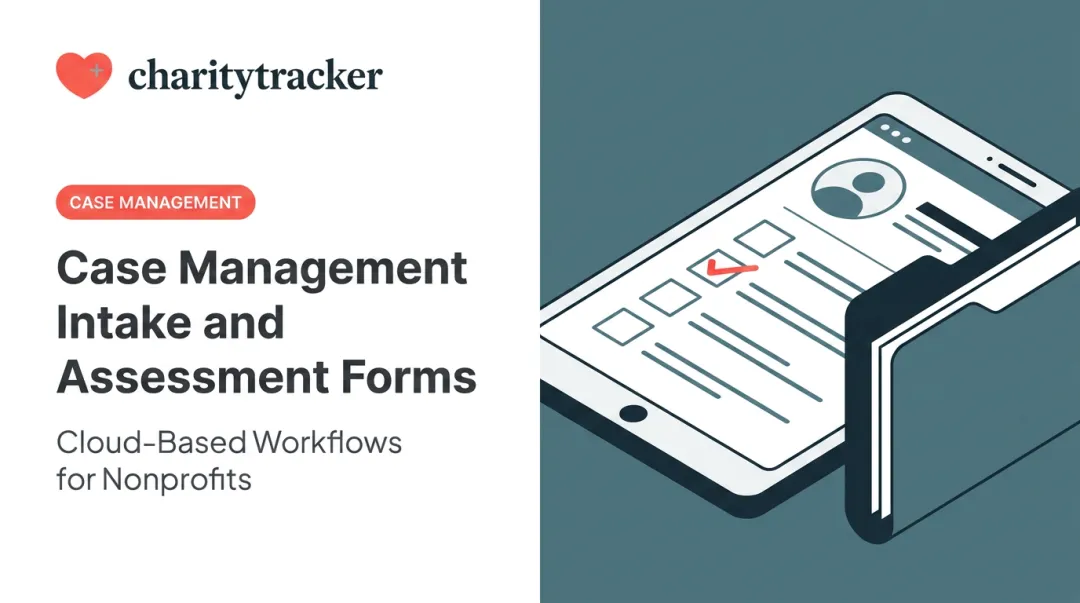
Remote and self-service intake. CharityTracker's Remote Intake and SMS capabilities, introduced in 2026, let clients submit information from a phone or tablet before ever walking through the door. This cuts wait times and reduces the amount of manual data entry staff have to handle on-site.
Faster check-in through barcode scanning. Instead of manually re-typing a returning client's information, staff scan a client ID card, pulling up the existing record instantly and avoiding duplicate entries.
A centralized digital filing cabinet. Every caseworker across a program, or across partner agencies, gets instant access to a client's full case history. One record, updated in real time, replaces scattered paper files and disconnected spreadsheets.
Paperless consent through digital signatures. Intake and consent forms get signed electronically, which speeds up the process and creates a cleaner audit trail than a filing cabinet full of signed paper ever could.
Real-time inter-agency referrals. The CharityTracker Assistance Network lets authorized staff at partner nonprofits, government offices, and faith-based organizations see what assistance a client has already received elsewhere.
This "Give Every Client a Fair Chance" approach lets an agency confidently say yes to a request, already knowing whether someone else in the network has served that client. Organizations using this shared visibility report reducing duplicated efforts by as much as 91% among participating churches, and by roughly 20% across broader collaborative networks.

Security that supports 24/7 emergency response. The platform is HIPAA/HITECH compliant, encrypts data with 256-bit SSL, and runs on AWS infrastructure meeting ISO 27001, FISMA, and PCI standards. That combination matters most during disaster response, when organizations like the Austin Disaster Relief Network need secure access at any hour, from any location.
This isn't unique to one platform. Broader research backs up the potential of digital systems. In Rhode Island, same-day SNAP application processing jumped from 10% in mid-2026 to 30% by early 2026 after the state adopted online applications and automated workflows.
Researchers cautioned, however, that inaccurate self-entered data can sometimes shift reconciliation work rather than eliminate it. Good digital intake still depends on good form design.
Best Practices for Effective Intake and Case Management
A few habits separate organizations that thrive with digital intake from those that struggle:
- Standardize forms across staff. Every caseworker should use the same intake and assessment templates, which platforms like CharityTracker enforce automatically so consistency doesn't depend on who's at the desk.
- Train for rapport, not just data entry. Active listening, empathy, and clear communication about confidentiality matter as much as accurate fields. Clients share more, and more honestly, when they trust the person across the desk.
- Review your data regularly. Look for bottlenecks such as long assessment times, high no-show rates, and referral delays, then adjust workflows based on what the numbers show, not assumptions.
None of this requires a massive overhaul. Small, consistent adjustments to intake practices compound into real improvements in service delivery over time.
Frequently Asked Questions
What is intake in case management?
Intake is the first meeting between a case manager and client, where the caseworker collects basic information, screens for urgent or crisis-level needs, and determines whether the client is eligible for services.
What are the 5 steps of case management?
The five commonly cited steps are intake and referral, needs assessment, service planning, implementation and coordination, and monitoring and evaluation. Different organizations may label or group these slightly differently.
What are the 4 levels of case management?
Some frameworks condense the process into four levels: intake, needs assessment, service planning, and monitoring/evaluating, folding implementation into either planning or monitoring depending on the organization's structure.
How long does an intake assessment take?
Most in-person intake sessions run 15 to 45 minutes, though urgent crisis screenings can take as little as 10 minutes. Digital intake tools shorten this further by letting clients submit information remotely before their appointment, cutting the data entry needed during the meeting itself.
What software helps with case management intake?
Purpose-built case management platforms like CharityTracker offer digital intake forms, remote and kiosk-based intake, and centralized client profiles designed specifically for nonprofits, government agencies, and faith-based organizations.
How does digital intake reduce duplicate services across agencies?
Shared, centralized databases and inter-agency referral networks let caseworkers see a client's full assistance history in real time. That visibility prevents overlapping aid and helps agencies stretch limited resources further.