The trouble is that coordination breaks down fast without the right structure. Fragmented services, duplicate paperwork, and disconnected agencies can worsen outcomes for the people who can least afford delays. Effective case management support requires a defined set of core services, a clear process, and tools built for the work.
This article covers the key services that make coordination work, walks through the case management process step-by-step, breaks down the main types of case management, and looks at how platforms like CharityTracker help agencies close gaps instead of creating them.
Key Takeaways
- Coordinated case management unifies assessment, planning, referrals, and follow-up so clients don’t fall through service gaps
- Match the case management model to each population while keeping shared practices: assessment, advocacy, and follow-through
- Digital platforms cut paperwork and duplicate services while strengthening inter-agency collaboration
- Document every step to protect client outcomes and keep funder reporting accurate
What Is Case Management Support?
Case management support refers to the services, processes, and tools that help caseworkers assess client needs, connect people to resources, and track progress across multiple organizations. The National Association of Social Workers describes case management as planning, seeking, advocating for, and monitoring services across social-service and healthcare organizations — work that requires cooperation well beyond a single agency's walls. Coordination matters because the alternative is expensive and harmful. A 2026 GAO review found that eight federal agencies administered 26 separate homelessness programs, worth roughly $2.8 billion, with overlapping missions and no shared front door for clients. When services fragment like this, people fall through the cracks, agencies duplicate effort, and outcomes suffer. Case management support now spans:
- Healthcare and clinical settings
- Social services and human services agencies
- Nonprofits and faith-based ministries
- Government programs
- Disaster relief organizations
Key Services for Effective Case Management Coordination
Effective case management depends on several connected functions working as one system:
- Intake and needs assessment: Caseworkers gather financial, social, and health history to identify gaps and determine program eligibility. Without accurate intake, every downstream step is guesswork.
- Service planning: Turns intake into action with measurable goals, realistic timelines, and outcomes the client agrees to, not a generic checklist.
- Referral and resource coordination: Connects clients to housing, healthcare, food assistance, and other community resources without sending them to five agencies for the same need.
- Inter-agency collaboration: Securely shares client data across organizations. NASW notes this can reduce inappropriate, duplicate, or fragmented services.
- Progress monitoring and reassessment: Keeps plans current as circumstances change; a plan built at intake rarely fits six months later without adjustment.
- Reporting and documentation: Produces the funder and grant reports that prove program impact and compliance.

The Real Cost of Skipping These Services
Administrative burden drains staff time and program resources. GAO reported that some child-welfare caseworkers spent 50-80% of their time on paperwork rather than working directly with families. Separately, more than 70% of nonprofits surveyed by the Urban Institute called application and reporting processes overly complicated.
Organizations using CharityTracker report internal figures that match this problem and the payoff from fixing it: a 50% reduction in paperwork time and an average 91% reduction in duplication across partner agencies. One office clerk described cutting his paperwork time "in half, at least" once inter-agency networking replaced manual cross-checking.
The Case Management Process: Step-by-Step
Coordination works best when it follows a repeatable sequence, not an ad-hoc routine.
- Screening and assessment – Evaluate medical, social, and financial circumstances to identify barriers and immediate needs.
- Service plan development – Set specific goals and coordinate with medical providers, social workers, and other stakeholders on how to reach them.
- Application and enrollment assistance – Help clients navigate paperwork and access benefit programs without getting lost in red tape.
- Referrals and service delivery – Connect clients to the right providers and track whether services actually get delivered.
- Ongoing support and reassessment – Monitor outcomes, adjust plans, and stay in consistent contact as circumstances shift.

Each stage builds on the last: need identification feeds planning, planning drives coordination, and follow-up shows whether the plan worked.
Documentation at each step isn't optional. Funders expect proof of service delivery, and continuity of care depends on the next caseworker — or the next agency — knowing exactly what's already happened.
Types of Case Management and Who Needs It
Common Types of Case Management
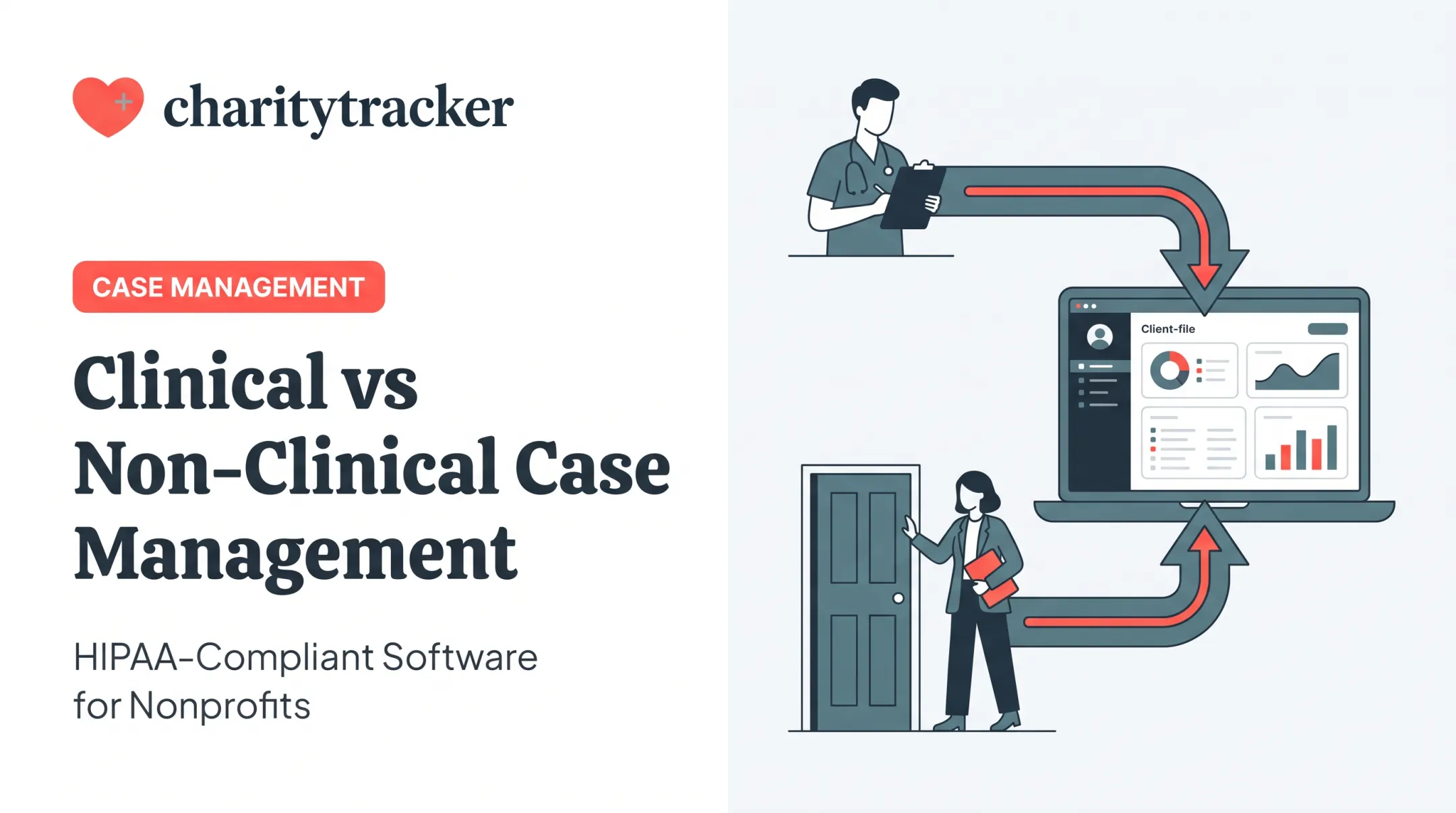
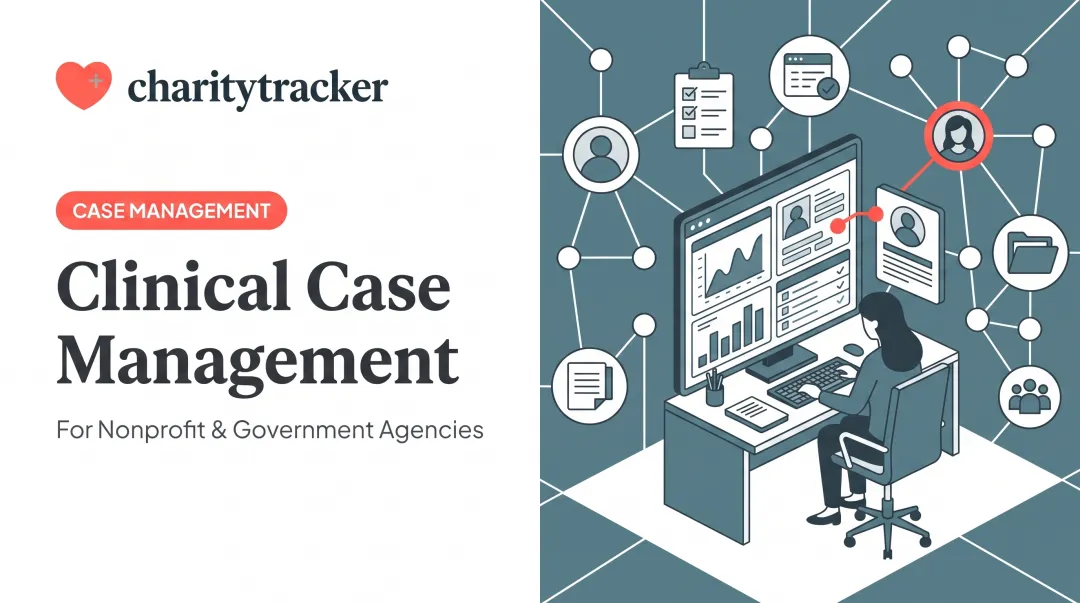
- Healthcare/clinical case management — focuses on health needs, care coordination, and evaluation, typically led by clinical case managers within hospitals or care networks.
- Social service case management — coordinates client and family needs across social-service and healthcare organizations, centered on strengths, goals, and client rights.
- Disaster relief/emergency case management — focuses on recovery, pairing a case manager with a survivor to build and carry out a long-term recovery plan.
Why Adults May Need Case Management Support
Adults typically enter case management through one of several triggers:
- Chronic health conditions requiring ongoing coordination
- Homelessness or unstable housing
- Domestic crisis or safety concerns
- Disability-related barriers to services
- Juggling multiple public assistance programs at once
CDC data shows three in four American adults have at least one chronic condition, and more than half have two or more. Not everyone needs a case manager — but those figures show why triage and cross-provider coordination matter so much for the people who do.

Core Principles That Guide Effective Coordination
- Client-centered planning — the client helps set goals and, when possible, signs the plan to confirm agreement
- Confidentiality and data security — information is shared only with documented consent
- Collaboration across providers — reduces duplicate or fragmented services
- Continuous reassessment — needs, priorities, and plan effectiveness get revisited regularly, not just at intake
How Technology Strengthens Case Management Coordination
Digital case management platforms turn these principles into daily practice instead of policy statements.
- Centralized records replace scattered spreadsheets with one searchable client file so staff can check for an existing record before creating a new one, cutting duplicate entries and repeated intake work
- Real-time inter-agency referral networks show authorized agencies a client's assistance history (amounts, dates, funding sources, prior aid) before they approve more help, which limits overlapping services and fraudulent claims
- Remote intake and digital signatures let caseworkers serve clients from anywhere; kiosk-style intake lets clients complete forms digitally when disaster lines and paperwork can't wait
CharityTracker: Built From Crisis Response
CharityTracker began in 2026, when community leaders and developers in Florence, Alabama, worked through Hurricane Katrina relief efforts and saw firsthand how badly agencies needed a shared coordination tool. That experience shaped a platform now used across more than 2,500 U.S. communities, including organizations like The Salvation Army and Boys & Girls Clubs of America.
The platform's Changes Over Time Report tracks a client's status against assessments, goals, and milestones from intake through program completion. Organizations get concrete evidence of what is working for board reports and funders.

Frequently Asked Questions
What are the steps of the case management process?
Steps typically run in order: screening and assessment, service plan development, application and enrollment help, referrals and service delivery, then ongoing support with reassessment. Each step builds on documentation from the last.
Why would an adult need case management support?
Common triggers include chronic illness, homelessness, domestic crisis, disability, or navigating several public assistance programs at once. Coordination becomes essential once a person's needs span more than one system.
What are the main types of case management?
Healthcare and clinical case management focuses on care coordination. Social service case management addresses broader client and family needs. Disaster and emergency case management centers on recovery planning after a crisis.
What are the core principles of case management?
Client-centered planning, confidentiality, collaboration across providers, and continuous reassessment guide effective coordination. All four principles work together. Dropping one weakens the rest.
How does case management software improve coordination?
It centralizes client data, cuts duplicate entries, and gives partner agencies real-time visibility into service history. CharityTracker reports an average 91% reduction in duplication across agencies using its shared database.
How much time can digital case management tools save case workers?
Organizations using CharityTracker report roughly a 50% reduction in paperwork time. One office clerk described cutting his paperwork time "in half, at least" after switching from manual tracking.