This isn't a minor inconvenience. Nearly 90% of nonprofits have staff directly entering data by hand, and 79% cite staff time as their biggest data-collection challenge, according to NTEN's 2026 Data Empowerment Report. Meanwhile, front-line nonprofits regularly waste time on duplicative funder submissions and red tape.
Cloud case management fixes this by centralizing data, automating workflows, and helping organizations serve more people with less friction.
Key Takeaways
- Cloud platforms centralize client data securely and make it accessible from any device
- The right platform cuts paperwork time by 50% or more, stops duplicate services, and simplifies funder reporting
- Purpose-built nonprofit platforms mean faster setup and better staff adoption
- Inter-agency referral networks let partners coordinate care in real time
- Outcome tracking proves program impact to funders and boards over time
What Is Cloud Case Management & Why It Matters
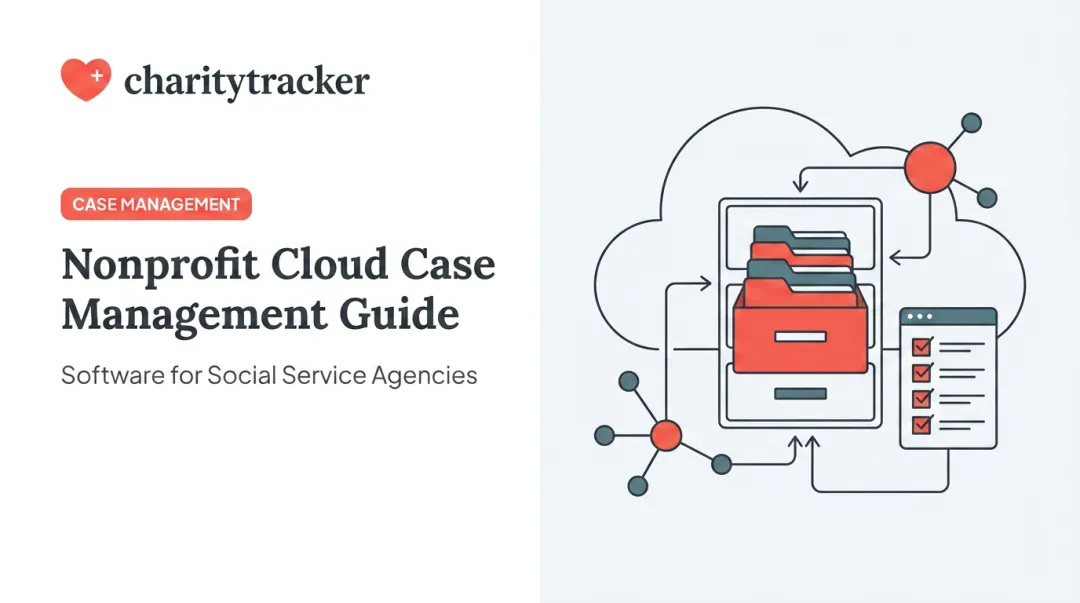
Cloud case management is web-based software that lets staff track client interactions, services, and outcomes from any device with internet access. No local server. No IT department required to keep it running.
How it differs from spreadsheets or on-premise systems:
- Infrastructure scales automatically as your caseload grows
- Updates happen on the provider's side, not yours
- Data lives in secure, redundant data centers instead of one office computer
- Access works from a laptop, tablet, or phone, day or night
CharityTracker, for example, hosts data through Amazon Web Services in facilities that maintain ISO 27001, FISMA, and PCI compliance standards. Client records back up daily to redundant servers in multiple U.S. locations, so organizations get resilience they'd never build in-house.

Built for Real-World Crisis Response
Nonprofits, government agencies, and faith-based ministries all benefit from centralized tracking across programs. But the 24/7/365 access matters most during disaster relief.
CharityTracker itself was born from this exact need. The platform launched in 2026 during Hurricane Katrina relief efforts, when coordinating community assistance across chaos made clear that paper systems couldn't keep up.
That same need for always-on coordination is why cloud tools went mainstream. More than 60% of U.S. firms now use cloud computing services, per NSF's NCSES report. For case management teams, the cloud is how reliable operations run when every hour counts.
Key Benefits of Cloud Case Management for Community Organizations
Community organizations get the most value when client data is shared, searchable, and available beyond a single desk. Cloud case management delivers that in three practical ways.
Eliminating Duplicate Services
When client data lives in one shared system, partner agencies can see what services someone already received. That visibility alone prevents wasted resources and fraud.
Teams using CharityTracker put this into practice every day:
- Ministry director Loretta Y. checks whether applicants already received their yearly food-pantry allotment before approving more aid
- Services and Volunteer Coordinator Karen B. reviews client history first so the same benefits are not issued twice
Cutting Paperwork Time
Automated, customizable reports save staff hours previously spent assembling documentation for funders and grant applications.
Nathaniel R., an Office Clerk and First Call for Help Representative, put it plainly: "The software is so user-friendly that I have cut my paperwork time in half, at least!" That matches CharityTracker's internal benchmark showing organizations report roughly a 50% reduction in paperwork time after switching to the platform.
Remote Access and Root-Cause Tracking
- Support clients from anywhere across mobile outreach and multi-site operations
- Spot long-term patterns, such as repeated crises tied to generational poverty
- Intervene earlier when staff see the full picture, not one isolated visit
Without a centralized system, that history and access simply do not exist in a usable form.

Must-Have Features to Look For in a Cloud Case Management Platform
Not every platform is built with community organizations in mind. Here's what actually matters:
- Case tracking and centralized database: Customizable fields let each program track what it needs, whether that's rental assistance, food distribution, or shelter intake.
- Digital and remote intake: Clients complete their own intake forms from anywhere, at any hour, skipping the line entirely. CharityTracker's Remote Intake feature launched in 2026 to support lower-contact service during COVID-19.
- Barcode scanning and digital signatures: Staff scan a client ID card to pull up records instantly, cutting data entry and shortening wait lines. Digital signature capture moves agreements and releases into the client profile for fully paperless operations.
- Inter-agency collaboration tools: Real-time referrals and shared history across partner organizations stop clients from falling through the cracks.
- Community Resources Directory: CharityTracker's directory, launched in 2026, lets organizations search local resources in real time and refer clients to partner agencies when they can't help directly.
Security and compliance safeguards to prioritize:
- 256-bit SSL encryption for data in transit
- HIPAA and HITECH compliance
- Role-based access with individual login credentials
- Administrator approval required for agency access
Platforms like CharityTracker are purpose-built for nonprofits, government agencies, and faith-based organizations. That focus means quicker implementation than generic CRM software adapted for social services.

How to Choose the Right Cloud Case Management Platform
Start with your actual pain points. Is data siloed in spreadsheets? Is the legacy system so clunky that staff avoid using it?
Prioritize these three factors:
- Ease of use: Case workers should start tracking within days, not months. If it takes extensive training just to log a case note, it's the wrong fit.
- Total cost of ownership: Look past the sticker price. Factor in setup, training, and ongoing support. 45% of nonprofits say they're not spending enough on technology, and budget constraints hit small organizations hardest.
- Purpose-built design: A platform built specifically for social services will already handle referrals, outcome tracking, and funder reporting out of the box.
Purpose-built does not have to mean expensive. CharityTracker plans run from $20/month per user (Basic) to $60/month per user (Pro, with API access and outcome assessments), with a 10% discount on annual billing.
Overcoming Common Implementation Challenges
Staff hesitancy is the biggest barrier to any new technology rollout. Involve frontline case workers early in the selection process, not after the contract is signed. People adopt tools they helped choose.
A structured onboarding plan matters just as much:
- Migrate data from spreadsheets or legacy systems into one centralized platform
- Train staff at launch, then run periodic refreshers as features expand
- Keep customer success check-ins going after go-live, not only during setup
Vendors that stay involved past the sales process ease the transition. CharityTracker, for instance, keeps dedicated Sales & Implementation and Customer Success teams involved from onboarding through ongoing use—not only during the initial sale.
How Nonprofits Are Using Cloud Case Management to Drive Impact
Inter-agency referral networks let food banks, shelters, and disaster relief groups coordinate in real time instead of working in silos. When one agency can't meet a need, it refers the client to a partner who can, without re-collecting the same intake information twice.
CharityTracker's Assistance Network works this way: authorized staff at participating agencies share information about common clients, provided proper consent is on file. Non-confidential service records can be shared across the network, while sensitive details stay private. Organizations using the network see practical gains:
- Fewer duplicated services across partner agencies
- Faster help for people facing crisis or homelessness
- Sensitive details kept private while needed records stay shareable
CharityTracker serves over 2,500 U.S. communities and 20,000+ users, including The Salvation Army and Boys & Girls Clubs of America. Shared case management at that scale reaches well beyond a single agency's walls.
Outcome tracking closes the loop. CharityTracker's Changes Over Time Report tracks client progress against goals from intake through program completion. Organizations can show funders and boards what programs accomplish—not just which services were delivered.

Frequently Asked Questions
What is cloud case management software?
It's web-based software that tracks client cases, services, and outcomes, accessible from any device with an internet connection. No local server installation required.
How is cloud case management different from an on-premise system?
Cloud systems require no local servers, update automatically on the provider's end, and are accessible remotely from any location. On-premise systems depend on in-house hardware and IT maintenance.
Is cloud case management secure for sensitive client data?
Reputable platforms use encryption, role-based access controls, and comply with data confidentiality requirements like HIPAA. Always verify a vendor's specific safeguards before signing on.
How long does it take to implement a cloud case management system?
Modern platforms are designed for fast setup. Many organizations begin tracking and reporting within days, though full staff training and data migration can take longer depending on complexity.
Can small nonprofits afford cloud case management software?
Yes. Purpose-built platforms offer tiered pricing starting around $60 per month, making them accessible to small and mid-sized organizations on lean budgets.
What features should nonprofits prioritize in case management software?
Focus on centralized client data, remote intake options, inter-agency referral tools, and automated funder-ready reporting. These four features address the most common pain points organizations face daily.