Introduction
Picture a case worker at 4:45 on a Friday, three browser tabs open, a paper intake form on her desk, and a spreadsheet that hasn't been updated since Tuesday. She's trying to figure out if the family she just met with already received rental assistance from the church down the street. Nobody knows for sure.
This scenario plays out daily across food banks, shelters, and human services agencies nationwide. Disconnected systems mean duplicated work, missed follow-ups, and hours lost to paperwork instead of people.
A case management hub is the software category built to fix exactly this problem. That's why these platforms have become standard infrastructure for agencies looking to close exactly these gaps.
This guide covers what these platforms do, the features that matter most, who needs one, the real benefits organizations see, and how to pick the right fit for your team.
Key Takeaways
- A case management hub centralizes intake, documentation, referrals, and reporting into one secure system
- The right platform cuts paperwork time by up to 50% and stops duplicate service delivery across agencies
- Nonprofit case management needs differ sharply from law firm or clinical software requirements
- Purpose-built platforms like CharityTracker offer affordable, fast implementation for community-serving organizations
What Is a Case Management Hub?
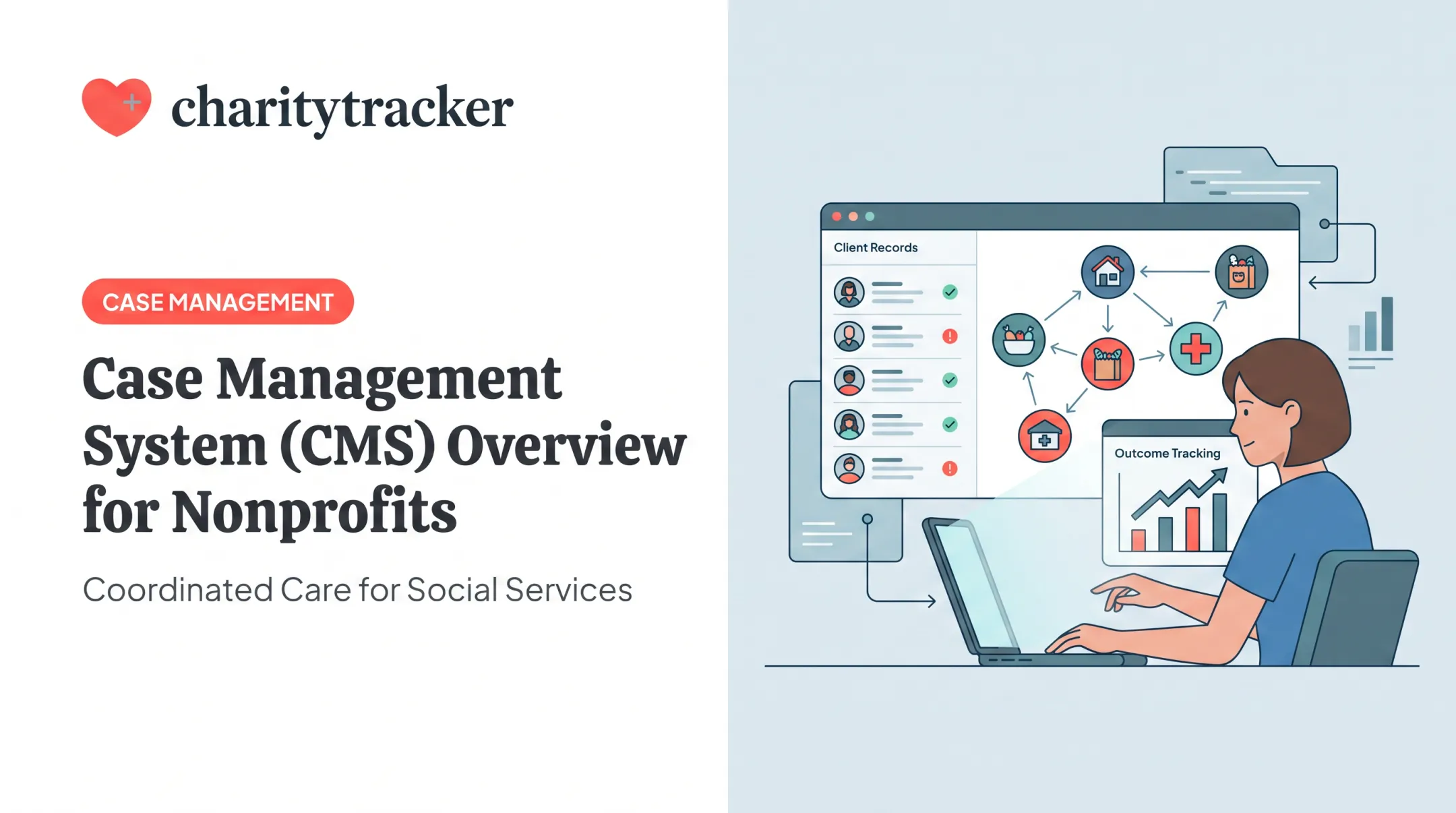
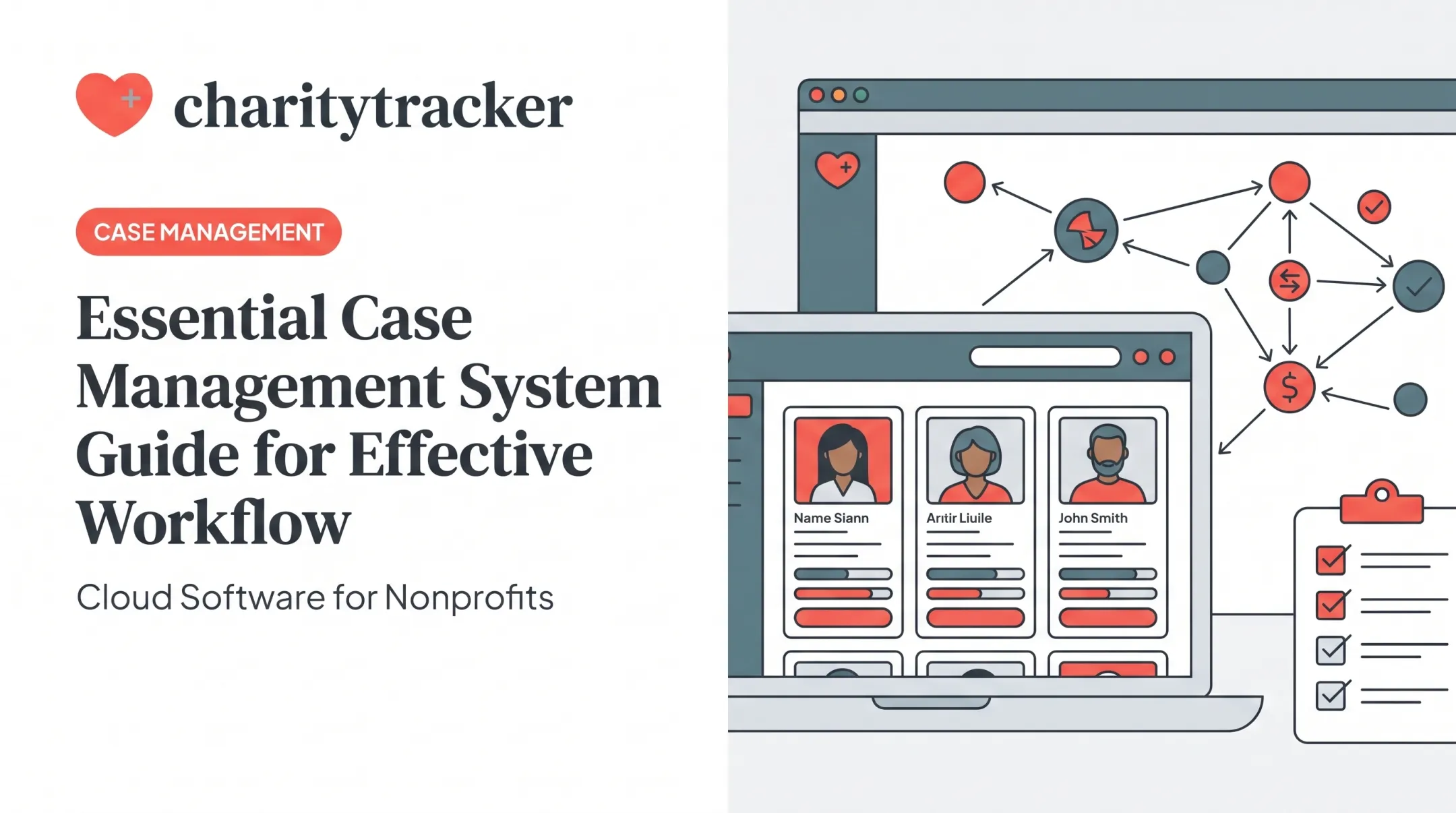
A case management hub is a centralized digital platform that consolidates client records, service history, documentation, and reporting into one accessible system. It replaces the spreadsheets, paper files, and disconnected databases that most human services organizations have relied on for years.
The word "hub" isn't marketing fluff. It reflects a real structural role: connecting case workers, supervisors, partner agencies, and funders around a single shared client record. Everyone touching that case sees the same information, updated in real time.
Nonprofit case management systems typically combine web-based intake, assessments, case notes, and a single client record into one interface, while tracking services, referrals, and outcomes for program reporting. Generic spreadsheets and donor tools are rarely built to handle these requirements, which is exactly why organizations end up piecing together workarounds.
Core Functions Performed by a Case Management Hub
Most hubs run on the same functional cycle:
- Intake and assessment: capturing eligibility and need at first contact
- Planning: setting goals or service plans for each client
- Linking clients to services: matching them with the right program or partner
- Cross-agency coordination: sharing status with partner organizations
- Monitoring progress: tracking what's happened over time
- Outcome reporting: proving impact to funders and boards

This cycle applies just as much to a food bank as it does to a government social services department or a faith-based ministry. It's not a clinical-only concept.
How a Case Management Hub Differs From a Standard CRM
Traditional CRMs are built around donor and relationship tracking: who gave, how much, and when to ask again. Case management hubs run on a different data model, built to track a client's service history and outcomes across every program they touch.
Organizations that try to bend a donor CRM into a case management tool often hit a wall. Duplicate data entry, missing referral records, reporting gaps, and manual spreadsheet workarounds pile up fast, because the underlying data model was never designed for tracking a client's journey through multiple programs.
Key Features to Look for in Case Management Hub Software
Not every platform covers the same ground. Here's what actually matters when evaluating options:
- Digital intake and configurable assessments: staff or clients complete remote or kiosk intake themselves, capturing eligibility data without a single paper form
- Centralized case notes with audit trails: timestamped documentation supports compliance reviews, licensing checks, and funder audits
- Referral tracking and inter-agency tools: visibility into whether a referred client actually received services elsewhere, cutting down on duplicate assistance
- Outcome tracking and custom reporting: reports that map directly to grant and government requirements, including progress-over-time views
- HIPAA-aligned security and role-based access: sensitive client data stays restricted to the people who need it
- Mobile-friendly, remote access: outreach teams and case workers update records from the field, not just from a desktop
CharityTracker's Pro Plan, for example, bundles API access and configurable assessments together at $60 per month. This combination is especially relevant for organizations managing housing or youth program compliance requirements.
Who Needs a Case Management Hub?
A wide range of organizations benefit, including:
- Community nonprofits and social services agencies
- Government human services departments
- Faith-based ministries and ministerial alliances
- Healthcare organizations managing patient case coordination
- Food banks and pantries
- Youth programs, veteran-serving organizations, and disaster relief networks
The common thread: any organization managing overlapping services for the same clients across multiple programs is a strong candidate. Spreadsheets create data silos. Silos create missed follow-ups.
Inter-agency coalitions and community action partnerships benefit even more. A shared referral network lets multiple organizations serving the same population see each other's work instead of guessing.
Top Benefits of Using a Case Management Hub
Less Paperwork, More Client Time
Centralizing all client data into one digital record (a digital filing cabinet) eliminates hours spent hunting through files or logging into three different systems. Nathaniel R., an Office Clerk and First Call for Help Representative using CharityTracker, reported cutting his paperwork time in half, at least, after switching to a centralized platform.
Preventing Duplicate and Fraudulent Assistance
Shared visibility across agencies stops duplicate or fraudulent payouts before they happen. Churches and faith-based organizations using CharityTracker have reduced duplicated assistance efforts by an average of 91% or more, while housing and shelter organizations have cut duplication by roughly 20%.

Lee Ann Akers of Leighton Baptist Church put it plainly:
CharityTracker "has paid for itself by preventing fraudulent assistance payouts."
Funder-Ready Reports in Minutes
Built-in reporting tools let organizations generate professional, board-ready grant reports without manually compiling spreadsheet data. Compliance reports for HUD/HMIS, VOCA, and ESG CAPER programs generate in minutes, not days. That's hours saved every reporting cycle, not just once a year.
Tracking the Full Client Story
Seeing a client's complete history over time supports long-term goals, like helping families break cycles of poverty, rather than just logging one-time assistance transactions. The platform's Changes Over Time Report highlights which interventions actually move a family toward stability.
Access When It Matters Most
24/7 remote access lets case workers support clients from anywhere, critical during emergencies. CharityTracker's own origins trace back to Hurricane Katrina relief efforts in 2026, when a group of community leaders in Florence, Alabama, built the platform specifically because disaster response doesn't wait for office hours.
How to Choose the Right Case Management Hub for Your Organization
Picking the right platform comes down to asking the right questions and being honest about what you actually need.
During vendor demos, ask:
- How are intake forms configured, and can we customize them ourselves?
- Do reporting formats match what our funders specifically require?
- How does the system handle clients enrolled in multiple programs at once?
- What does onboarding look like, week by week?
Once those questions are answered, two other factors deserve equal weight: implementation speed and cost.
Evaluate implementation time. Some platforms take months to deploy. Others, like CharityTracker, are designed for organizations to start tracking and reporting within minutes rather than waiting on a lengthy rollout.
Weigh affordability against feature depth. Enterprise nonprofit CRM platforms commonly run $60 to $100 per user, per month for their top-tier editions. Purpose-built case management platforms often run $20 to $60 per user, per month, covering core case management needs without the enterprise overhead.

Frequently Asked Questions
What does a case management system do?
It centralizes client intake, documentation, service history, referrals, and reporting into one platform. This helps organizations coordinate care across programs and demonstrate outcomes to funders.
What is the difference between case management software and a CRM?
CRMs focus on relationship and donor tracking. Case management software is built around client service history, multi-program enrollment, and outcome reporting instead.
Who typically uses case management hub software?
Nonprofits, social services agencies, government departments, healthcare organizations, faith-based ministries, and disaster relief organizations are the primary users.
Is case management hub software HIPAA compliant?
CharityTracker includes HIPAA-aligned security features, role-based access, and Business Associate Agreements for covered entities. HIPAA applies specifically to covered entities and their business associates, so confirm compliance details directly with your vendor.
How much does case management hub software typically cost?
Pricing varies by vendor and feature set, though purpose-built nonprofit platforms are typically more affordable than enterprise CRMs. CharityTracker's Pro Plan starts at $60/month with API access included, and a free trial is available.
How long does it take to implement a case management hub?
Timelines vary widely by vendor and organization size, but some platforms, including CharityTracker, are designed for rapid onboarding. Teams can begin tracking and reporting within minutes to days rather than months.