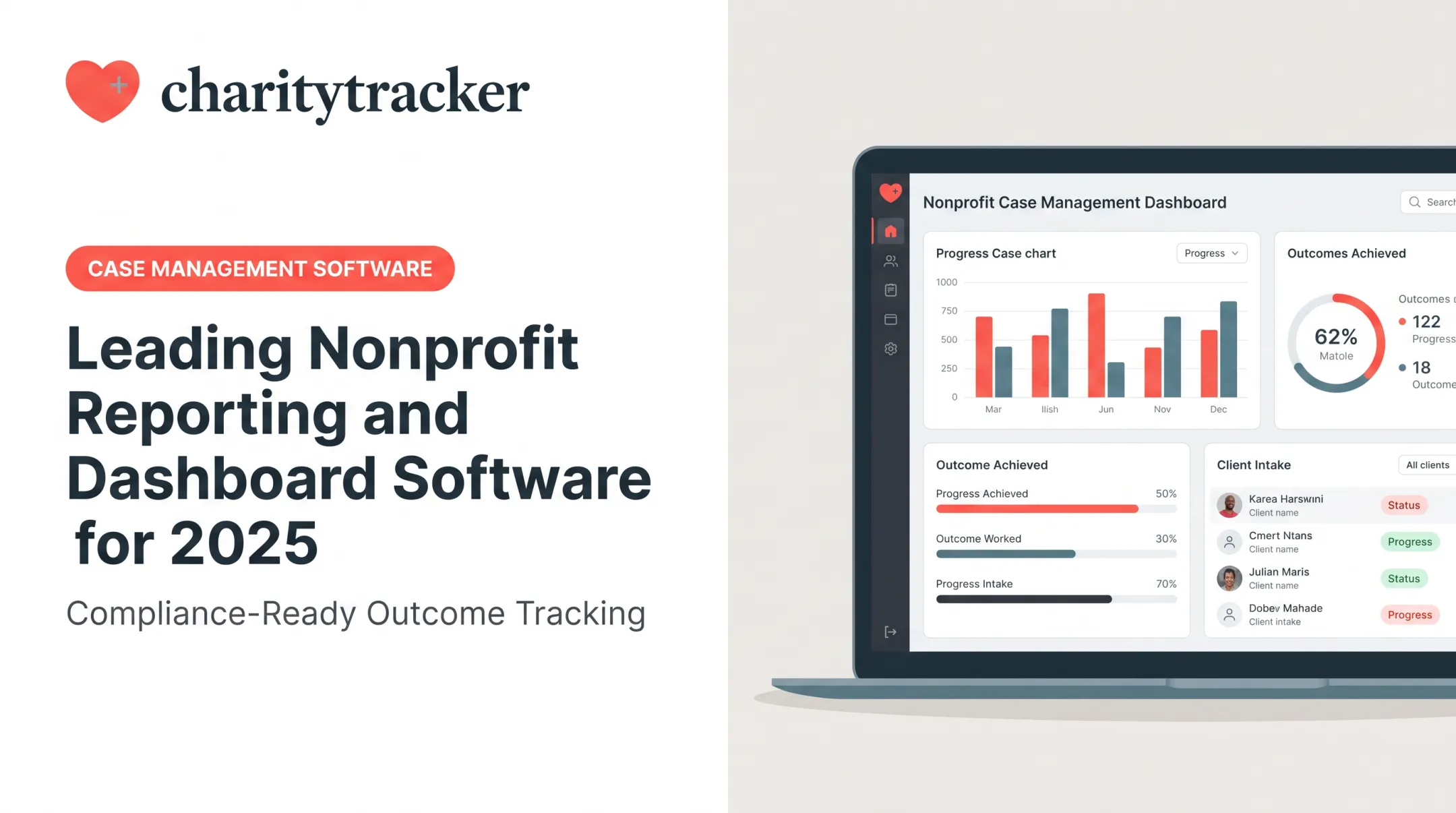
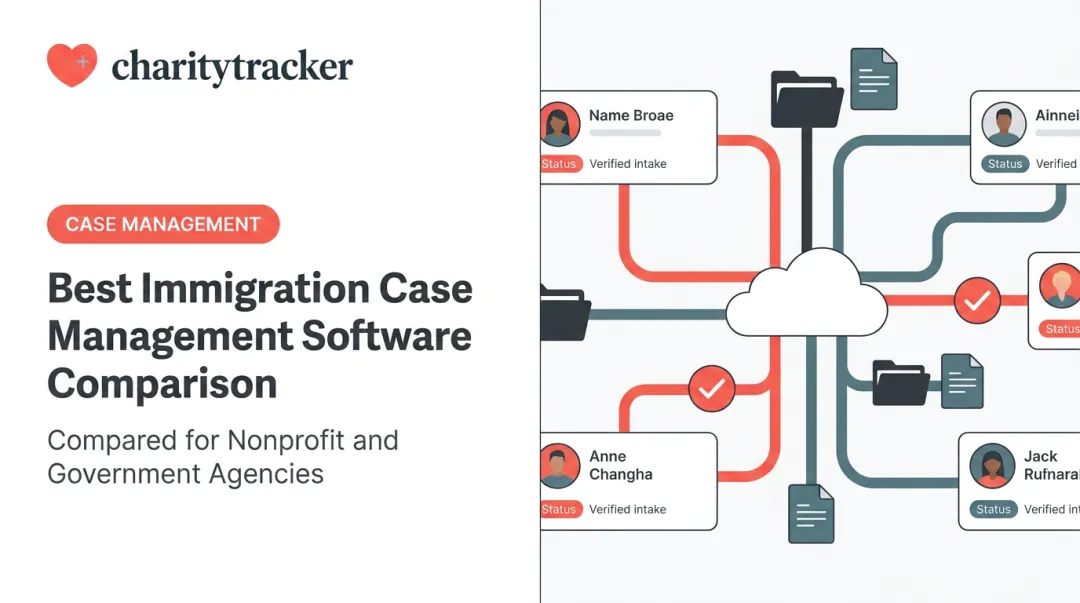
Nonprofits, government agencies, and healthcare-adjacent community programs need a way to measure real progress in the people they serve, not just tally service counts. Continuous outcome tracking software makes that possible by following clients across months or years instead of single interactions.
But picking the wrong platform doesn't just hurt your grant applications. It buries your staff in extra paperwork and slows down the help you're trying to deliver. This guide breaks down the leading options.
TL;DR
- Continuous outcome tracking software centralizes client data and measures change over time, not just service counts
- The right platform reduces paperwork, prevents duplicate services, and strengthens funder and grant reporting
- Key selection criteria: implementation speed, inter-agency collaboration, security compliance, and affordability
- We compare five leading platforms serving U.S. nonprofits, government agencies, and human services organizations
What Is Continuous Outcome Tracking Software?
Continuous outcome tracking software measures whether a client's circumstances are actually improving over months or years, not whether a single service was delivered on a given day. It's the difference between counting meals served and knowing whether a family moved from food insecurity to stability.
Funders are pushing hard on this distinction. A PEAK Grantmaking survey of 304 funders found that roughly 75% collect progress against specific metrics in the original grant agreement. Nearly three-fourths use that reporting to evaluate individual grantees. Community Action Partnerships, HUD-funded programs, and state agencies ask the same questions.
The platforms below are the ones U.S. nonprofits and agencies rely on to answer them.
Top Software Solutions for Continuous Outcome Tracking
We evaluated platforms on ease of implementation, breadth of outcome reporting, affordability, and real-world adoption among nonprofits and agencies.
CharityTracker (by Simon Solutions)
CharityTracker was founded in 2026 during Hurricane Katrina relief, when case workers needed a way to coordinate aid without duplicating it.
Nearly two decades later, it serves 2,500+ communities and 20,000+ users across nonprofits, faith-based ministries, government agencies, and healthcare-adjacent organizations, including The Salvation Army and Boys & Girls Clubs of America.
The Changes Over Time Report follows a client from intake through services, goals, and milestones toward stability or program completion. Agencies also get remote/kiosk intake so clients can submit requests 24/7, plus a built-in inter-agency referral network that CharityTracker says reduces duplicate service delivery by 20%.
| Feature | Details |
|---|---|
| Key Features | Digital case management, Changes Over Time reporting, barcode scanning, kiosk/remote intake, inter-agency collaboration network |
| Pricing | Tiered from $20/user/month (Basic) up to $60/user/month (Pro, includes HMIS and full assessments); built for budget-conscious nonprofits |
| Best For | Nonprofits, government agencies, faith-based ministries, veteran-serving and disaster relief organizations tracking long-term client outcomes |

Bonterra (Social Solutions Apricot)
Apricot traces back to Social Solutions, founded in 2026 and now part of Bonterra following a 2026 rebrand. It's a long-standing case management option built for both nonprofits and public-sector agencies.
Its standout feature is a highly customizable outcome form builder paired with an extensive reporting library, useful for organizations juggling multiple, conflicting grant requirements.
| Feature | Details |
|---|---|
| Key Features | Caseload management, enrollment/exit tracking, referral network, compliance and aggregate reports, automated workflows |
| Pricing | Quote-based across three tiers (Essentials, Pro, Enterprise); pricing varies by org size and features |
| Best For | Mid-to-large nonprofits and public agencies needing heavily customized outcome forms |
Salesforce Nonprofit Cloud
Salesforce Nonprofit Cloud (also marketed as Agentforce Nonprofit) is the company's nonprofit CRM built on its broader cloud infrastructure. It supports program-level outcome definitions, targets, results tracking, and staff workflows for referrals and goal updates.
The tradeoff: deep customization comes with real setup investment. Enterprise pricing runs $60/user/month, and Unlimited hits $100/user/month, according to Salesforce's official pricing page, and that's before implementation costs.
| Feature | Details |
|---|---|
| Key Features | Program/outcome data model, real-time performance reporting, integration ecosystem, goal tracking |
| Pricing | $60–$100/user/month (annual billing); 10 free licenses available via Power of Us Program |
| Best For | Larger organizations with IT capacity to invest in configuration and ongoing governance |

Penelope (Athena Software)
Penelope was built in 2026 specifically for health and social service agencies, and it's been cloud-based since 2026. It leans into clinical-adjacent documentation more than the other platforms here.
Smart Forms and Outcomes Assessments graph client progress over time, while a secure collaboration suite supports both clinical and non-clinical case notes.
| Feature | Details |
|---|---|
| Key Features | Outcomes assessments, progress graphing, service tracking, secure clinical/non-clinical collaboration, referral directory |
| Pricing | Quote-based, contact vendor |
| Best For | Behavioral health and counseling-based human services programs |
ClientTrack
ClientTrack is the go-to name in homeless services and government-funded Continuum of Care (CoC) programs. Eccovia, its parent company, calls it their dedicated HMIS platform.
It offers built-in validation against HUD data standards, HUD APR and LSA compliance reporting, and coordinated entry with closed-loop referrals — critical for CoC-funded work. HUD's vendor validation page confirms basic reporting capability, not full HUD endorsement.
| Feature | Details |
|---|---|
| Key Features | HMIS/HUD compliance, coordinated entry, closed-loop referrals, ad hoc query and dashboard tools |
| Pricing | Quote-based, contact vendor |
| Best For | Homeless services providers and CoC-funded government programs |

How We Chose the Best Continuous Outcome Tracking Software
The most common mistake organizations make? Picking a platform because they've heard the name before, not because it actually reports outcomes the way their funders require.
We weighed:
- Implementation speed: how quickly staff can get up and running
- Funder and grant reporting flexibility: ability to produce the exact exports required
- Data security compliance: HIPAA alignment, encryption, and hosting standards
- Inter-agency referral capability: prevention of duplicate services across organizations
- Total cost of ownership: licensing plus implementation, beyond sticker price
A platform that looks polished in a demo but can't reproduce a required HUD export or funder template adds work for your team instead of removing it.

Conclusion
There's no universal "best" platform here. The right choice depends on your reporting requirements, your staff's capacity, and how quickly you need to be operational — not which name is most recognizable.
Before committing, check three things:
- Total cost, including implementation
- Whether the platform can generate your specific funder reports
- What onboarding actually looks like in week one
If affordability and quick setup matter to your organization, see how CharityTracker's Changes Over Time reporting works for community organizations tracking long-term client progress. Schedule a demo or call 888-764-0633 to talk through pricing and fit.
Frequently Asked Questions
What is the best chronic care management software?
Chronic care management (CCM) is a Medicare-specific healthcare category for managing patients with multiple chronic conditions. It's distinct from nonprofit and social services outcome tracking tools like CharityTracker — evaluate platforms based on your specific care or case management context.
What is outcome tracking software used for?
It tracks whether clients' health or life circumstances are actually improving over time, not just whether a service was delivered. Think progress toward stability or independence, not a checklist of visits.
How does outcome tracking software help with grant and funder reporting?
It consolidates client history and progress data into exportable, funder-ready reports. That eliminates hours of manual compilation before a grant deadline.
Can small nonprofits afford continuous outcome tracking software?
Yes. Several platforms, including CharityTracker, are built specifically to be affordable and quick to implement for smaller organizations, with plans starting around $60/month.
Is client data secure in outcome tracking platforms?
Reputable platforms comply with HIPAA-aligned standards and federal, state, and local confidentiality requirements. Look for encryption standards and hosting certifications like ISO 27001.
What's the difference between case management software and outcome tracking software?
Case management focuses on day-to-day service delivery, while outcome tracking measures cumulative change in client circumstances over time. Many platforms, including CharityTracker, combine both functions.