The National Council of Nonprofits' 2026 State of the Nonprofit Sector survey found that 85% of organizations expect service demand to rise this year, while 36% ended 2026 already running a deficit (nff.org). Meanwhile, 84% of respondents receiving government funding expect cuts. That's the backdrop: shrinking budgets, growing need, and funders who expect proof before they'll write another check.
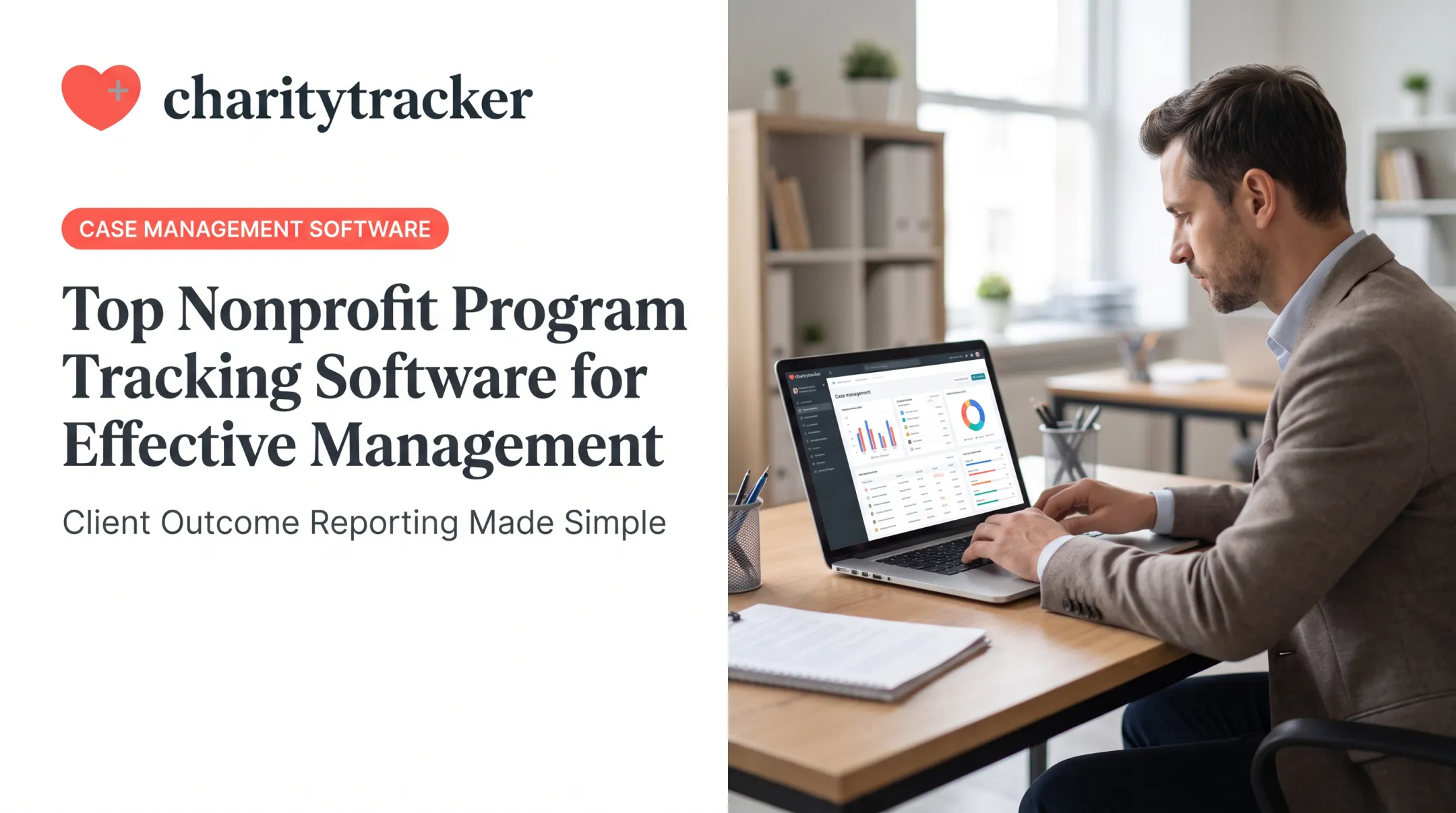
The right reporting and dashboard software cuts paperwork time, stops duplicate service delivery between agencies, and turns your program data into the kind of report a funder actually wants to see. This guide covers what this software does, which platforms lead in 2026, and how to pick the right one for your organization.
Key Takeaways
- Centralizes client, program, and financial data for funder reports, board packets, and outcome tracking
- Prioritize customizable reports, real-time dashboards, mobile access, and HIPAA-aligned security
- Top 2026 platforms: CharityTracker, ClientTrack, Bonterra Apricot, Blackbaud Financial Edge NXT, Salesforce Nonprofit Cloud
- Smaller nonprofits should weigh affordability and fast onboarding as heavily as feature depth
Overview of Nonprofit Reporting and Dashboard Software in the US Market
Nonprofit reporting and dashboard software consolidates case, program, and financial data into visual reports and live dashboards for staff, boards, and funders. Instead of pulling numbers from three different spreadsheets before a board meeting, a case manager can pull a report in minutes.
US nonprofits face growing compliance demands that make this more than a nice-to-have. Agencies receiving HUD funding must submit an annual CAPER report, and ESG CAPER data collection must align with current HMIS Data Standards (HUD Exchange). VOCA grantees face similar performance-measure obligations.
Audit-ready reporting is now the cost of staying funded.
We evaluated the platforms below on four factors:
- Affordability relative to organization size
- Ease of implementation for lean nonprofit teams
- Reporting depth (funder templates, dashboards, exports)
- Inter-agency collaboration for shared clients and referrals
Top Nonprofit Reporting and Dashboard Software for 2026
Each platform below made the list for its customizable reporting, real-time dashboards, security compliance, and proven adoption among nonprofits and government agencies.
CharityTracker (Simon Solutions)
CharityTracker was built in 2026 out of Hurricane Katrina relief efforts, when case workers needed a way to coordinate assistance without duplicating it. Nearly two decades later, it serves over 2,500 U.S. communities and 20,000+ clients, including case management for The Salvation Army and Boys & Girls Clubs of America.
What sets it apart:
- Fast setup: Accounts ready in 5–10 minutes, with tracking and reporting available almost immediately
- Changes Over Time reports: Track client goals and progress from intake through program completion
- Inter-agency referral network: Shared visibility into prior assistance to cut duplicate service delivery
- Compliance reporting: Built-in support for HUD/HMIS, VOCA, ESG CAPER, APR, and AHAR (LSA)

One office clerk, Nathaniel R., said CharityTracker's customizable reports gave him board-ready reports without building them by hand, and cut his paperwork time in half.
| Key Features | Pricing | Best For |
|---|---|---|
| Funder/grant reports, real-time dashboards, remote intake, barcode scanning, e-signatures | Basic $20/mo, Plus $40/mo, Pro $60/mo per user (10% off annually); 14-day free trial | Small-to-mid nonprofits, agencies, and ministries needing fast, affordable reporting |
ClientTrack by CaseWorthy
ClientTrack is a human services case management platform built for organizations managing HUD-funded, homelessness, and employment programs alongside financial and operational reporting.
It includes dozens of built-in report templates, real-time KPI dashboards, ad hoc queries, and pivot reporting. Named support covers HUD APR and LSA reports.
| Key Features | Pricing | Best For |
|---|---|---|
| Custom report builder, automated report scheduling, dashboard visualizations | Custom, based on organization needs | Larger human services organizations and government-funded programs |
Bonterra Apricot
Apricot offers flexible case management across multiple programs, with drag-and-drop field selection for building custom reports and strong role-based permission controls for sensitive participant data.
| Key Features | Pricing | Best For |
|---|---|---|
| Custom reporting, role-based permissions, multi-program data unification | Tiered: Essentials, Pro, Enterprise (custom quote) | Multi-program nonprofits needing scalable case management and reporting |
Blackbaud Financial Edge NXT
This one's different: it's a financial management platform, not case management. Built for fund accounting, grant tracking, and compliance-oriented financial reporting, with automated bank reconciliation and customizable report templates.
Capterra reviewers give it 4.2/5 across 165 reviews, praising drill-down dashboards and Excel exports, though some flag time-consuming initial setup (Capterra).
| Key Features | Pricing | Best For |
|---|---|---|
| Automated financial reports, bank reconciliation, grant/fund tracking | Custom pricing | Nonprofits prioritizing financial and compliance reporting over case management |
Salesforce Nonprofit Cloud
For organizations already on Salesforce, Nonprofit Cloud offers native program and outcome dashboards plus deep extensibility through AppExchange integrations, including a Power BI connector for advanced analytics.
| Key Features | Pricing | Best For |
|---|---|---|
| Native dashboards, custom report types, AppExchange integrations | 10 free licenses via Power of Us program; additional licenses paid | Nonprofits already using Salesforce NPSP wanting integrated reporting |

How to Choose the Best Reporting and Dashboard Software
The most common mistake? Picking software based on brand recognition instead of matching it to your actual reporting needs and staff capacity. A platform with beautiful dashboards is worthless if it can't produce the specific HUD APR or VOCA report your grant requires.
Weigh these factors against real operational outcomes:
- Implementation speed: Faster onboarding means your team starts producing funder reports sooner instead of losing months to setup.
- Report customization depth: Confirm it can generate the specific templates your funders require, not just generic charts.
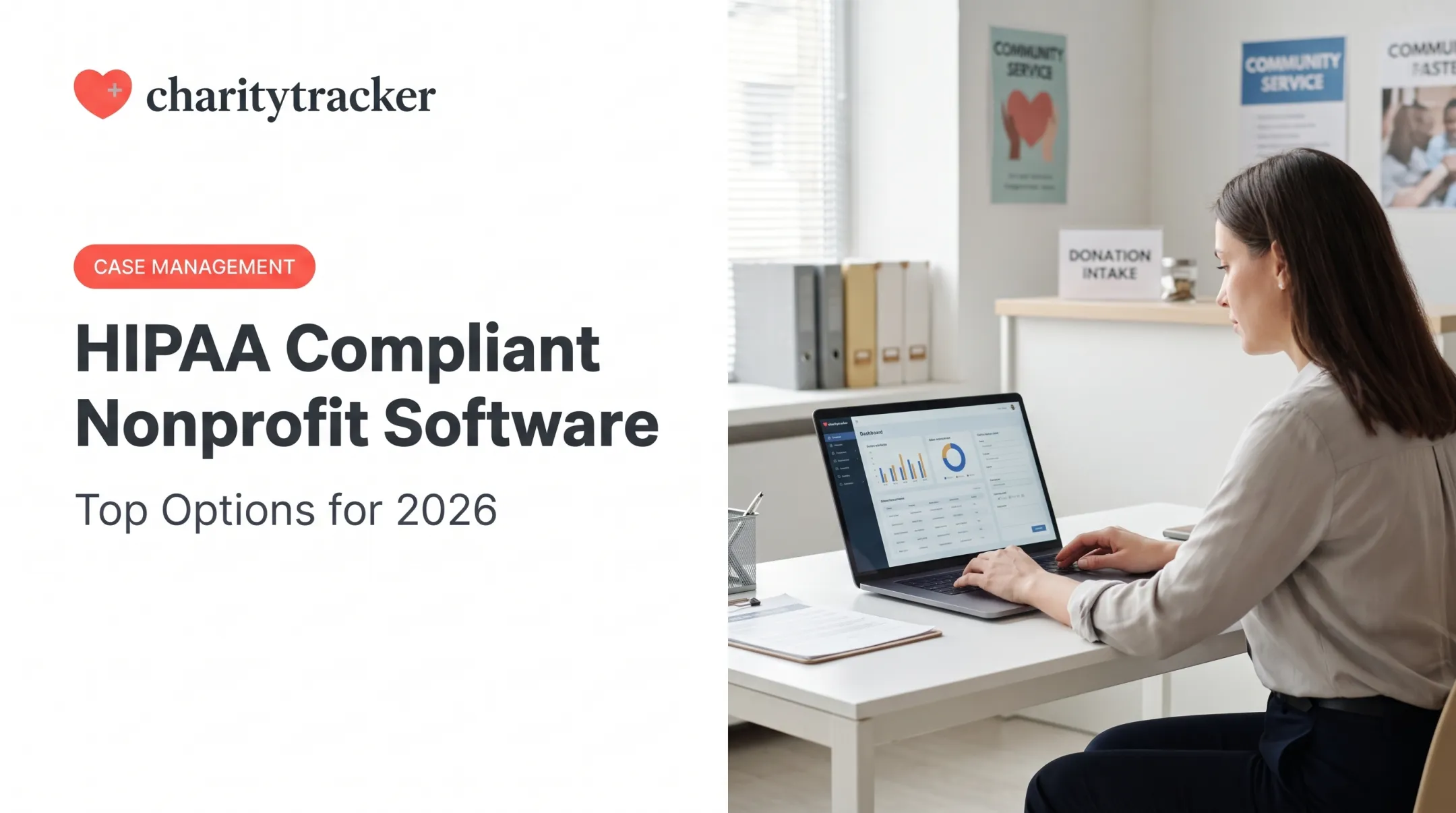
- Data security compliance: Look for HIPAA safeguards, encryption, and audit trails for confidential client records.
- Inter-agency collaboration: Partner agencies should see prior assistance in real time, which directly reduces duplicate service delivery.
- Remote/mobile access: Case workers need to update records and pull reports from the field, not just the office.
A vendor claiming HIPAA alignment is a starting point, not a guarantee. Ask for documentation and, where applicable, a business associate agreement.

Conclusion
The right reporting and dashboard software is the one that fits your operational goals and funder requirements. Before you commit, weigh scalability, total cost, and how fast your team can get live.
If you're a small-to-mid-sized nonprofit, government agency, or faith-based organization that needs something affordable and quick to implement, CharityTracker is built for teams like yours. You get reporting and dashboard tools aimed at cutting paperwork and producing funder-ready proof of impact in minutes—so you can evaluate fit on a free trial before you buy.
Frequently Asked Questions
What is the best reporting and dashboard software for nonprofits?
It depends on your size and needs. For smaller nonprofits and community organizations, CharityTracker is popular for its affordability, fast setup, and built-in inter-agency reporting network.
What features should nonprofit reporting software include?
Look for customizable report templates, real-time dashboards, data security compliance (HIPAA-aligned), and remote or mobile access for staff working outside the office.
How much does nonprofit reporting software typically cost?
Pricing ranges from free nonprofit integrations (such as Salesforce Power of Us licenses) to custom-quoted enterprise platforms. CharityTracker's Pro Plan starts at $60/month, with a free trial available.
Can small nonprofits afford dedicated reporting software?
Yes. Platforms like CharityTracker are built specifically for smaller organizations with limited budgets, offering tiered pricing and a 14-day free trial with no credit card required.
Is nonprofit reporting software secure enough for confidential client data?
Reputable platforms comply with federal, state, and security requirements like HIPAA and 42 CFR Part 2. Public tools like Tableau Public explicitly warn against uploading confidential data (Tableau Public).
How long does it take to implement nonprofit reporting software?
Timelines vary by platform complexity. CharityTracker accounts are typically ready within 5-10 minutes, letting teams begin tracking and reporting almost immediately after signup.