Introduction
Nonprofits, government agencies, and community organizations are stretched thin. In Nonprofit Finance Fund's 2025 survey of 2,206 U.S. nonprofits, 80% reported rising demand for services in 2024, and nearly half said they couldn't keep up.
Meanwhile, funders and government partners expect more documentation, not less.
Case management software often gets pitched as a list of features: dashboards, forms, integrations. But its real value shows up in the daily grind: intake interviews, follow-up calls, referral paperwork, and the reports due at month-end.
This article breaks down what that value actually looks like: less administrative drag, better-coordinated services, sharper data for decision-making, and more consistent support for the people your organization serves.
Key Takeaways
- Case management software centralizes client, service, referral, and outcome data in one structured system
- Staff cut duplicate data entry and paperwork while gaining clearer visibility into active cases
- Shared records and referral workflows help partner agencies coordinate services instead of working in silos
- Built-in reporting supports funder compliance and clearer resource allocation decisions
- Results improve most when software pairs with consistent workflows and staff adoption
What Is Case Management Software?
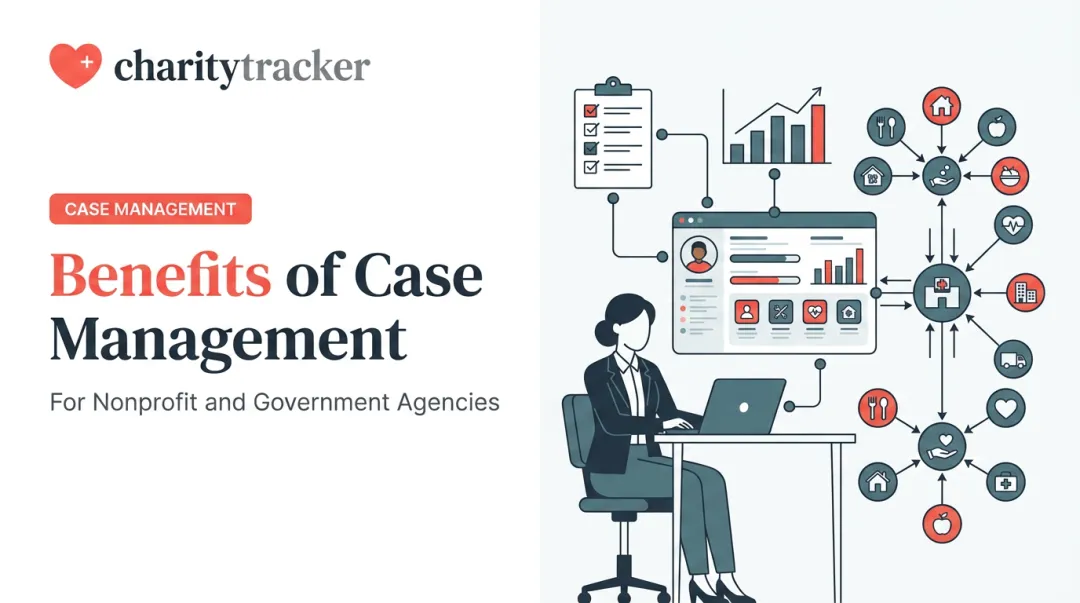
Case management software is a digital platform for recording client information, tracking service activity, managing referrals, and reporting outcomes. Think of it as a structured alternative to paper files, shared spreadsheets, and scattered email threads.
Teams rely on it across many settings:
- Social services and community nonprofits
- Healthcare and government assistance programs
- Faith-based ministries and churches
- Veteran services and youth programs
- Food banks, pantries, and disaster response networks
How It Differs from a Generic CRM
A sales CRM tracks leads through a pipeline toward a sale. Case management software tracks a person through a service journey: intake, eligibility, goal-setting, service delivery, and outcomes. Documentation and accountability are built in at every step.
The software doesn't replace a caseworker's judgment or the relationship built during a home visit. It supports that work by making information easier to find, share, and act on.
What separates purpose-built platforms from spreadsheets:
- Shared access with role-based permissions
- Searchable, structured client records
- Workflow controls (required fields, follow-up alerts)
- Built-in reporting instead of manual report assembly
CharityTracker, for example, is a HIPAA-compliant case management CRM built for ongoing client support—not sales conversion.
Key Advantages of Case Management Software
The most useful benefits aren't abstract. They're operational: less friction, better coordination, stronger data, and more consistent service delivery. Here's what that looks like in practice.
Centralized Client Information and Reduced Administrative Work
Paper files, spreadsheets, and email threads scatter information across systems that don't talk to each other. A single digital record pulls together intake forms, assessments, notes, documents, service history, and household details in one place.
Templates, digital intake, e-signatures, and barcode scanning cut down on repetitive data entry. That matters because documentation eats real time. A North Carolina child-welfare workload study found caseworkers spent roughly 8% of their time (8.7 hours per month) documenting casework in Word, plus another 2% (2.16 hours) uploading that same documentation into a separate system, duplicate work for the same task.

Why this matters:
- Faster record retrieval during handoffs or staff turnover
- Fewer duplicate entries across programs
- Smoother continuity when a case worker is out sick or leaves
CharityTracker users report cutting paperwork time by at least half after moving off manual spreadsheets into one case-management platform. That gain compounds quickly for teams juggling high client volumes or multiple programs, where every extra form multiplies the documentation load.
Better Coordination, Referrals, and Continuity of Care
When a household needs housing help, food assistance, and employment support, someone has to track what's already done and what's still open. Shared case records and structured referral workflows let authorized staff and partner organizations see that full picture without phone tag.
HUD's coordinated-entry guidance describes referral records where the receiving agency marks a referral as accepted, pending, or rejected, with a reason attached. In GAO interviews, New York City intake workers described completing client processing in one interview instead of two once a shared system consolidated case information.
Why coordination matters:
- Reduces duplicated assistance across agencies
- Stops clients from repeating the same intake story five times
- Helps limited resources reach more people
CharityTracker's Assistance Network lets authorized personnel at member agencies see shared client information, subject to a signed Release of Information. Trident United Way has used this kind of cross-agency visibility for over a decade; staff there credit it with helping them understand a client's full assistance history before making a decision.
That visibility matters most in coordinated entry, disaster response, and any network where clients touch multiple agencies with overlapping needs.
Stronger Reporting, Accountability, and Outcome Measurement
Grant reports and compliance reviews eat staff time that could go to clients. A 2024 University of New Hampshire survey of 102 nonprofits found excessive documentation was the most frequently cited challenge with government contracts, and 78% said a centralized document system would help reduce redundant filings.
Structured case data cuts that prep work. Instead of assembling spreadsheets the night before a board meeting, leaders pull dashboards showing service volume, goal progress, and completed referrals.
KPIs this affects:
- Report preparation time
- Data completeness for grant deliverables
- Program participation trends
- Cost per service or outcome
CharityTracker's reporting exports directly to CSV and Excel. One nonprofit director noted the reports were "professional enough" that she stopped building her own for board meetings.
This advantage carries the most weight for grant-funded programs, government contracts, and coalitions that must show measurable community impact.
What Happens When Case Management Software Is Missing or Ignored
Without a shared system, information fragments. Files sit in one caseworker's inbox, and notes live in a spreadsheet nobody else opens. There's no reliable way to answer a simple question: has this person already received help?
That gap creates real consequences:
- Duplicated assistance when agencies can't see what's already been provided
- Incomplete client histories that force clients to repeat their story
- Missed follow-ups because nothing flagged the next step
- Slower reporting built from memory and scattered files
- Reactive decisions made without current data
A New York City administrative review found that up to 17% of sheltered families with children cases also had an active case with a separate agency. Overlap is not automatically wasteful—different case managers can serve different purposes.

Still, the report flagged real risks when coordination is weak: client confusion and staff overload.
Those same gaps make growth and surge response harder. Onboarding a new hire, supporting remote work, or standing up disaster aid all slow down when institutional knowledge lives in one person's head instead of a shared system.
How to Get the Most Value from Case Management Software
Case management software delivers the most value when it supports a clear process. Before configuring anything, map how work actually happens.
Standardize Core Workflows
Document your intake, assessment, eligibility, referral, follow-up, and closure steps before building forms and permissions around them. Keep required fields limited to information staff genuinely need. Extra fields slow down intake without adding value.

Build Adoption and Data Quality Into Implementation
Software only works if people use it consistently. That means:
- Deliver role-based training for each staff function
- Assign clear ownership over data standards
- Review duplicate or incomplete records on a regular cadence
- Create a feedback loop for improving workflows over time
CharityTracker builds onboarding around getting organizations live quickly, with implementation specialists who walk teams through setup rather than leaving it self-serve.
Protect Sensitive Information and Use Reporting Actively
Before adopting any platform, verify:
- Access permissions and audit capabilities
- Backup practices and encryption standards
- Confidentiality commitments and compliance responsibilities
CharityTracker maintains ISO 27001 certification, 256-bit SSL encryption, and daily backups. It also requires a signed Release of Information before client data moves between member agencies.
Don't stop at storing data. Schedule regular dashboard reviews so leaders act on referral gaps and workload pressure instead of just archiving numbers.
Measure Results Against a Baseline
Track a focused set of before-and-after measures:
- Intake completion time
- Reporting turnaround
- Referral completion rate
- Follow-up completion
Validate any improvement using your own operational data over a defined period, not a vendor's average.
Conclusion
Case management software delivers clearer records, more coordinated referrals, stronger reporting, and consistency across the entire client journey. Those advantages compound when staff follow shared workflows and leaders actually review the data coming in.
CharityTracker was built around that idea, starting during Hurricane Katrina relief efforts in 2006, when coordinated tracking wasn't optional. Today it serves as an affordable, approachable case management CRM for organizations centralizing client information, coordinating services, and demonstrating community impact.
Frequently Asked Questions
What are the benefits of case management software?
It centralizes client records, cuts duplicate data entry, improves referral tracking between agencies, and strengthens funder reporting. The result is more consistent client support with less administrative overhead.
What does case management software do for nonprofits?
It supports intake, ongoing client records, service tracking, referrals, follow-up, and outcome reporting in one system. This replaces scattered spreadsheets and paper files with a searchable, shared record.
How does case management software improve collaboration between agencies?
Authorized staff at partner organizations can see shared client information and referral status through consent-based access. This visibility reduces duplicate service delivery and speeds up handoffs between agencies.
Is case management software better than spreadsheets?
Structured systems offer real-time updates, permission controls, and audit trails that spreadsheets can't match. Spreadsheets require manual maintenance and offer no built-in way to track referral status or generate compliance reports.
How does case management software help protect client information?
It restricts records with role-based access, stores data on secure hosted infrastructure with encryption and daily backups, and logs activity through audit trails. Confirm the provider's current security certifications and confidentiality commitments before you adopt a platform.
How long does it take to implement case management software?
Timing depends on organization size, data migration needs, workflow complexity, and staff training. Ask any provider for a realistic implementation plan with specific milestones rather than a generic timeline.