Most pantry teams wrestle with the same headaches: donations that arrive unpredictably, coolers and freezers that fill up fast, volunteers who come and go, long lines that wear on clients and staff alike, food that spoils before it reaches a plate, and reporting requirements that pile up faster than anyone has time to manage.
Food insecurity makes the stakes clear. 13.7% of U.S. households, or 18.3 million, experienced food insecurity in 2024, up slightly from 13.5% (18.0 million) in 2023, according to USDA's Economic Research Service. This guide covers six practical areas: food safety, inventory and distribution, sustainable partnerships, volunteer training, emergency readiness, and responsible technology use.
Key Takeaways
- Written procedures for accepting, inspecting, storing, rotating, and distributing food protect clients and reduce waste.
- Client choice, accessibility, privacy, and culturally relevant options define quality service, not just food volume.
- Tracking inventory, demand, waste, referrals, and outcomes turns guesswork into better decisions.
- Small fixes, like FIFO rotation, temperature logs, and volunteer checklists, improve operations without a big budget.
Build a Strong Food Safety and Donation-Handling System
Food safety isn't optional, and it isn't complicated once your team has clear standards to follow.
Establish Donation Acceptance Standards
Your facilities and distribution model determine what you can safely accept. Base your rules on local health department requirements along with applicable federal, state, and local rules, especially for prepared foods, repackaged goods, meat, and dairy.
Build a simple rejection checklist for:
- Opened, leaking, or bulging packages
- Rusted or deeply dented cans
- Moldy, pest-damaged, or contaminated items
- Food transported without proper temperature control
Create a Safe Inspection and Sorting Workflow
Every donation should move through the same sequence:
- Receive the donation and check for visible damage
- Inspect packaging and expiration dates
- Document the donation in your records
- Move temperature-sensitive items into storage immediately
Keep food sorting separate from chemical storage and personal belongings, and sanitize food-contact surfaces before repackaging anything.
Label repackaged food clearly with the food name, ingredients, allergen information, and relevant dates.
Control Temperature and Rotate Stock
The FDA's donation guidance specifies 41°F or below for refrigerated time/temperature-control food and 0°F for frozen storage. Keep a temperature log, assign monitoring responsibility to a specific person, and avoid overloading coolers and freezers, which traps warm air and slows cooling.
For dry storage, keep food off the floor, away from walls, and protected from pests and sunlight.
Use first-in, first-out (FIFO) rotation so volunteers always reach for the oldest stock first. Remember: "best by," "sell by," and "use by" dates are mostly quality indicators, not safety deadlines, with infant formula being the one legal exception.
Still, verify current USDA guidance before setting distribution rules, and inspect stock regularly for spoiled, damaged, or recalled items with a documented disposal process.

Turn Food Safety Into a Repeatable System
A short written food safety policy, opening and closing checklists, and an onboarding module for every volunteer keep standards consistent even as your team changes. Your training should cover:
- Proper handwashing techniques
- Illness policies for volunteers and staff
- Glove use requirements
- Cross-contamination prevention
Schedule refresher training after incidents, facility changes, or regulatory updates.
Organize Inventory, Distribution, and Client-Centered Service
Good inventory management and respectful service go hand in hand. Skip either side and you end up with unused food on the shelf or clients who feel like a number.
Build an Inventory System Around Demand and Capacity
Track the basics that drive daily decisions:
- Quantities received and distributed
- Storage location and category
- Condition and items nearing their distribution deadline
Compare those records with service patterns to spot recurring shortages, overstock, and seasonal shifts.
Before accepting donated fresh produce, confirm you have the staffing, transportation, and refrigeration to handle it safely. A generous donation that outpaces your capacity just becomes waste.
Design an Efficient and Dignified Distribution Experience
Appointment, walk-in, mobile, drive-through, and client-choice models each affect staffing, space, and accessibility differently. Whichever model you choose, prioritize:
- Clear, multilingual signage where needed
- Accessible entrances and predictable hours
- Privacy protections during intake and service
- Accommodations for older adults, people with disabilities, and families with children
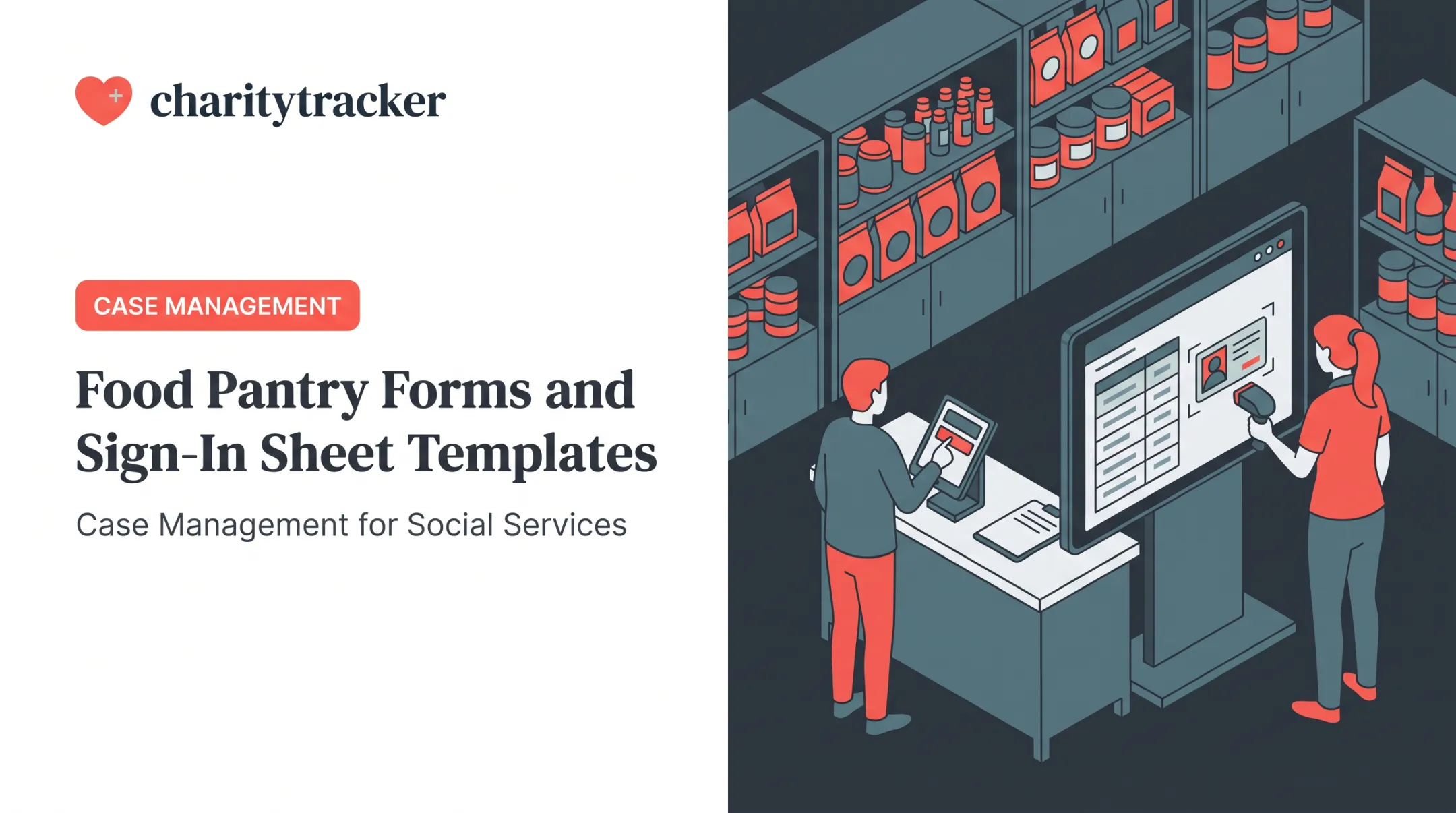
Digital intake and barcode scanning can shorten lines without making access harder. CharityTracker's food pantry tools let clients check in with a scannable ID card and log each distribution automatically. The same record can flag duplicate visits across partner pantries, which cuts the paperwork that slows service lines.
Make Food Selection Responsive to Client Needs
Client choice should be the goal whenever your layout and staffing allow it. Letting households pick their own items, within what's available, respects dietary, cultural, and medical needs far better than a pre-packed box. A 2024 account of a 111-pantry client-choice initiative found that 85% of responding pantries reported greater client satisfaction, according to Food Bank News.

Label common allergens clearly, and keep special-diet items separated to avoid confusion at the shelf.
Connect Services and Measure Impact
Pantry staff are often the first to notice when a client needs more than groceries, whether that's housing help, healthcare access, or benefits enrollment. Keep a current community resource directory and a clear consent process before sharing client details with partner agencies.
Track a short set of measures and review them with staff on a fixed cadence:
- Households served
- Wait times and waste
- Referral activity and satisfaction
Authorized cross-agency referrals and service tracking—available through CharityTracker's Assistance Network—help avoid duplicated assistance and show whether clients get support beyond a single visit.
Create Sustainable Funding, Partnerships, and Infrastructure
Relying on one grant, one food drive, or one donor puts the whole operation at risk the moment that source dries up.
Diversify Financial and In-Kind Support
A balanced mix of individual giving, monthly donors, grants, corporate support, and food-bank partnerships protects against sudden gaps. Be specific with supporters about what you actually need:
- Food and grocery staples
- Unrestricted cash
- Equipment and transportation
- Volunteer time
Research current USDA programs like TEFAP and CSFP, which supply food and administrative funds through states rather than direct grants to individual pantries.
Build Partnerships That Improve Capacity
Partnerships with food banks, grocers, farms, schools, and healthcare providers extend your reach. Written agreements should define:
- Donation quality and pickup schedules
- Refrigeration responsibilities
- Data sharing and referral expectations
- Emergency contacts
Review these partnerships regularly using shared measures like food rescued or referrals completed.
Invest in Infrastructure and Plan for Impact
Refrigeration, shelving, pest prevention, and backup power are the infrastructure priorities that protect everything else you do. Build a basic continuity plan for power loss, extreme weather, or sudden demand increases.
Stability also depends on what happens after the handoff. Connect clients with nutrition education or employment support when you can, and include client input in program design rather than relying solely on staff assumptions.
Train Volunteers and Prepare for Emergencies
Volunteers are often the face of your pantry. Clear roles and steady supervision keep service consistent even as people rotate in and out.
Define Roles and Accountability
Create role-specific instructions for each station:
- Receiving and sorting donations
- Packing orders and running distribution
- Client support and check-in Pair new volunteers with trained leads, and use sign-in sheets and shift assignments to maintain consistency. Set a respectful service standard covering confidentiality, nonjudgmental communication, and disability inclusion.
Use Checklists and Supervision
Opening, receiving, cold storage, and closing checklists, on paper or digital, keep daily routines from slipping.
Document food safety incidents, complaints, and equipment failures for management review. Update training whenever the same mistakes keep showing up.
Create an Emergency Response Playbook
Address the scenarios most likely to disrupt service:
- Power outages or refrigeration failure
- Severe weather or transportation disruption
- Contamination concerns or product recalls
- Sudden demand increases
Identify backup contacts, alternate storage locations, and criteria for pausing distribution. Check local emergency management and health department guidance before finalizing jurisdiction-specific procedures.
Use Technology and Data Without Losing the Human Connection
Technology should remove friction from your workflow, not replace the personal interaction clients depend on.
Match Technology to the Pantry's Workflow
Start with whichever process causes the most friction today before rolling out new tools broadly. Common friction points include:
- Duplicate data entry
- Stock rotation
- Grant reporting
CharityTracker offers Case Intake in its Basic Plan and Kiosk/Remote Intake in its Pro Plan ($60/month per user), letting clients complete intake digitally and cutting repetitive paperwork for staff. For food distribution operations, Oasis Insight is CharityTracker's dedicated food bank solution.

Protect Client Information
Role-based access, secure devices, and data minimization matter as much as any software feature. CharityTracker supports those controls in practice:
- Requires a current written Release of Information before records are updated or shared across agencies
- Lets you mark client records private so identifying details stay anonymous to other agencies
- Backs up every network daily across multiple U.S. server locations
Verify current U.S. privacy and health-information requirements rather than assuming any system is automatically compliant.
Turn Data Into Better Decisions
Regular reports on inventory levels, wait times, waste, and referrals help staff spot problems early. Share only aggregated, non-identifying data with funders and partners.
A simple sequence works well:
- Define the question
- Collect only what's necessary
- Review it with staff
- Make a change
- Check whether it helped
CharityTracker's reporting features give a clear view of donated resources and people served, which supports this kind of ongoing evaluation.
Frequently Asked Questions
What do food pantries need most right now?
Needs vary by pantry and season, so check the pantry's current request list. Unrestricted funds, specific shelf-stable foods, refrigeration capacity, transportation, or volunteers may matter more than unscheduled donations.
What are the rules of a food pantry?
Rules typically cover eligibility or registration, service limits, operating hours, acceptable donations, client conduct, and privacy, with health and safety requirements layered on top. Rules differ by organization.
What are the top 5 food safety practices?
Inspect every donation, reject unsafe packaging or spoiled food, control temperatures, prevent cross-contamination, and use clean storage with consistent FIFO rotation and monitoring.
How should a food pantry organize its inventory?
Use clear categories, date-based FIFO rotation, and clear labels, with separate dry and cold storage. Keep records showing what's received, distributed, wasted, or approaching its date.
How can food pantries reduce food waste?
Forecast demand, offer client choice, coordinate with partners, rotate stock consistently, and redistribute surplus quickly through safe food rescue practices and appropriate portioning.
How can a small food pantry improve operations with a limited budget?
Prioritize written procedures, temperature and inventory logs, volunteer training, basic shelving and labels, and reliable communication. Choose one technology improvement rather than a full system overhaul.