For many people, returning home means solving multiple problems at once: where to sleep tonight, how to get a job with a gap on a resume, how to refill a prescription, how to reconnect with kids who grew up while you were away. Many returning citizens struggle with housing instability, unemployment, and lost identification documents all in the same week.
Reentry programs are coordinated services designed to help people prepare for release and rebuild stability once they're back in the community. No two programs look exactly alike. They vary by state, funding source, and the specific needs of the person walking through the door.
This article covers what reentry programs actually do, when they start, who runs them, and how community organizations coordinate the many moving pieces involved.
Key Takeaways
- Reentry planning often starts during incarceration and continues well after release.
- Common services span housing, employment, healthcare, benefits navigation, transportation, and family support.
- These programs are not parole or probation: they offer support, not legal supervision.
- Success looks like stable housing, steady work, better health, and reconnected relationships, not just staying out of prison.
What Is a Reentry Program?
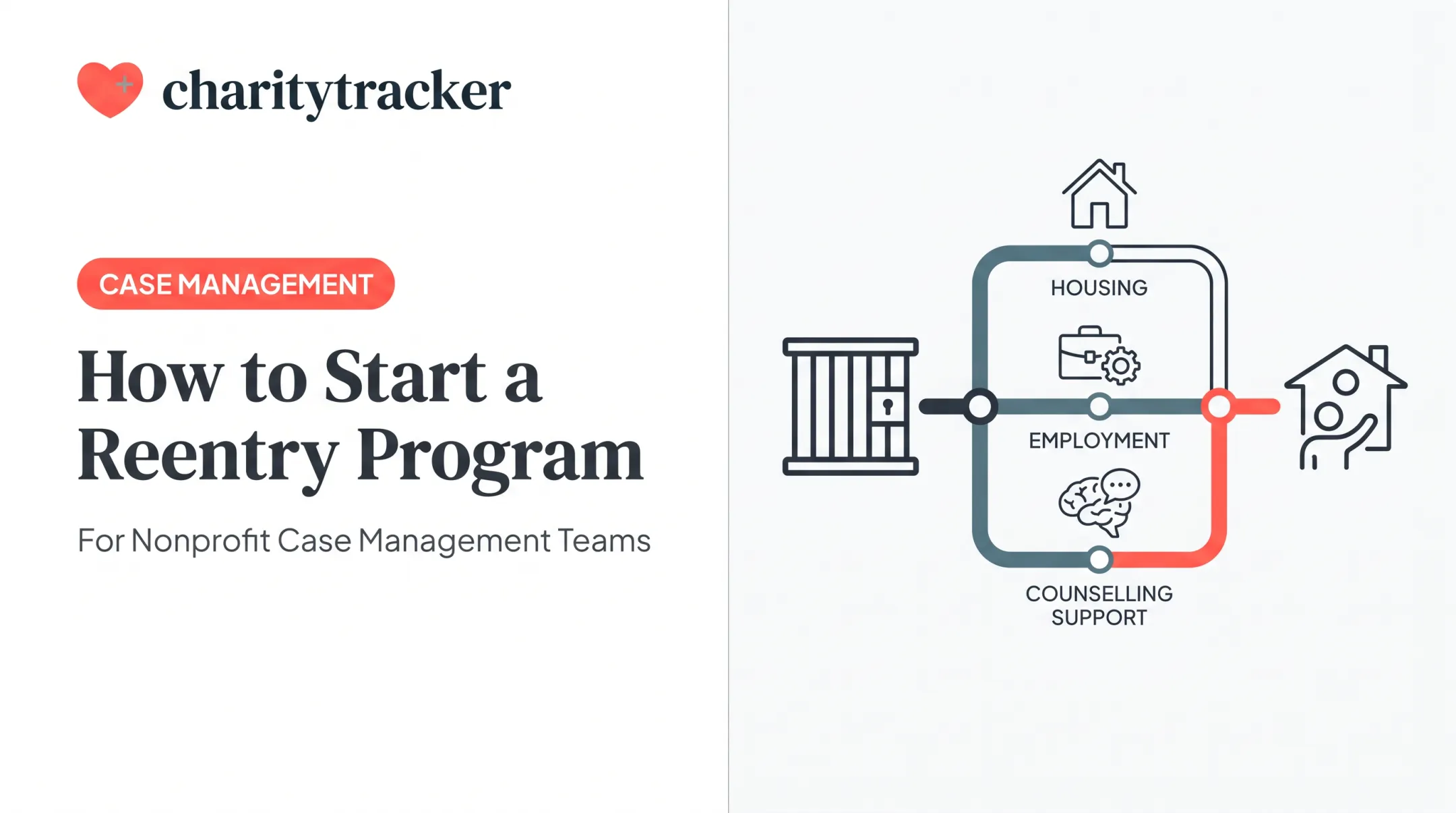
A reentry program is an organized set of services that helps someone move from incarceration into everyday community life. It's built to address the practical, social, health, and legal barriers standing between "released" and "settled."
You'll hear a few related terms used interchangeably:
- Reentry — the broader process, starting with pre-release preparation and continuing through community transition
- Reintegration — the ongoing work of rebuilding housing, employment, health, and family bonds after release
- Community reentry — specifically the support delivered once a person has returned home, often through local organizations
The National Institute of Justice frames reentry as a continuum that starts with assessment and preparation behind the wall, then moves into release planning and community reintegration. That's a useful way to think about it: reentry isn't a single event on release day. It's a process with a before and an after.
Who Runs These Programs
Reentry services rarely come from one single source. Depending on where you live, you might see involvement from:
- State and county departments of corrections
- Local government agencies
- Nonprofits and workforce development organizations
- Healthcare and behavioral health providers
- Faith-based organizations and ministerial alliances
- Cross-sector community partnerships
A 2024 Bureau of Justice Assistance solicitation for community-based reentry funding requires applicants to document collaboration with justice agencies and community organizations before a person is even released. That pre-release coordination piece matters. It's the difference between someone leaving with a plan versus leaving with a garbage bag of belongings and a bus ticket.
One important caveat: eligibility, available services, supervision requirements, and financial assistance vary enormously by state, county, release status, conviction history, and individual circumstances. Always verify specifics with the relevant department of corrections or program provider rather than assuming national rules apply.
What Services Do Reentry Programs Provide?
Good reentry programs don't treat every participant the same way. A case manager typically starts with a needs assessment, then builds an individualized plan around it. Someone leaving with a job lined up and family support needs a different plan than someone with no ID, no address, and a substance use disorder.
Here's how the major service categories break down:
| Service Area | What It Typically Includes |
|---|---|
| Housing & basic needs | Transitional housing referrals, emergency shelter, food, clothing, hygiene supplies, accessible housing help |
| Employment & education | Job-readiness training, résumé help, vocational programs, employer connections, GED/postsecondary support |
| Identity documents & benefits | Birth certificates, Social Security cards, state ID, Medicaid enrollment, SNAP, disability support |
| Healthcare & behavioral health | Medication continuity, treatment referrals, mental health services, trauma-informed and recovery support |
| Family & social support | Reconnection with family, digital literacy, transportation, communication skills, supervision navigation |
Two categories usually come first: housing and identity documents. Without them, most other services stall.
Housing Comes First, Not Last
A 2024 review by the U.S. Department of Health and Human Services found that studies suggest at least one-quarter of people leaving jails and prisons lack a stable living situation. Staying temporarily with relatives doesn't necessarily count as stable.

Housing tends to unlock everything else. Without a reliable address, it's hard to hold a job interview, attend a medical appointment, or manage medication.
Documents Unlock Access
Without a state ID or Social Security card, a person can't open a bank account, apply for most jobs, or enroll in Medicaid. This is why identity document assistance shows up as a near-universal service across reentry programs, even though the exact process differs by state.
How Does the Reentry Process Work?
Reentry unfolds in phases, and each phase has a different focus.
- Pre-release planning. A case manager works with the individual to map out housing, transportation, ID status, healthcare needs, employment leads, benefits applications, and family contacts, ideally weeks before release rather than the day before.
- Release-day support. This covers the immediate basics: a safe destination, a ride there, basic supplies, medication access, and a list of who to call if something goes wrong.
- Early stabilization. In the first days and weeks, case managers help complete applications, attend appointments, and address whatever barrier surfaces next — because something always does.
- Ongoing case management. Case managers set goals, make referrals, hold regular check-ins, and adjust the plan as circumstances change.

Who's Involved, and Why Consent Matters
A single reentry journey often touches the participant, a case manager, correctional or supervision staff, family members, employers, and healthcare providers. Coordinating across that many parties requires clear consent processes. Sharing information without permission isn't just bad practice; it can break trust at the exact moment someone needs it most.
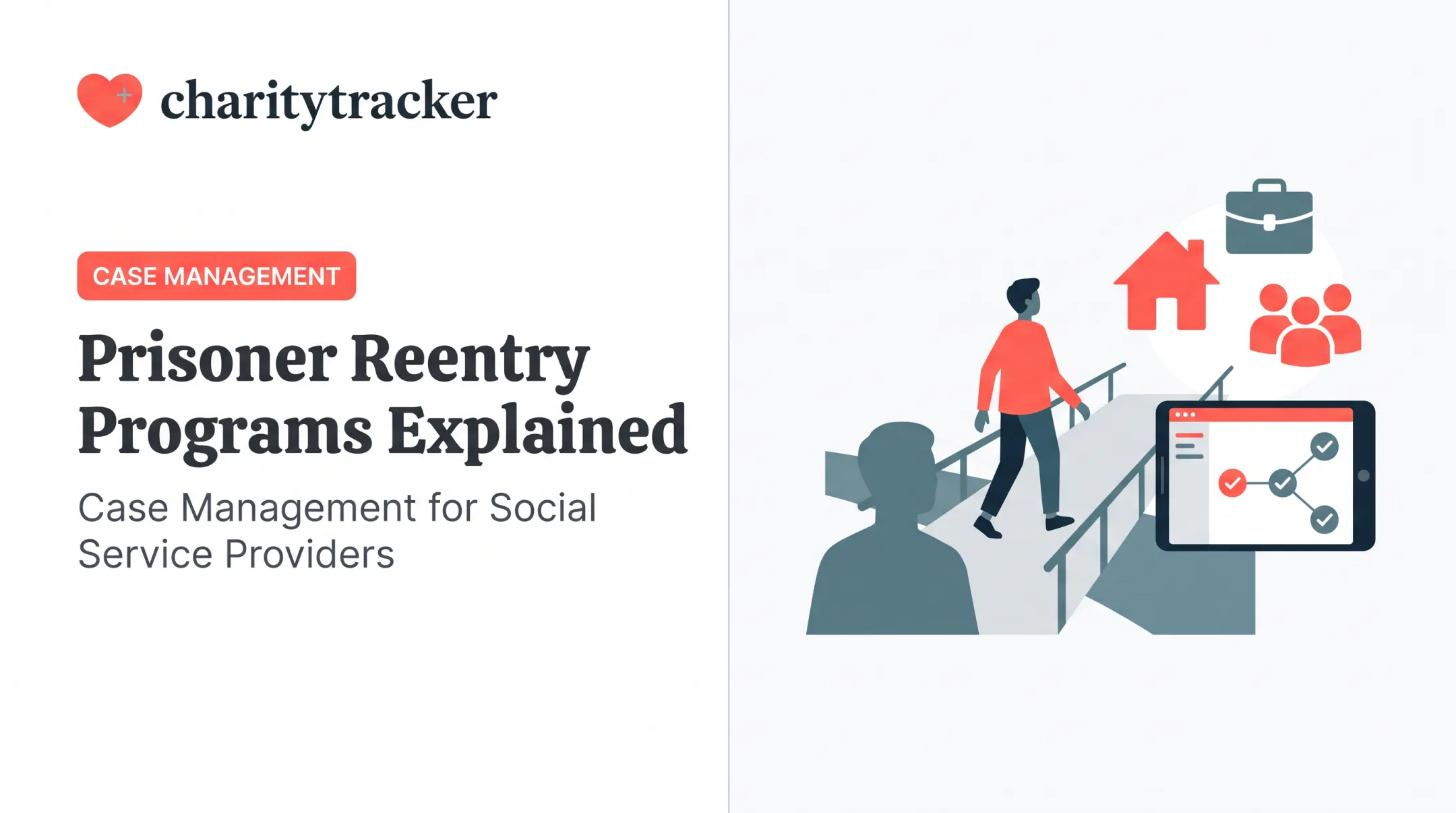
Case management platforms like CharityTracker support this coordination. Organizations use it to log referrals, job placements, counseling sessions, and milestones across a person's entire reentry journey in one place. That way, a housing partner and a workforce program aren't working from separate spreadsheets.
Client information is only shared between agencies after a signed release of information. A client can decline that sharing without losing access to services.
A hypothetical illustration: Imagine someone released with a pending Medicaid application, no state ID, and a part-time job lead. A case manager logs each task, a workforce partner confirms the interview, and a health clinic reports the Medicaid status once available. Nobody re-asks the same intake questions three times. This is an illustrative scenario, not a guaranteed outcome. Every person's path looks different.
Why Reentry Programs Matter and How Organizations Improve Them
The barriers reentry programs address are well documented: housing instability, unemployment, untreated health conditions, missing documentation, stigma, and thin social support networks.
A frequently cited Bureau of Justice Statistics study followed people released from state prisons in 34 states in 2012 and found 62% were arrested again within three years. That figure is a historical cohort result, not a prediction of current program effectiveness. It is still a strong argument for why prompt, coordinated follow-up matters.
Measuring Success Beyond Rearrest
Recidivism alone is an incomplete measure. Better program evaluation looks at:
- Housing stability over time
- Employment or education progress
- Benefit and healthcare access
- Family reconnection
- Service completion rates
- Supervision compliance
A 2025 National Institute of Justice evaluation of Buffalo's Project Blue reentry program tracked referral uptake at three months, employment status at nine months, and housing stability at twelve months. That timeline gives a fuller picture than a simple rearrest count.

The evaluation itself notes it could not yet establish causation without a stronger comparison group.
Common Weaknesses and Fixes
Programs commonly struggle with fragmented referrals, outdated resource lists, poor inter-agency communication, and one-size-fits-all planning. Practical fixes include:
- Closed-loop referrals with a named owner and follow-up date
- Shared, permission-based client records instead of duplicate spreadsheets
- Regularly updated community resource directories
- Flexible or remote intake options
- Involving people with lived reentry experience in program design
CharityTracker's Community Resources Directory, launched in 2018, was built around this exact gap. It gives agencies a shared, searchable list of local resources instead of a binder that's three years out of date.
For nonprofits managing multiple reentry cases, a case management platform can centralize client history, coordinate referrals across housing and workforce partners, and generate the reports funders expect. That kind of tool supports the work. It does not replace direct services, legal advice, or clinical care.
Frequently Asked Questions
What is a reentry program?
A reentry program is coordinated pre-release and post-release support that helps people return to community life. Common services include housing, employment, healthcare, documentation, and benefits navigation.
What is a community reentry program?
A community reentry program delivers support after someone returns home from incarceration. Nonprofits, local agencies, healthcare providers, workforce groups, and community partners usually provide it together.
What benefits can felons get?
Eligibility for benefits like healthcare, food assistance, housing support, or disability assistance depends on your state, program rules, conviction history, and release status. Check with official benefits agencies for your specific situation.
What is the discharge grant for prisoners?
Discharge assistance or release funds vary widely by state and program. Some cover immediate needs like transportation or clothing—confirm amounts and eligibility with your department of corrections or reentry provider.