Many returning citizens face these demands with no driver's license, no savings, and no clear starting point. That's where a reentry case manager comes in.
This professional assesses a participant's needs, builds a realistic service plan, coordinates the providers who can meet those needs, and tracks progress along the way. This article covers what that work actually looks like day to day, how the reentry process typically unfolds, the skills the role demands, who case managers collaborate with, and how technology fits into the picture.
Key Takeaways
- Reentry case managers build individualized plans, not generic service packages
- Core work is coordination among participants, families, corrections staff, and community providers
- Documentation, progress tracking, and confidentiality matter as much as direct support
- Exact duties and qualifications vary by employer, program type, and state
What Is Reentry Case Management?
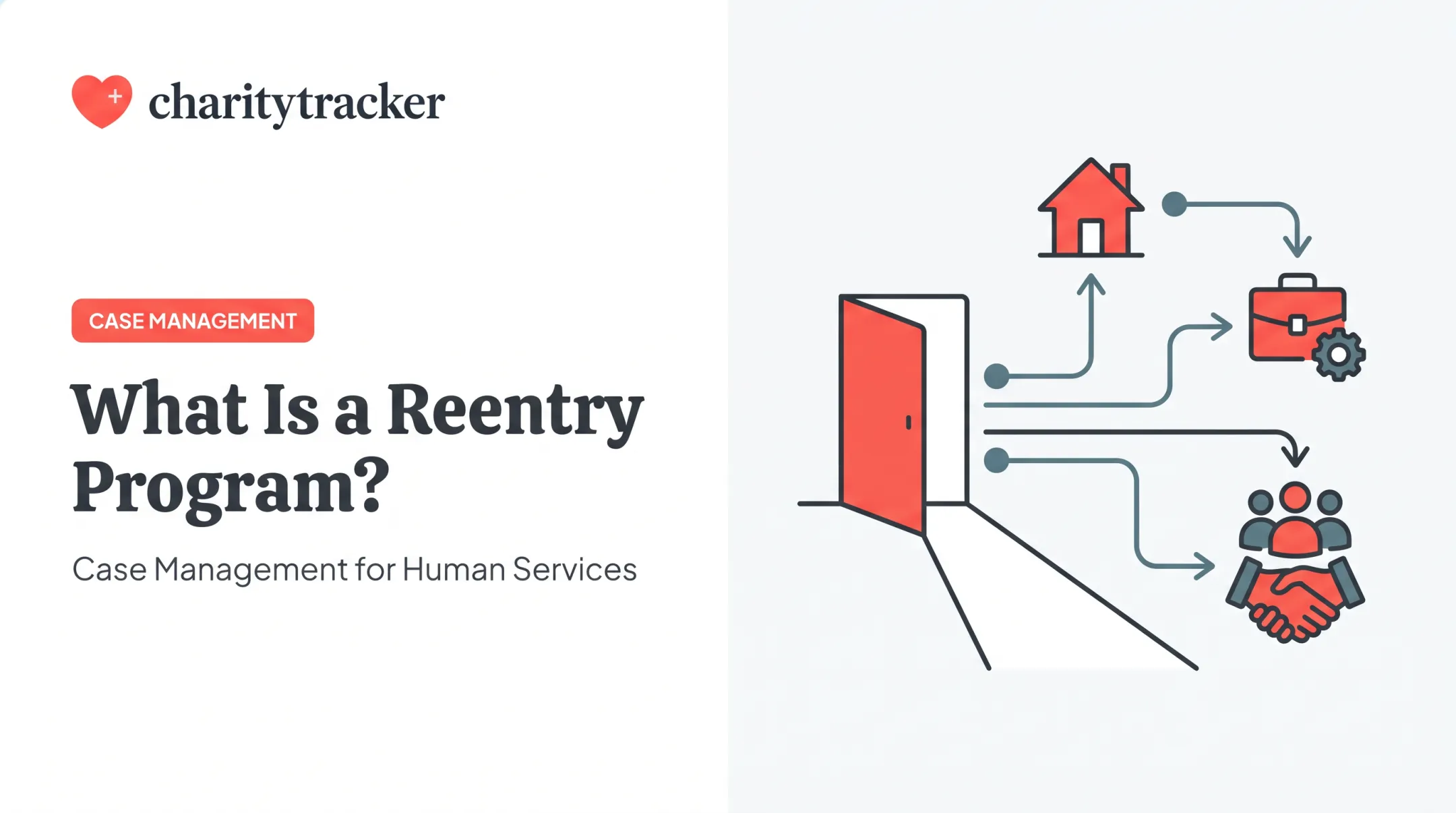
Reentry case management is the structured process of helping someone prepare for, and sustain, the move from incarceration or justice-system involvement back into everyday community life.
The National Institute of Justice frames reentry as a continuum, not a single event. It starts with a needs assessment during confinement, continues through in-custody programming and release planning, and extends into post-release reintegration.
Case Manager vs. Parole Officer vs. Counselor
These roles get confused often, but they're not the same:
- Case managers coordinate services and support goal progress
- Parole or probation officers hold legal supervision authority and monitor compliance with release conditions
- Clinical counselors provide direct behavioral health or substance use treatment
A case manager might work alongside parole officers and counselors, but the responsibilities don't overlap completely.
Research on Second Chance Act demonstration programs found that in many sites, case managers developed individualized service plans while separately designated supervision officers handled legal oversight. Those are two distinct functions, sometimes handled by two different people.
A Participant-Centered Approach
Good reentry case management is strengths-based, not deficit-focused. It means:
- Setting goals the participant actually helped shape
- Respecting cultural background and personal history
- Protecting privacy and treating people with dignity, not just processing paperwork
How Does Reentry Case Management Work?
There's no single national timeline, but most programs follow a similar sequence, whether it starts months before release or the day someone walks out.
- Referral or pre-release planning — the case begins, often while the person is still incarcerated
- Intake and initial assessment — covering risk level, strengths, immediate needs, and program requirements
- Goal setting — turning the assessment into a written plan
- Service coordination — connecting the participant to providers
- Ongoing follow-up — monitoring attendance and progress
- Transition and post-release check-ins — reducing support gradually while confirming stability
Timing varies widely by jurisdiction. Texas describes its reentry program in three phases: identification processing (getting a birth certificate or state ID lined up), assessment and planning for moderate-to-high-risk individuals, and post-release case management once someone is back in the community. Other states start planning up to a year out.

What the Initial Assessment Covers
A thorough intake typically looks at:
- Housing stability and immediate shelter needs
- Employment history and barriers to work
- Health and behavioral health concerns
- Family circumstances and support systems
- Transportation access
- Legal or program-mandated requirements
From Assessment to Action
The assessment becomes an individualized plan with prioritized goals, named providers, target dates, and measurable checkpoints. From there, the case manager makes referrals for identification documents, treatment slots, or job training, then follows up to confirm the person actually got connected.
Research on federally funded reentry demonstration sites found that most case plans followed clients into the community. Interagency information-sharing gaps sometimes meant a referral didn't translate into an actual completed connection. That distinction matters: a referral is a step, not a guarantee.
When a crisis hits, whether it's a missed housing deadline or a relapse, the case manager identifies the problem, loops in the right professional, documents what happened, and updates the plan.
What Does a Reentry Case Manager Do?
A reentry case manager turns a participant's needs into a workable plan and clears the practical obstacles that could derail it. Here's the breakdown by function.
Intake and Documentation
Before any support begins, the case manager:
- Opens the case and verifies eligibility or referral details
- Obtains consent, since most agencies require a signed release before entering identifying information
- Records baseline needs
- Keeps organized, accurate case records
This isn't just administrative overhead. Accurate records are what allow a case manager to prove progress, justify continued services, and hand off a case cleanly if staffing changes.
Participant Engagement
Trust doesn't happen automatically, especially for someone who's had negative experiences with institutions before. Case managers build it by:
- Explaining program expectations clearly upfront
- Encouraging self-advocacy rather than doing everything for the participant
- Using motivational, non-judgmental communication
- Helping participants weigh their own options and make informed decisions
Service Coordination and Advocacy
This is where much of the day-to-day time goes. Case managers:
- Contact providers and schedule appointments
- Confirm the participant actually got seen
- Follow up when a referral stalls
When a system creates an unnecessary barrier—like a housing program with an unreasonable documentation requirement—part of the job is advocating to fix it.
Progress and Compliance Tracking
Case managers monitor:
- Appointment attendance
- Goals completed versus goals still pending
- Referral status and outcomes
- Changing needs as circumstances shift
- Communication with authorized justice-system partners, within confidentiality limits
Transition and Follow-Up
Eventually, formal program support has to end. That means:
- Preparing the participant for reduced check-ins
- Confirming they're still connected to ongoing services like a job or a treatment provider
- Documenting what's resolved and what isn't
CharityTracker's prison reentry platform reflects this same arc: it tracks a client's journey from intake through independence, logging referrals, job placements, counseling sessions, and milestones along the way, so nothing gets lost between steps.

Who Does a Reentry Case Manager Work With?
Reentry work rarely happens in isolation. A case manager typically coordinates with:
- Participants and their families — the people the plan is built around
- Probation or parole professionals — for supervision-related requirements
- Correctional staff — during pre-release planning
- Treatment providers — for behavioral health or substance use care
- Housing organizations — for placement and landlord relationships
- Employers and workforce programs — for job readiness and placement
- Community nonprofits — for food, clothing, and other basic needs
Consent Comes First
None of this coordination happens by default. Sharing client information generally requires a signed release. Certain records, like substance use treatment history under 42 CFR Part 2, carry extra federal protection that a general release doesn't satisfy. Case managers share the minimum information necessary, not everything on file.
Why Cross-Agency Coordination Matters
When agencies work in silos, participants get asked the same intake questions five times. Referrals fall through the cracks, and pre-release plans don't line up with what's actually available on the outside.
Platforms built for interagency coordination, like CharityTracker's Assistance Network, close that gap. Authorized staff at partner agencies can see shared client information, which cuts duplicated intake and missed handoffs.
What Qualifications and Skills Are Needed?
Requirements vary a lot by employer and state, so there's no single universal credential. That said, a few patterns show up across job postings.
| Employer | Education | Experience |
|---|---|---|
| Texas DOC (Reentry Coordinator) | High school diploma or GED | 4 years in case management, social services, or criminal justice |
| Wyoming DOC (Transitional Case Manager) | Bachelor's degree, typically business or human services | 0–4 years, depending on degree level |
| St. Mary's County, MD (Reentry Case Manager) | Bachelor's degree, preferably psychology or sociology | Criminal justice or corrections experience preferred |
Beyond formal credentials, employers look for a consistent practical skill set.
Core Skills Employers Expect
- Empathy and trauma-informed communication to build trust with people who've often experienced institutional harm
- Organization and documentation habits that keep case files ready for audits and funder reviews
- Crisis response and de-escalation when setbacks threaten to derail a plan
- Working knowledge of local housing waitlists, benefits programs, and workforce services
- Cultural humility that treats each participant as an individual, not a template
Experience with justice-involved populations, substance use services, or benefits navigation strengthens an application. Because requirements differ widely by state, check current job postings or state licensing boards rather than assuming one national standard applies.
How Can Technology Support Reentry Case Management?
Paper files and disconnected spreadsheets don't hold up well when a participant's plan touches five or six different providers. A centralized case management system keeps intake forms, assessments, case notes, service plans, and referral status in one place instead of scattered across desks.
What Good Workflow Tools Actually Do
- Flag upcoming appointments and follow-ups so nothing slips through
- Track unresolved referrals instead of assuming they closed
- Surface changes in a participant's circumstances that might require a plan update
- Generate reports that show progress over time, not just a snapshot
Security Has to Come First
None of this works if it compromises privacy. Role-based access, audit trails, and clear consent practices aren't optional extras. They're the baseline for handling confidential participant data responsibly.
CharityTracker approaches this from that same starting point. It's a HIPAA-compliant, cloud-based case management system built for nonprofits, government agencies, and faith-based organizations working with returning citizens.
It centralizes client records and supports interagency referrals so parole officers, housing partners, and workforce programs aren't working from separate files. Remote or kiosk-based intake helps programs serve people wherever they are, and changes-over-time reporting shows funders and evaluators what's actually working.
None of that replaces corrections supervision or clinical treatment. It's built to support the coordination layer around those functions, not substitute for them.
Well-organized data does more than satisfy a grant report. It helps program staff spot service gaps, like a housing shortage in one county or a training program with a long waitlist, before those gaps become crises for the next participant.

Frequently Asked Questions
What is the reentry process?
Reentry typically includes pre-release preparation, connection to community services, post-release stabilization, ongoing progress monitoring, and longer-term follow-up. The exact process varies by jurisdiction and program.
What is the role of a reentry case manager?
A reentry case manager assesses needs, builds an individualized service plan, coordinates referrals, tracks progress, documents services, and helps address barriers to successful community reintegration.
What services does a reentry case manager help arrange?
Common supports include housing, identification documents, employment, education, health care, behavioral health or substance use treatment, transportation, benefits, and family services.
What is the difference between a reentry case manager and a parole officer?
A case manager coordinates services and supports participant goals, while a parole officer holds legal supervision authority over release conditions. Their work often overlaps in communication but isn't the same function.
What qualifications do you need to become a reentry case manager?
Employers commonly look for education or experience in human services, social work, criminal justice, or psychology. Exact requirements vary by role and by state, so review specific job postings for the credentials each program requires.
How does case management support successful reentry?
Coordinated planning, timely referrals, consistent follow-up, and clear documentation help close service gaps after release. That continuity makes it easier for participants to stabilize housing, work, and treatment supports.