Introduction
Refugee resettlement agencies help people who have already been identified or referred for protection build a new life in a U.S. community. They are not immigration courts, USCIS, or private attorneys, and they don't decide who qualifies for protection.
Many families trying to understand this system struggle with overlapping terms: refugee, asylum seeker, resettlement, sponsor, local affiliate. Each means something different, and mixing them up can lead to wasted time or, worse, scams targeting vulnerable people.
This article walks through how the U.S. refugee resettlement process actually works, what services local agencies provide, who holds which responsibilities, and how to find a legitimate organization. It also covers recent federal rule changes. Admissions policy and program administration have shifted significantly over the past two years.
Key Takeaways
- U.S. resettlement runs through federal agencies, UNHCR, national orgs, local affiliates, and community partners.
- Local agencies help with housing, jobs, benefits, health care, transport, interpretation, and orientation.
- Agencies don't decide refugee status or automatically provide immigration legal representation.
- Admissions, funding, and program rules change; confirm current details through official government sources.
What Is a Refugee Resettlement Agency?
A refugee resettlement agency is an organization that helps eligible refugees transition into American life, usually through federally funded programs paired with local community partnerships. Their job starts after someone has already cleared the screening and approval process overseas.
These agencies focus on long-term integration. That means helping someone set up a bank account, enroll kids in school, find a job that matches their skills, and build a foothold in the neighborhood.
National Organizations vs. Local Affiliates
Resettlement work runs through two layers:
- National organizations administer federally funded programs and set direction. HHS's Office of Refugee Resettlement (ORR) currently names eight national implementing organizations under its Program of Initial Resettlement.
- Local affiliates are the organizations refugees actually interact with on the ground. A family assigned to a national implementer gets matched with a local provider in their specific city or region.
This matters because a national nonprofit's website might not reflect what services are actually available in your area. Local capacity varies.
Refugees vs. Asylum Seekers
These terms get confused constantly, but the distinction is straightforward:
- A refugee is generally processed for protection while still outside the United States.
- A person seeking asylum requests protection after already reaching the U.S. or its border.
According to USCIS guidance on refugees and asylum, both rely on the same underlying definition of persecution, but they move through entirely separate legal pathways. Always check current USCIS and State Department pages, since eligibility rules can shift.

What Agencies Usually Cannot Do
Resettlement agencies are not a substitute for legal counsel. They generally cannot:
- Determine someone's refugee status
- Guarantee admission into the U.S.
- Overturn an immigration decision
- Represent someone in immigration proceedings (unless staff are accredited representatives)
For case-specific immigration questions, contact a legal aid organization or an accredited representative rather than relying solely on a resettlement agency's front-desk staff.
How Does the U.S. Refugee Resettlement Process Work?
The process follows a defined sequence, though recent policy changes affect whether a given case can actually move forward.
As of this writing, ordinary refugee admissions remain restricted following a January 2025 executive action. Case-by-case exceptions require joint approval by the Secretaries of State and Homeland Security, according to the Federal Register notice on realigning the U.S. Refugee Admissions Program. A numerical ceiling for a given fiscal year does not override that restriction.
Here's how the process is designed to work, step by step:
- Referral – UNHCR, a U.S. embassy, or another authorized source refers a case into the system. Referral starts consideration; it's not approval.
- Case preparation – A Resettlement Support Center collects biographic and biometric information and prepares the file for review.
- USCIS interview and screening – A trained USCIS officer interviews the applicant, with medical, security, and background checks at multiple stages. Processing times aren't fixed and shouldn't be promised as a set timeframe.
- Cultural orientation and travel – Approved cases receive orientation before departure, with travel coordinated once required steps are complete.
- Sponsorship and placement – An approved case gets connected with a resettlement agency and local community for arrival planning.
- Arrival – Local providers handle airport reception, initial housing, transportation, interpretation, and connections to local services.

Post-arrival support varies by program and funding source at the time of arrival. Not every refugee receives every possible service.
Placement can also depend on:
- Family ties
- Medical needs
- Safety considerations
- Housing availability
- Local agency capacity
For current, case-specific guidance, official federal sources remain the most reliable reference point.
What Services Do Refugee Resettlement Agencies Provide?
Services typically fall into a few clear categories, though availability depends heavily on funding and program rules in effect at the time.
Immediate arrival support:
- Safe housing arrangements and household basics
- Transportation and food access
- Help applying for benefits and Social Security
- School enrollment and orientation to local systems
Employment and self-sufficiency:
- Job-readiness training and career counseling referrals
- English language (ESL) class referrals
- Connections with employers willing to hire new arrivals
This support helps people find work faster, but it's assistance, not a guarantee of employment.
Health and well-being:
- Referrals to primary care, specialists, and behavioral health providers
- Vaccination support and links to disability resources
- Help navigating health coverage
Agencies connect people to care; they're not a replacement for licensed medical professionals.
Family and education services:
- Childcare referrals and ongoing school support
- Interpretation during appointments
- Family reunification referrals
Longer-Term Integration
When funding allows, agencies also support:
- Community connections and naturalization education referrals
- Transportation independence (learning transit systems, driving resources)
- Financial literacy coaching
- Continued case management
According to ORR's Program of Initial Resettlement description, local providers are typically assigned to deliver these services, with initial support generally running for a defined period after arrival rather than indefinitely.
Who Does What in Refugee Resettlement?
Multiple organizations play distinct roles, and confusing them wastes time for families who need help fast.
| Role | Responsibility |
|---|---|
| Department of State / federal refugee programs | Sets policy, funds and oversees overseas processing |
| USCIS | Conducts refugee eligibility interviews and screening |
| HHS / ORR | Supports eligible populations through initial and longer-term domestic programs |
| UNHCR and referral partners | Identify people for possible resettlement consideration |
| Resettlement agencies (national and local) | Deliver or coordinate on-the-ground services |
| Schools, employers, faith communities, volunteers | Provide the housing, jobs, and social connections that make integration possible |
Who is not a resettlement agency matters just as much. Immigration attorneys and accredited representatives handle legal casework. Asylum organizations serve a different population. Emergency responders handle crisis situations unrelated to immigration status.
Reducing Duplication Across Agencies
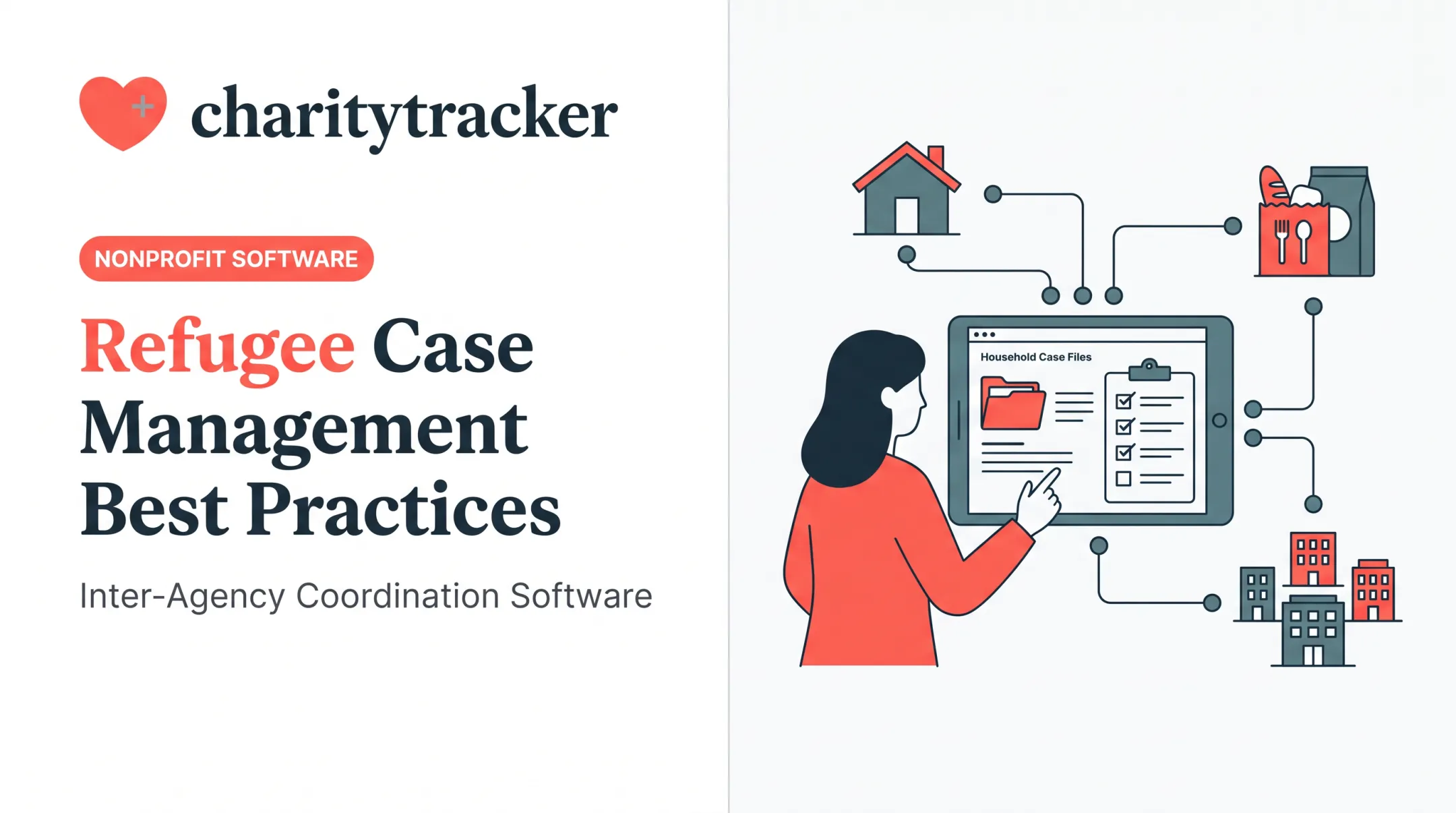
When multiple organizations serve the same family, coordination gaps show up fast. A client may repeat the same sensitive history to three intake workers because no one shared information. A shared referral process—with clear consent and documented follow-up—prevents that.
Case-management software helps close those gaps. CharityTracker, for example, is used by nonprofits, government agencies, and faith-based groups to centralize client records, track referrals, and prepare funder reports many federally funded programs require.
Its Assistance Network supports consent-based sharing between agencies:
- Confidential records release only with written authorization from the client or guardian
- Only general, non-confidential notes can be entered for network visibility
- Partners such as a resettlement affiliate, food pantry, and health clinic can coordinate without forcing a family to retell their story

How to Find and Work With a Refugee Resettlement Agency
Start with official sources rather than search results alone:
- U.S. Department of State
- USCIS
- Office of Refugee Resettlement (ORR)
- State refugee coordinators
- UNHCR
- Reputable national resettlement organizations
Program lists change, so check current directories directly rather than relying on an older list someone shared with you.
A Practical Checklist Before Contacting an Agency
Ask these questions upfront:
- Does this agency serve my location and population?
- What programs are currently operating?
- What languages are available?
- Are services actually free?
- What documents will I need to bring?
- What can this agency not provide?
How Supporters Can Help
Volunteers, donors, employers, landlords, and faith communities can help—but through verified agency channels, not informal side arrangements.
Route these areas through the agency so good intentions don’t create risk or confusion:
- Transportation
- Housing
- Interpretation
- Money or financial gifts
- Personal information and documents
Safety and Privacy Reminder
Be cautious of anyone promising a guaranteed immigration outcome or requesting unusual fees. The official U.S. Refugee Admissions Program is free. Don't share sensitive documents or personal details without understanding exactly how that information will be used and stored.
That same privacy bar applies when agencies share referrals and case notes across partners. If your organization is evaluating a referral or case-management system for this work, prioritize:
- Role-based access controls
- Audit trails
- Consent workflows
- Clear reporting for funders and partners
- Hands-on implementation support
Those controls decide whether cross-agency coordination protects client privacy in practice.
Frequently Asked Questions
Can you still seek asylum in the US?
Asylum is a separate protection process from refugee resettlement, and eligibility and filing rules can change. Consult current USCIS guidance or a qualified immigration attorney or accredited representative for your specific situation.
Who qualifies to be a refugee?
A refugee generally must show a well-founded fear of persecution based on race, religion, nationality, political opinion, or social group membership, plus required screening. Verify current legal requirements with USCIS, since standards can change.
What support is available for refugees?
Common services include housing assistance, orientation, employment support, health care referrals, education enrollment, transportation, interpretation, and benefits navigation. Availability depends on the specific program, location, funding, and individual eligibility.
What does a refugee resettlement agency do?
Agencies help eligible refugees settle into U.S. communities and coordinate practical services like housing and employment support. They do not decide refugee status and do not automatically provide immigration legal representation.
How do I find a refugee resettlement agency in the U.S.?
Check current federal, state, UNHCR, and reputable nonprofit directories rather than older lists. Confirm the agency's service area, program availability, language access, and fees before sharing any personal information.