Most case managers know the daily friction points all too well:
- Fragmented records scattered across spreadsheets, paper files, and email threads
- High caseloads that make thorough follow-up nearly impossible
- Duplicated assistance because agencies can't see what other providers already offered
- Inconsistent documentation that breaks down when a case gets transferred
- Limited visibility across partner organizations working with the same client
A 2025 federal workforce study found that 53.3% of child-welfare supervisors reported increased caseworker turnover between March 2019 and June 2022, with burnout and workload cited as leading causes. The pressure is real, and it's not unique to any one sector.
This article walks through a practical framework: build client-centered foundations, standardize core workflows, strengthen collaboration, use secure technology wisely, and measure progress to keep improving.
Key Takeaways
- Treat assessment, planning, coordination, monitoring, and evaluation as one connected process, not isolated steps.
- Build case plans around client goals, strengths, safety, and changing circumstances.
- Centralize documentation so every worker can maintain continuity and accountability.
- Map clear referral workflows so partner agencies do not duplicate services.
- Choose technology that cuts paperwork and improves visibility without replacing professional judgment.
Case Management Foundations: Principles That Guide Effective Practice
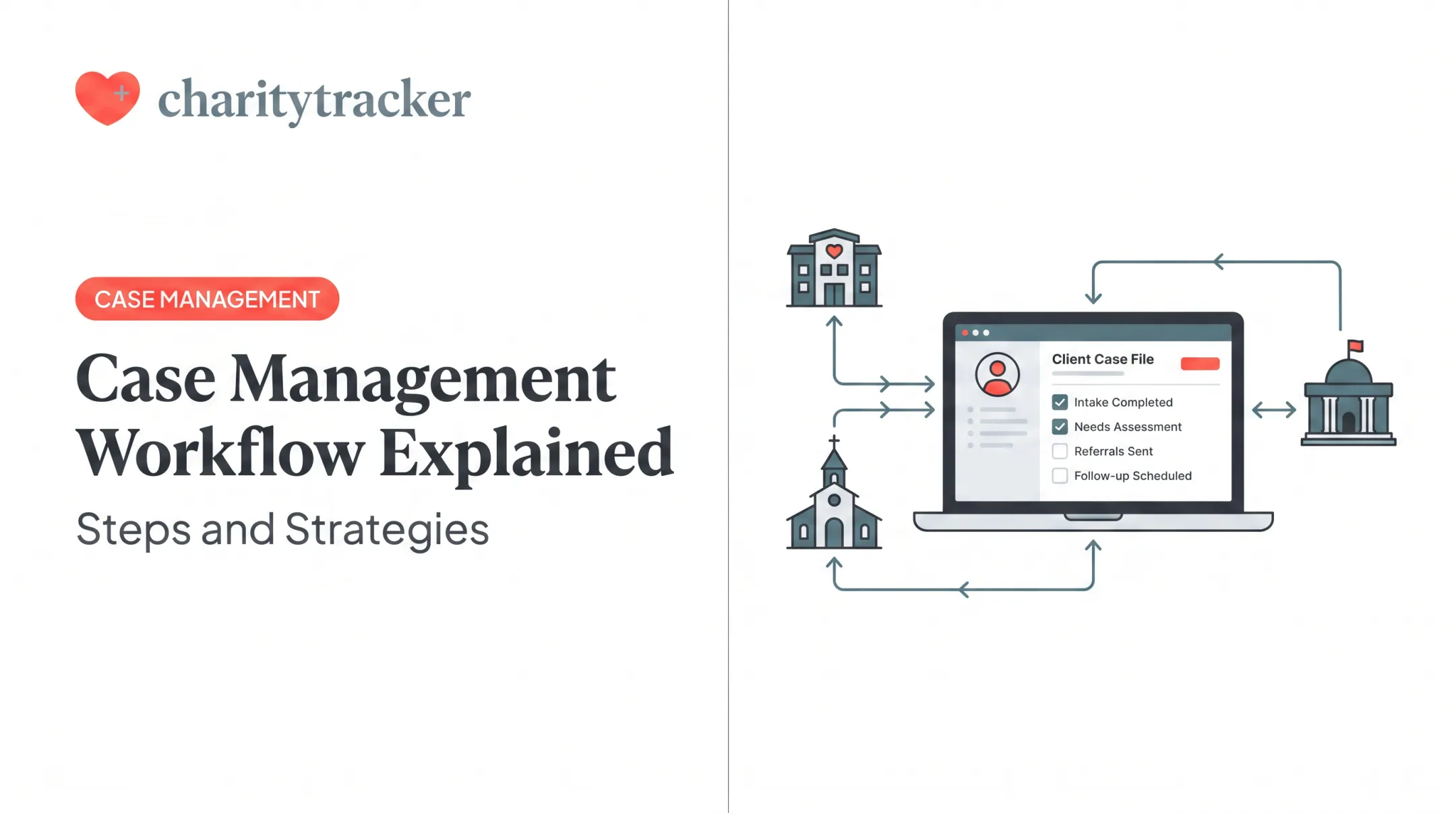
Case management is a collaborative process: assess needs, develop a plan, coordinate services, monitor progress, and evaluate outcomes for an individual or household. That definition holds true whether you're at a nonprofit food pantry, a government human services office, a faith-based ministry, or a healthcare program's social work department.
The National Association of Social Workers frames the process around six functions:
- Engagement
- Assessment
- Care-plan development
- Service monitoring
- Outcome evaluation
- Closure or transition follow-up
These stages inform each other constantly. What a case manager learns during monitoring often reshapes the original plan.
Core Principles Behind Every Decision
Strong programs anchor decisions in a few non-negotiable principles:
- Client-centeredness: Involve clients in setting goals and choosing among appropriate services
- Strengths-based, trauma-informed practice: Recognize capabilities and barriers without assumptions
- Advocacy and equity: Help clients navigate systems and access services fairly
- Continuity and coordination: Keep a clear record of actions, referrals, and next steps
- Confidentiality and informed consent: Collect and share only the information needed for legitimate service purposes
Standardization Isn't Rigidity
Standardized workflows keep quality and accountability consistent across a team. But standardization applies to the process (intake forms, documentation steps, referral procedures), not to the client's goals or the pace of their journey.
A case manager can follow the same intake checklist for every client while still tailoring the conversation, the language, and the service mix to that person's specific situation.
Best Practices for Effective Case Management
Good case management starts long before a service gets delivered. It starts with how you ask questions and how you organize what comes next.
Start With a Holistic Assessment
A comprehensive assessment looks beyond the immediate request. It should cover:
- Housing and financial stability
- Health, safety, and risk of abuse or exploitation
- Family or social supports and community relationships
- Barriers to access and services already in place
- What the client says matters most
NASW standards treat these as core domains to weigh against each person's own priorities.
Build Plans Clients Actually Understand
An individualized plan needs specific goals, assigned responsibilities, milestones, resources, deadlines, and review dates. Skip the jargon. Confirm the client understands the plan and agrees with it before moving forward. A plan nobody buys into rarely gets followed.
Prioritize Caseloads by Risk, Not Arrival Order
First-come, first-served sounds fair but often isn't. Triage by urgency, risk, time-sensitive deadlines, and required follow-up instead. A practical structure might look like this:
- Crisis: safety risk or imminent loss of housing; same-day response
- Urgent: time-sensitive deadline (eviction notice, benefit expiration) within 48-72 hours
- Standard: ongoing case management with scheduled check-ins
- Monitoring: stable case requiring periodic reassessment only
Escalate anything that shifts categories immediately to a supervisor rather than waiting for the next scheduled review.
Communicate With Structure, Not Guesswork
Reliable communication requires a few consistent habits:
- Record preferred contact methods, language needs, and consent limitations up front
- Use structured handoffs that state the current situation, actions taken, outstanding needs, responsible party, and next follow-up date
- Reserve case conferences or supervisory reviews for complex cases instead of relying on hallway conversations
Close the Referral Loop
A referral sent isn't a referral completed. HUD's coordinated entry guidance tracks referrals through statuses like accepted, pending, or rejected. It also reports on whether clients actually connected with the referred service.
Apply the same discipline broadly: confirm eligibility, send information with proper consent, track acceptance, and verify the client showed up.

Document Objectively and Promptly
Record each of these separately:
- What you observed and what the client said
- Your professional assessment and decisions made
- Referrals sent, consent obtained, and follow-up actions
The NASW Code of Ethics requires records that are accurate, timely, and limited to information relevant to service delivery. Clear documentation keeps a case coherent when it transfers to a new worker.
Keep Case Managers Equipped
Onboarding, supervision, peer consultation, and scenario-based training matter more than a one-time orientation. Refresh staff regularly on boundaries, confidentiality, crisis response, cultural responsiveness, and software workflows. Cases change; skills need to keep pace.
Use Technology to Strengthen Case Management Without Replacing Human Judgment
Spreadsheets, paper files, and scattered email threads work fine for a handful of cases. They fall apart once a team needs a shared view of client history, referrals, and reporting obligations. The GAO documented exactly this problem in human services systems that couldn't share client data — workers ended up entering the same information twice, wasting time and introducing errors.
What to Look For in a Case Management Platform
A checklist worth running through before you commit to any tool:
- Centralized client profiles with searchable service history
- Configurable intake forms, assessments, workflows, and task reminders
- Role-based access, audit trails, and documented retention practices
- Mobile or remote access for staff working outside the office
- Inter-agency referral features that respect data-sharing permissions
- Dashboards and exportable reports for funders and grant requirements
Where CharityTracker Fits
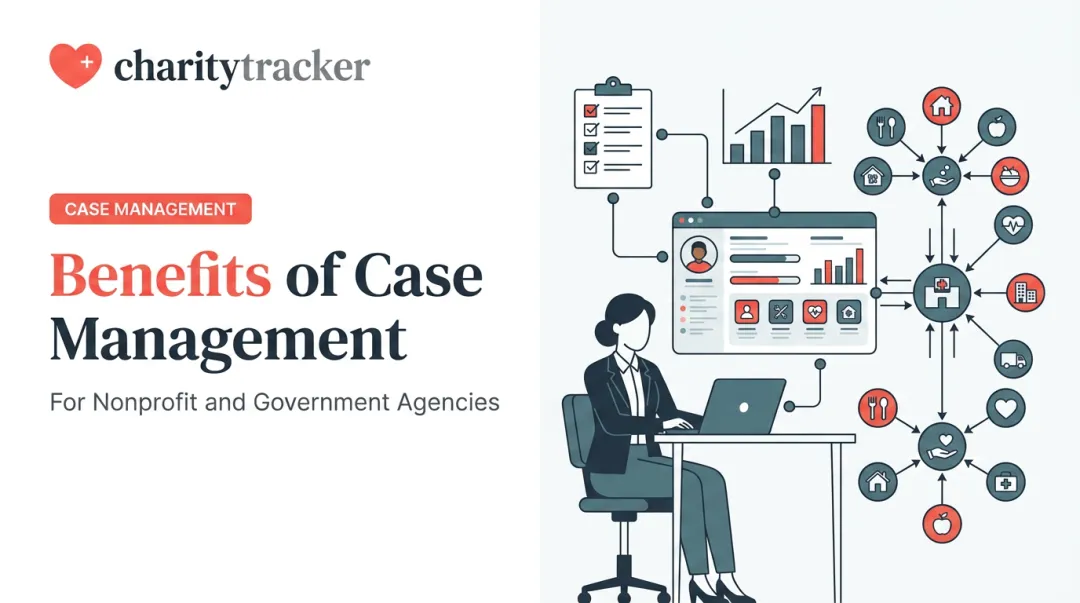
Those checklist items are exactly what a purpose-built platform should deliver in practice. CharityTracker centralizes client data, case notes, assessments, and referrals into one HIPAA-compliant record per client.
Its Assistance Network lets participating agencies share information on common clients with proper Release of Information consent. That reduces duplicate aid without a phone call to every partner organization in town.
The platform also supports:
- Remote and kiosk intake
- Digital signature capture
- Barcode-based client IDs
- Changes Over Time Reports for tracking progress against goals
One user, Nathaniel R., noted he "cut paperwork time in half, at least" after switching over. Organizations like The Salvation Army and Boys & Girls Clubs of America use the platform. Every organization should still weigh any tool against its own privacy, workflow, and reporting needs before adopting it.

Implementation Safeguards Matter
Technology only helps if it's set up carefully:
- Define user roles before rollout, not after
- Establish data standards so entries stay consistent across staff
- Train everyone who touches the system, including part-time and volunteer staff
- Audit access periodically and create a process for correcting duplicate or inaccurate records
Implement, Monitor, and Improve a Case Management Program
Rolling out new processes or software works better in stages than all at once.
A Practical Implementation Sequence
- Document the current workflow: map what actually happens today, not the ideal version
- Identify bottlenecks: where do cases stall or get lost?
- Define minimum data requirements: what must every case record include?
- Assign ownership: who configures forms, alerts, and permissions?
- Pilot with a small team: work out the kinks before a full rollout
- Collect feedback and expand in stages: scale once the pilot proves out
Measuring What Matters
A balanced measurement framework covers client outcomes, service delivery, operations, and equity. Useful indicators include:
- Client outcomes: goal progress, successful referral connections
- Service delivery: follow-up completion rates, time to service
- Operations: unresolved needs, documentation completeness
- Equity and efficiency: duplicate assistance prevented
Build a regular review rhythm where supervisors examine trends, investigate exceptions, and consult both case managers and clients before adjusting policy. Data should support learning and advocacy, not punitive surveillance. Numbers tell part of the story; client experience fills in the rest.

Common Challenges and Practical Responses
| Challenge | Response |
|---|---|
| Limited resources | Prioritize the highest-risk cases; automate repetitive data entry where possible |
| Staff resistance to new tools | Involve frontline staff in pilot testing before full rollout |
| Inconsistent data entry | Standardize required fields and provide short refresher training |
| Communication gaps | Use structured handoff templates for every case transfer |
| Complex, multi-agency cases | Schedule case conferences instead of relying on informal updates |
Turn Case Management Best Practices Into Consistent Community Impact
Effective case management blends empathy and professional judgment with dependable processes, real collaboration, accurate records, and consistent follow-up. None of these elements work in isolation.
Start with one high-impact improvement — standardizing intake, closing the referral loop, or building a documentation checklist — then measure its effect before tackling the next one.
If your team still manages case files across spreadsheets and paper folders, a centralized platform like CharityTracker can cut paperwork, coordinate services across partner agencies, and simplify funder reporting. Plans start at $60/month, and a free trial is available to see how it fits your workflow.
Frequently Asked Questions
What qualities should a good case manager have?
Strong case managers combine empathy, clear communication, and organizational skills with sound judgment and cultural responsiveness. They advocate for clients while maintaining professional boundaries and collaborating well with partner agencies.
How can case managers effectively manage their caseloads?
Prioritize cases by urgency and risk rather than arrival order, and build realistic schedules around required follow-ups. Use reminders, timely documentation, and regular supervision to catch cases before they slip through the cracks.
What are best practices for case management documentation?
Write objective, timely notes covering client goals, services provided, consent, referrals, and follow-up responsibilities. Store records securely and follow your organization's applicable legal and confidentiality requirements.
What are the core steps in an effective case management process?
Start with client-centered assessment and an individualized plan, then coordinate referrals and keep communication clear across partners. Document securely, monitor progress on a set cadence, and support the work with staff training and continuous process improvement.