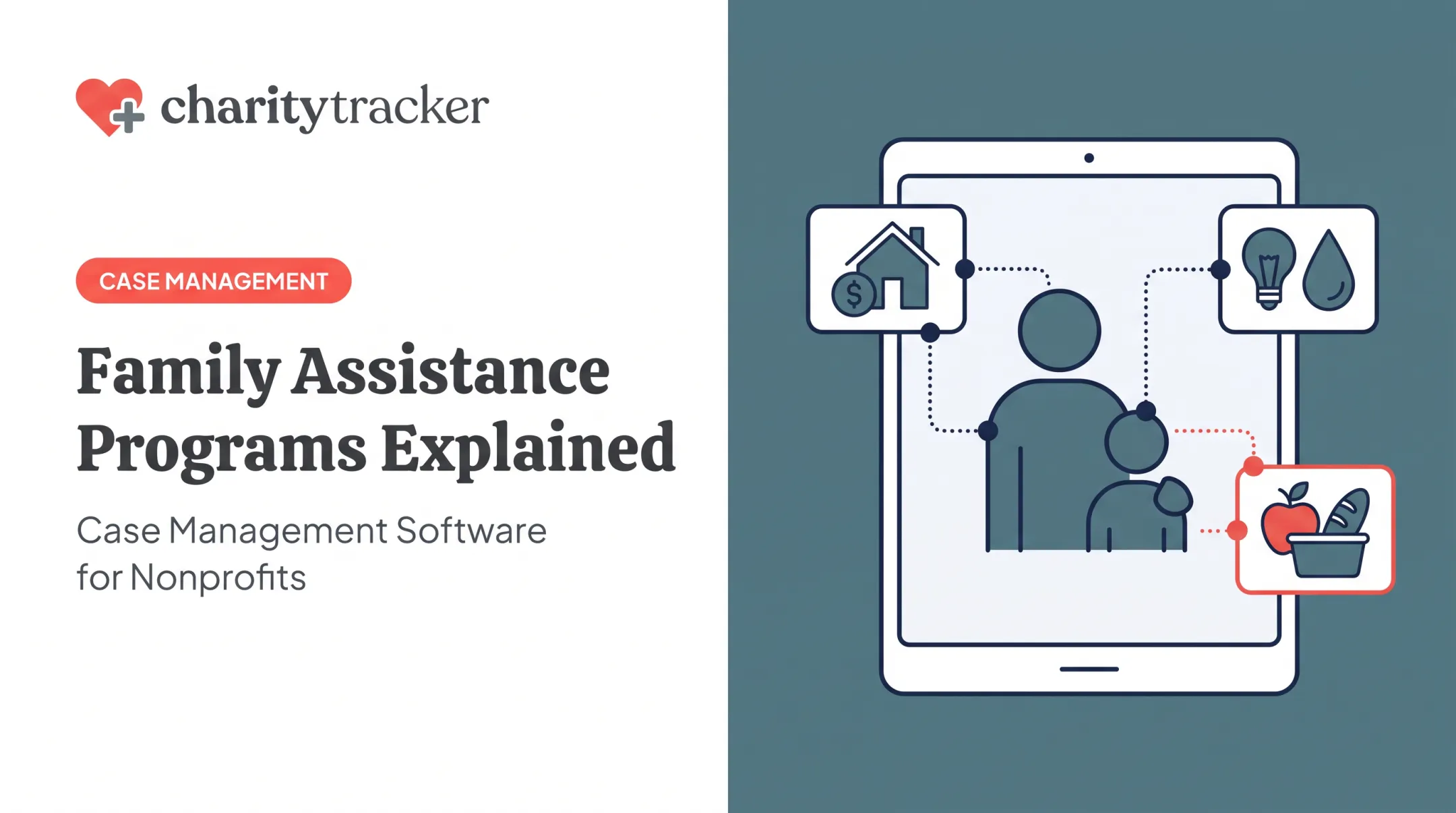
Many families don't realize how many programs exist, or that they might qualify for several at once. Confusion about eligibility rules, paperwork, and where to even start keeps people from applying for help they're entitled to receive.
Eligibility and application steps vary by program, household situation, and state. This guide walks through the major categories of public assistance, what you'll need to apply, where to find trustworthy help, and how to spot a scam before it costs you money or personal information.
Key Takeaways
- Federal, state, and local programs cover food, housing, health care, and related needs
- Income, household size, age, disability, work history, residency, or immigration status drive eligibility
- Apply only through official agencies, schools, housing authorities, or verified community groups
- You can stack programs, but each runs its own approval process and wait time
What Does Public Assistance Mean?
"Public assistance," "government benefits," and "public benefits" get used interchangeably, but they don't always mean the same thing.
The U.S. Census Bureau distinguishes means-tested social welfare programs (based on income and need) from social insurance programs, where eligibility depends on factors like age or work history. Its overview of public assistance data lays out the distinction.
USA.gov takes a broader view, grouping assistance by the type of need it addresses: food, housing, health care, and beyond.
In practice, assistance takes a few different shapes:
- Cash assistance – direct payments, such as TANF
- Cost-reduction benefits – lower premiums or bills, like Medicare Savings Programs
- Direct services – programs delivered in person, such as Head Start
- Needs-based or refundable support – benefits tied to income thresholds or tax filing, such as the EITC
Government Programs vs. Nonprofit Assistance
A food bank referral is not the same as applying for SNAP. Government programs follow federal or state law, with defined eligibility rules and appeals processes.
Nonprofit and faith-based assistance often has more flexible criteria but limited funding and no guaranteed renewal. Both can be useful. Neither replaces the other, and knowing the difference helps you avoid wasted applications.

Common Types of Public Assistance Programs
Here's a quick reference before diving into specifics:
| Category | Common Examples |
|---|---|
| Food & Nutrition | SNAP, WIC, school meals, summer food programs |
| Housing & Utilities | Housing Choice Vouchers, public housing, LIHEAP |
| Healthcare & Disability | Medicaid, CHIP, Medicare Savings Programs, SSI, SSDI |
| Family, Work & Education | TANF, child care assistance, Head Start, unemployment insurance, Pell Grants |
| Veterans & Emergencies | VA health care and disability, FEMA, 211 |
What assistance is available for food and nutrition?
SNAP (Supplemental Nutrition Assistance Program) helps eligible households buy groceries. Eligibility rules cover income, resources, state residency, and sometimes work requirements. You apply through your state's SNAP agency rather than a single national form, per USDA's SNAP eligibility guidance.
WIC supports pregnant, postpartum, and breastfeeding individuals along with infants and children under five, factoring in both income and nutritional risk. Participation in SNAP, Medicaid, or TANF can establish WIC income eligibility automatically.
Other food resources:
- School breakfast and lunch programs
- SUN Bucks (Summer EBT) and SUN Meals for kids during school breaks
- Food banks and local pantries through networks such as USDA's TEFAP; these are not government benefit applications, but they fill real gaps
What programs help with housing, rent, and utilities?
Housing assistance is almost always local. Two HUD programs anchor this category:
- Housing Choice Vouchers help eligible renters afford privately owned housing, administered through local public housing agencies (PHAs)
- Public housing is managed directly by a PHA, separate from the voucher program
Both often involve waiting lists, so ask the PHA whether its list is open before assuming you qualify.
For utility costs, LIHEAP (Low Income Home Energy Assistance Program) covers bill help, crisis assistance, and weatherization through state, territory, or tribal offices. If you're facing an eviction or utility shutoff, local homelessness-prevention programs and emergency rental assistance may also apply. Check current state and county resources, since funding and availability shift often.
What healthcare and disability-related assistance may be available?
Medicaid covers qualifying adults, children, pregnant individuals, and people with disabilities, with rules that vary by state. CHIP fills the gap for children in families who earn too much for Medicaid but still need help affording coverage.
Separately, the Social Security Administration manages two often-confused disability benefits:
- SSI (Supplemental Security Income) — needs-based support for people who are older or disabled
- SSDI (Social Security Disability Insurance) — tied to a qualifying disability and work history with Social Security-covered earnings
Medicare Savings Programs can reduce premium costs for eligible Medicare enrollees. Each of these has distinct application procedures, so check with the administering agency directly.

What assistance supports families, work, and education?
TANF provides temporary cash support to qualifying families with children, administered state by state. Child care assistance, funded through the Child Care and Development Fund, helps families afford care while working or studying. Head Start and Early Head Start offer early learning and family services, with eligibility sometimes extending to families experiencing homelessness or involved in foster care.
For adults navigating job loss or education costs:
- Unemployment insurance replaces partial wages for workers who lost jobs through no fault of their own
- Pell Grants help undergraduates with exceptional financial need, starting with the FAFSA rather than a private application
What help may be available for veterans and people facing emergencies?
Veterans have a dedicated benefits system through the U.S. Department of Veterans Affairs, covering health care, disability compensation, education, and housing support. Each benefit requires its own application.
For urgent, non-veteran emergencies:
- 211 connects callers to local food, shelter, utility, and transportation resources
- FEMA's Individual Assistance program may help after a declared disaster, with its own application window and documentation requirements
Who Qualifies and How Do You Apply?
What factors commonly affect eligibility?
No single rule determines every program's outcome. Common factors include:
- Income and household size
- Age, pregnancy, or disability status
- Work history and earned credits
- Residency and citizenship or eligible immigration status
- Dependent children or household composition
- Assets or resources
Income limits and benefit amounts change yearly. Always check the administering agency's current guidance rather than relying on a figure you saw last year or heard from a friend.
How should you prepare to apply?
Gather documentation before you start, since most applications ask for similar basics:
- Identity verification – ID, Social Security number, or an agency-approved alternative
- Household information – names, ages, and relationships of everyone in the home
- Income records – pay stubs, benefit letters, or tax documents
- Housing and utility costs – lease, mortgage statement, or utility bills
- Supporting documentation – disability paperwork, school enrollment, or employment history, if relevant
Requirements differ by program, so confirm exactly what's needed with the agency itself. Never send sensitive documents through an unverified link or text message.
Where should you submit an application?
Applications typically go through one of these channels:
- State benefits portal or county human services office
- Social Security Administration (for SSI/SSDI)
- Local public housing authority
- School or Head Start program
- Health Insurance Marketplace or state Medicaid agency
- Workforce office or tribal program
Use an official federal directory, such as USA.gov's benefit finder, to locate the correct office. Avoid third-party sites that charge a fee to "help" you apply.
What happens after applying?
Possible outcomes include:
- Approval or partial approval
- Denial
- A request for more documents
- Waiting list placement
- A scheduled renewal date
Save your confirmation number, any notices, and deadlines the moment you receive them.
If a decision seems wrong, most programs allow an appeal. Reach out to a qualified benefits navigator or legal aid organization for help before that deadline passes.

Where to Find Public Assistance and Benefits Navigation
211 is a solid starting point for identifying local food, housing, utility, healthcare, and disaster resources, though availability depends on your location. Beyond that:
- Benefits.gov and state portals direct you to the right federal and state applications
- Community action agencies often screen for multiple programs at once
- Public housing authorities, schools, libraries, and healthcare providers can connect you to local resources
Ask a trusted navigator to screen you for several programs rather than assuming one form covers everything. Verify each resource's current deadlines and eligibility rules before you apply.
Avoid Assistance Scams and Protect Personal Information
Scammers impersonate government agencies constantly, and the warning signs tend to repeat:
- Unsolicited calls, texts, or emails promising "guaranteed" benefits
- Requests for an upfront fee to "process" your application
- Pressure to pay by gift card or cryptocurrency
- Demands for your Social Security number or bank details before verifying identity
- Threats of arrest or benefit loss if you don't act immediately
The FTC's government impersonation scam guidance recommends verifying independently. Find the agency's official number yourself and call it directly, rather than using contact details from an unexpected message.
If you suspect fraud, take these steps:
- Save the message and report it to the relevant agency
- File a report at reportfraud.ftc.gov
- If personal information was exposed, follow recovery steps at identitytheft.gov
- Monitor your accounts for several months afterward
How Community Organizations Can Coordinate Public Assistance
Here's a problem that doesn't get talked about enough: when five different nonprofits, a church, and a government office all serve the same family, nobody has the full picture. Records live in separate spreadsheets. Referrals get lost. Reporting to funders becomes a scramble of mismatched files.
Case management software fills this gap. CharityTracker, for example, centralizes authorized client and household information so agencies can coordinate referrals, track services already provided, and avoid handing out duplicate aid to the same household. This isn't a government benefits application system. It's a tool for the organizations working alongside those systems.
A few features that matter in practice:
- Link family members in one household record and track shared goals, instead of treating each person as a disconnected case
- Let clients start intake on their own from anywhere, including kiosk and remote options available 24/7
- Capture signatures digitally and cut physical forms out of the workflow
- Export funder-ready reports (HMIS, VOCA, ESG CAPER) from case data without manual compilation
One user, Nathaniel R., reported cutting his organization's paperwork time in half after switching. That's time case workers get back for actual client conversations.
Results like that depend on choosing a platform that fits how your network actually shares data. Before adopting one, evaluate:
- Privacy controls and role-based access
- Consent practices, including a documented Release of Information before any cross-agency data share
- Reporting capabilities matched to specific funder requirements
- Implementation support and training
- Compliance with rules such as 42 CFR Part 2 for sensitive records
CharityTracker, for instance, requires that ROI step before identifying data moves across its Assistance Network.
Platforms built for this work typically start around $60 per month on entry-level plans, with HIPAA-aligned compliance built in.
Frequently Asked Questions
What are some public assistance programs?
Common examples include SNAP, WIC, Medicaid, CHIP, TANF, and LIHEAP, plus housing aid, SSI, SSDI, and unemployment insurance. Child care help, Head Start, and veterans' benefits are also widely used. Eligibility and availability vary by program and state.
How can I get money if I'm struggling?
Start with 211 or your state's official benefits portal to match programs to your situation. Cash or near-cash help often includes TANF, SSI, SSDI, unemployment insurance, refundable tax credits, or local emergency assistance.
What government assistance programs are available in Texas?
Texas residents can explore SNAP, Medicaid or CHIP, TANF, WIC, utility assistance through CEAP, housing support, and workforce services via the Texas Health and Human Services Commission and Texas Workforce Commission. Verify current program rules and application links directly with those agencies.
What government assistance programs are available in Oklahoma?
In Oklahoma, main options include SNAP, SoonerCare, WIC, TANF, LIHEAP, housing support, and workforce services through the Oklahoma Department of Human Services, Oklahoma Health Care Authority, and OESC. Confirm current eligibility and application steps with those official state agencies.