Families, funders, and even people working inside these organizations often struggle to pin down what separates a "youth development" group from a crisis-intervention provider, or how any of them prove their work actually helps kids.
This confusion creates real gaps. A parent may not know whether a program is the right fit. A board member may not know what questions to ask about safety. A funder may receive attendance numbers instead of evidence of change.
This guide breaks down what youth services organizations do, how they're structured and funded, how they measure impact, and what to look for before trusting one with a young person's wellbeing.
Key Takeaways
- Youth services address development, education, health, safety, and crisis response — often combined.
- Strong programs use strengths-based, youth-centered approaches — not deficit-based ones.
- Collaboration between schools, nonprofits, and agencies closes gaps and prevents duplicated support.
- Evaluate organizations by mission, safety practices, staff expertise, and outcome transparency.
What Is a Youth Development Organization?
A youth development organization is a specific type of youth services provider. It focuses on building strengths, relationships, and opportunities rather than only responding to crises.
The federal Interagency Working Group on Youth Programs describes positive youth development (PYD) as "an intentional, pro-social approach" that recognizes young people's existing strengths and promotes good outcomes through relationships, opportunities, and support [7]. PYD describes an approach, not a single legal or organizational category.
A Strengths-Based Starting Point
Instead of asking "what's wrong with this young person," strengths-based programs ask "what does this young person already have going for them, and how do we build on it?" Young people participate as active contributors, not passive recipients.
This mindset shapes everything from how staff talk to participants to how programs design activities. Development goals also shift by age:
- Childhood: Social-emotional skills, safe play, early learning habits.
- Adolescence: Identity, peer relationships, academic and career exploration.
- Early adulthood: Workforce readiness, independent living, civic participation.
The Five Cs of Positive Youth Development
Trusted adults, consistent relationships, and meaningful activities form the backbone of most development programs. Researchers at Tufts University studied this directly: their 4-H Study of Positive Youth Development tracked more than 7,000 young people across 42 states between 2002 and 2012 [5].
From that work came the widely cited Five Cs framework:
- Competence — a positive view of one's abilities in academic, social, and practical areas.
- Confidence — a broader sense of self-worth and self-efficacy.
- Connection — positive relationships with people, schools, and community institutions.
- Character — integrity and respect for behavioral standards.
- Caring — sympathy and empathy for others [23].
A possible sixth C — contribution, meaning giving back to self, family, and community — appears in some later research [18]. Terminology also varies by organization.
Youth.gov notes that while evidence suggests PYD programs can improve social and emotional outcomes, evaluation in this field remains limited [10]. Don't assume every program using "Five Cs" language has been formally evaluated.
What Do Youth Services Organizations Do?
Most youth services organizations group their work into recognizable categories.
| Service Category | What It Typically Includes |
|---|---|
| Mentoring & coaching | One-on-one or group relationships with trusted adults |
| After-school & summer programs | Structured activities during out-of-school hours |
| Tutoring & education support | Academic enrichment, reading and math help |
| Sports, arts & recreation | Physical activity, creative expression, team skills |
| Leadership & civic engagement | Youth councils, community service, advocacy training |
| Workforce readiness | Job skills, pre-apprenticeships, career exploration |
| Health, wellness & behavioral support | Counseling referrals, mental health awareness |
Some organizations focus on prevention: building skills before problems emerge. Others respond to acute needs such as housing instability, food insecurity, family crisis, justice-system involvement, or disability support.
Federal examples show how different this work gets. YouthBuild combines education with job training for opportunity youth ages 16-24. The Basic Center Program provides emergency shelter, food, and counseling referrals for youth up to age 18, with stays up to 21 days [2][21].

Delivery Settings Shape Access
Where a program operates affects who can reach it. Common settings include:
- Schools and school-linked programs
- Community centers
- Residential or shelter facilities
- Faith-based organizations
- Healthcare settings
- Mobile outreach or online platforms
A rural teen without transportation benefits more from a mobile outreach model than a downtown facility with fixed hours.
What Makes a Program Effective
Effective programs typically share several traits:
- Clear goals and age-appropriate activities
- Trained staff and documented safeguarding procedures
- Genuine youth voice in decision-making
- Culturally responsive practice
Those same safeguarding habits extend to how programs handle sensitive records. Confidentiality rules vary by context.
- Education records fall under FERPA
- Health records may involve HIPAA, depending on the provider relationship
- Substance-use counseling notes carry separate consent requirements under federal Part 2 rules [13][12][28]
No single privacy rule applies universally. The right answer depends on the specific program, record type, and participant's age.
How Are Youth Services Organizations Structured and Funded?
Youth services organizations take several forms:
- Nonprofits
- Public agencies
- Schools and education-linked programs
- Healthcare or behavioral-health providers
- Faith-based groups
- Community coalitions
Governance differs by type, but boards generally oversee mission, finances, and executive leadership, according to the National Council of Nonprofits [16].
Funding typically comes from a mix of sources:
- Government grants and contracts
- Foundation grants
- Individual donations
- Corporate support
- Membership or program fees
- Multi-agency partnerships
Funding source matters beyond the dollar amount. A government grant often comes with specific eligibility rules, reporting formats, and program-design requirements that shape how services get delivered.
Staff Roles and Safeguarding Basics
Behind most programs sit program directors, youth workers, case managers, counselors, educators, mentors, volunteers, and administrative staff. Because so much of this work involves minors, screening and supervision are baseline requirements—not optional extras.
The CDC's youth-serving-organization guide names six core prevention components [9]:
- Screening employees and volunteers
- Setting rules for adult-youth interaction
- Monitoring behavior
- Maintaining safe physical environments
- Responding to inappropriate conduct or allegations
- Providing prevention training
When you vet an organization, ask whether these policies exist in writing and whether staff can explain how they work day to day.
How Case Management Software Supports This Work
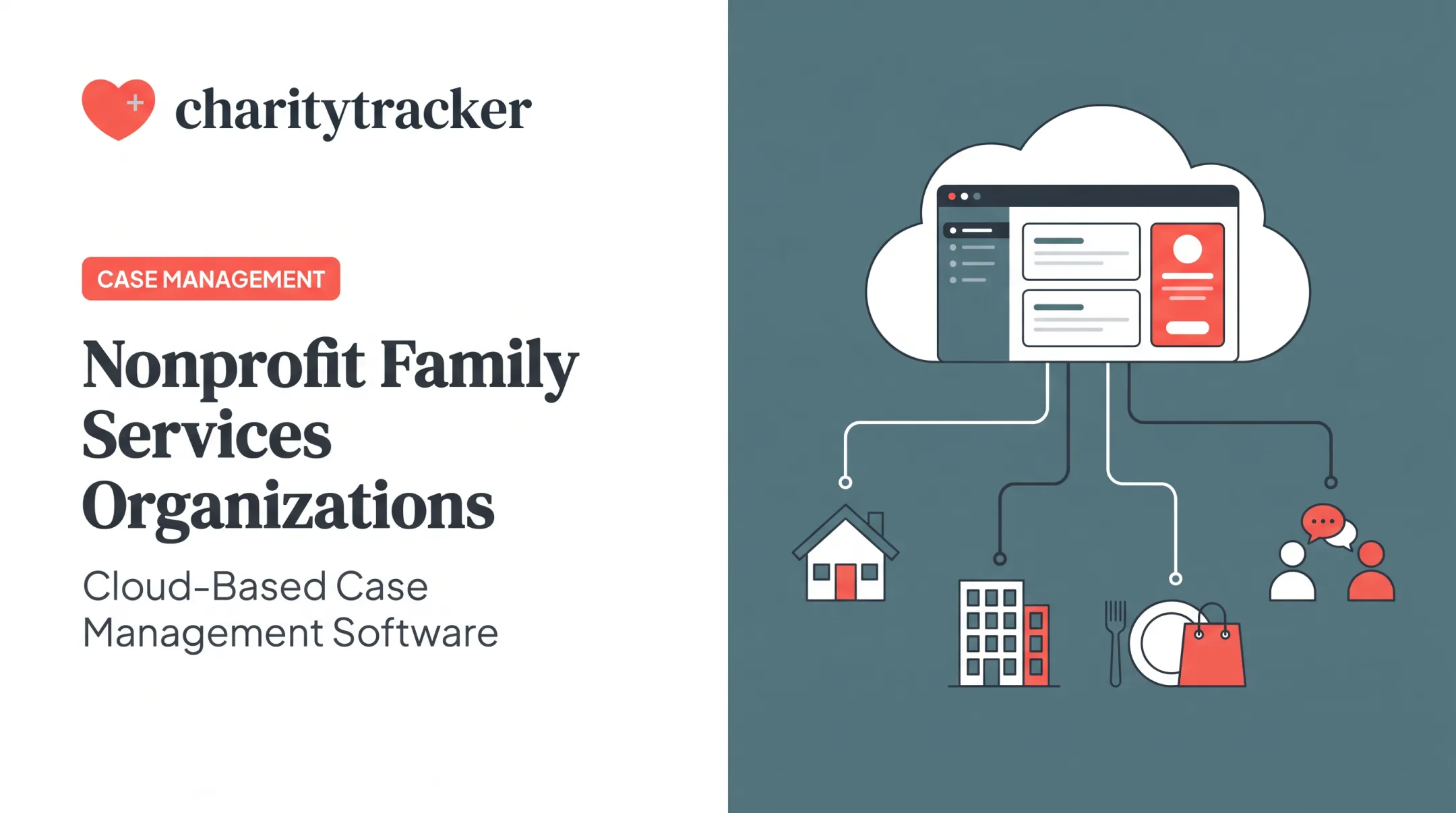
Structure, mixed funding, and multi-provider staffing create a coordination problem: the same family may appear in several programs at once, each with its own eligibility rules and privacy duties.
CharityTracker, a case management platform used by organizations including Boys & Girls Clubs of America, addresses that through a Network Administrator model. A designated agent oversees a shared database. Member Agencies can view common-client history only after training on confidentiality, security, and data integrity.
Access and sharing controls include:
- No database access without completed training
- Confidential records shared across agencies only with documented written consent from the client or guardian
- Consent handling aligned with the stricter standard under 42 CFR Part 2 for substance-use records
That design fits youth programs, where several providers often serve one household and need shared history without weakening privacy safeguards.

How Do They Measure Impact and Collaborate?
Counting activity is not the same as proving impact. Child Trends defines outputs as the products of activities (classes taught, meals served, referrals made) and outcomes as the benefits participants actually experience, such as improved reading skills or stronger school engagement [27]. Attendance is easy to report; it does not show whether anyone's life improved.
Evaluation Methods That Actually Work
Programs use several tools to capture outcomes, each with tradeoffs:
- Pre- and post-assessments: Measure change over time when tools stay consistent.
- Goal tracking with follow-up dates: Ties progress to each participant's goals.
- Caregiver and participant feedback: Captures lived experience when surveys are carefully designed.
- Referral completion tracking: Shows whether outside-service connections actually happened.
- Qualitative stories: Add context numbers miss, though they are harder to aggregate.
Youth.gov frames meaningful engagement as a real decision-making partnership with young people, not a token end-of-program survey [17]. Programs that ask youth how success should be measured tend to collect more useful data.
Where Coordination Fits In
Strong outcome data still falls short when schools, healthcare providers, government agencies, and nonprofits serve the same family in isolation. Shared case management closes that gap.
CharityTracker, for example, lets authorized staff track attendance, assistance requests, and goal progress on one youth profile, then produce custom outcome reports for funders and boards without rebuilding spreadsheets by hand. The Pro plan ($60/month per user) adds customizable assessments and Changes Over Time reporting so teams can show social, emotional, and academic progress—not just session counts.

Any platform like this still follows the same consent rule: information moves between agencies only with proper authorization, and only what is essential to the service gets recorded.
How to Evaluate or Support a Youth Services Organization
Before enrolling a young person or writing a check, do some homework. Here's a practical starting checklist:
Fit and access:
- Mission and target age group
- Eligibility requirements and waitlists
- Location, schedule, and delivery format (in-person vs. online)
- Cost and accommodations available
Safety and quality:
- Staff and volunteer screening procedures
- Supervision ratios and emergency protocols
- Complaint and grievance processes
- Transportation and online-interaction safeguards
Evidence and accountability:
- Clearly stated program goals
- Recent outcomes data, not just attendance figures
- Financial transparency (a current Form 990, when applicable)
- How the organization handles unmet needs or referrals elsewhere
Support goes beyond donating. Volunteering appropriately, sharing accurate referrals with other families, offering professional skills, and participating honestly in feedback surveys all add real value. Above all, contact the organization directly about eligibility, fees, and privacy practices. A name on a building doesn't guarantee the program fits your specific situation.
Frequently Asked Questions
What is the purpose of a youth development program?
Youth development programs help young people build skills, relationships, confidence, and healthy decision-making. They create structured pathways toward education, employment, well-being, and civic participation.
What is a youth development organization?
A youth development organization is a school, nonprofit, public agency, or faith-based group that creates structured opportunities, trusted relationships, and support systems. The goal is helping young people build strengths and reach personal or community goals.
What are the 5 C's of youth development?
The 5 C's are competence, confidence, connection, character, and caring — a framework from Tufts University's 4-H Study of Positive Youth Development. Some researchers add contribution as a possible sixth C, and terminology can vary by organization.