Many nonprofits still run reporting through manual exports pulled from three or four disconnected systems. That delay isn't just annoying — it slows decisions about staffing, program adjustments, and where to put limited resources.
This guide covers why real-time reporting matters, what features actually move the needle, and how CharityTracker helps organizations report to boards and funders with confidence.
Key Takeaways
- Real-time reporting turns static spreadsheets into a living communication tool for boards and donors
- Strong platforms unite case management, outcomes tracking, and instant report generation in one system
- CharityTracker lets organizations build customizable funder and grant reports in a few clicks
- Match software to your size, funding mix, and reporting cadence before you commit
Why Real-Time Reporting Matters for Nonprofits and Their Boards
Boards and funders expect more than a financial statement now. They want visibility into program outcomes, client impact, and mission progress on a continuous basis, not just at fiscal year-end.
BoardSource's Leading with Intent research found that board knowledge of an organization's programs correlates directly with stronger strategic thinking, deeper engagement, and better external leadership, including fundraising (BoardSource). Boards that understand the data lead better. Simple as that.
Delayed reporting also hides problems. A duplicate service here, an underused program there : small issues that compound before anyone notices, because nobody was looking at current numbers.
Real-time data changes the equation:
- Demonstrates measurable community impact during grant renewal cycles
- Supports faster decisions on staffing and program adjustments
- Flags resource gaps before they become funding problems
- Enables inter-agency data sharing to prevent duplicate services
That last point matters more for case-management-focused nonprofits than pure accounting platforms.
NTEN's 2026 Data Empowerment Report found that nearly 92% of surveyed nonprofits now use cloud-hosted databases for online access, and 52% already run dashboards with real-time data (NTEN, 2026). Real-time visibility is no longer optional. It is becoming the baseline expectation.

Must-Have Features in Real-Time Reporting Software
Not every "reporting tool" actually solves the board-and-funder problem. Here's what to look for:
- Customizable dashboards: Staff, board members, and funders each see only the metrics relevant to them
- On-demand grant and funder reports: Pull directly from live client and case data, not re-typed from memory
- Changes Over Time reporting: Track client goal progress and program outcomes across defined periods
- Cloud-based access: Board members can review reports securely, 24/7, from anywhere
- Role-based permissions: Protect sensitive client data while still giving boards and funders appropriate visibility
- Integration with intake and case data: Eliminate duplicate data entry across systems

NTEN also flags data silos as a top challenge for nonprofits. Departments that store information separately end up unable to combine it for analysis. A reporting platform should break down those silos, not add another one.
Why Role-Based Access Matters
A board member doesn't need to see a client's case notes. A funder doesn't need staff scheduling data. Good software separates these views by design, so sensitive information stays protected while stakeholders still get what they need.
Reports Every Board and Donor Expects to See
Boards, funders, and individual donors each want different proof of impact. Real-time reporting should produce all three without a last-minute data scramble.
Program & Outcome Reports
Boards want participation trends and client outcomes tied to mission goals, not just activity counts. BoardSource recommends examining trends over at least three years, ideally five, rather than judging performance off a single quarter (Metrics That Matter, BoardSource).
Funder & Grant Compliance Reports
Funders expect proof of how restricted dollars were spent and what results they produced. Programs with federal or state funding often need compliance-specific formats tied to defined data standards:
- HMIS for HUD homeless services
- VOCA for victim assistance programs
- ESG CAPER for emergency solutions grants
Impact Summaries for Donors
Donors respond to short, visual summaries of what their gift accomplished. Long narratives get skimmed; simple charts get read. Strong donor snapshots highlight:
- Families housed, meals served, or similar concrete outputs
- Results tied to a specific gift or campaign
- Clear progress against the outcome the donor funded

How CharityTracker Powers Real-Time Donor and Board Reporting
CharityTracker centralizes client, case, and service data into one system, so staff aren't compiling reports by hand across spreadsheets. Everything lives in a single digital filing cabinet, updated as services happen.
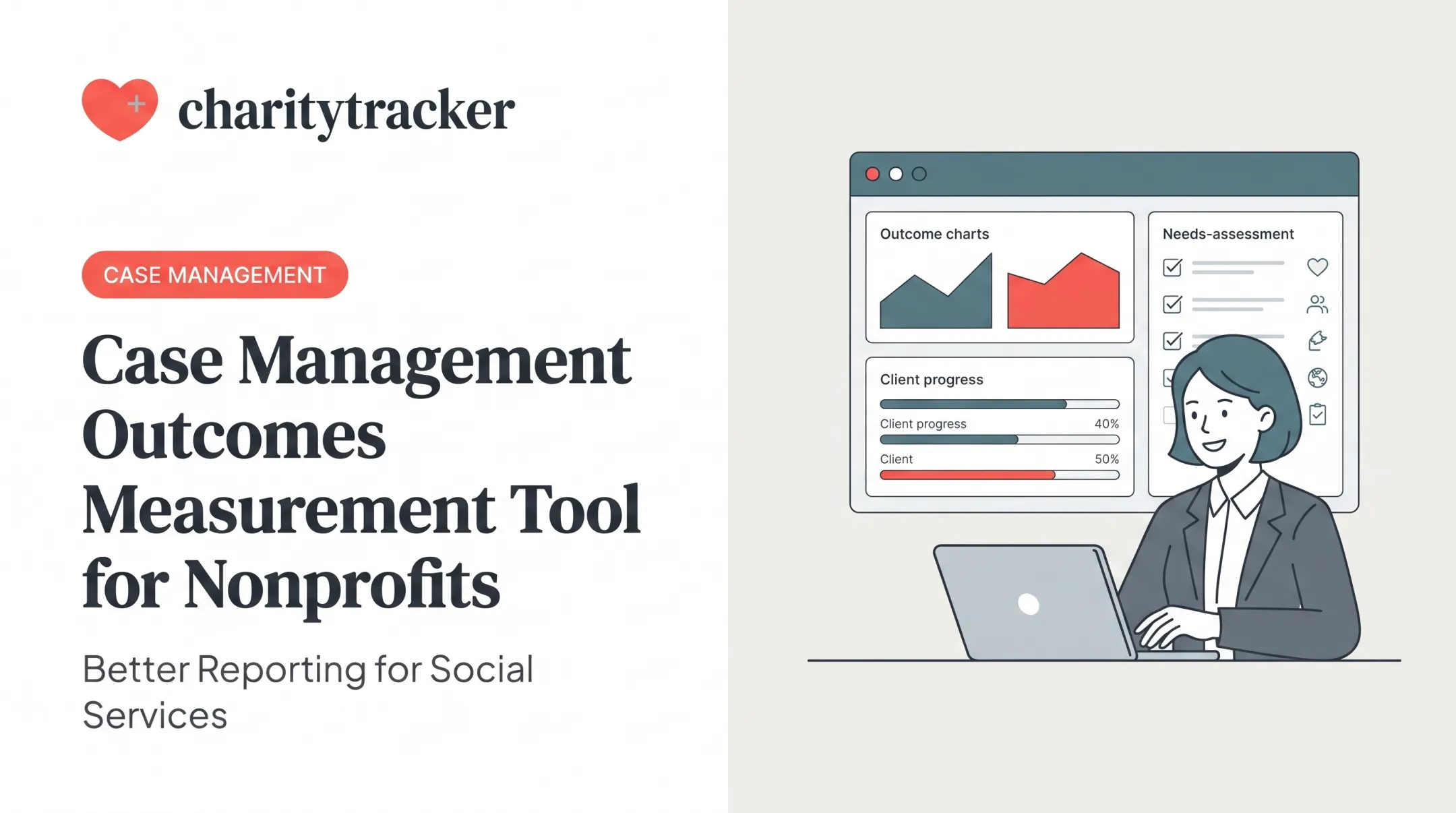
The Changes Over Time Report uses customizable assessments and measurement checkpoints to document a client's status and goals at multiple points in their journey. Staff can:
- Record intake information
- Set individualized goals
- Log services as they happen
- Track milestones through program completion
Donors and boards get an evidence-based view of progress, not a one-time snapshot.
Organizations can also build customizable funder and grant reports for donors, boards, and grantors. Supported formats include:
- HMIS/HUD reporting
- VOCA reports
- ESG CAPER, APR, and Data Quality LSA
Exports go out in CSV or Excel for whichever funder requested them. As executive director Donna P. put it, CharityTracker "makes it easy to build and produce the various reports required by different grantors."
Organizations like The Salvation Army and Community Action Partnership rely on CharityTracker's platform for data-driven case management and reporting. Across the network, CharityTracker has tracked over 8.4 million clients helped and more than $1.36 billion in assistance (CharityTracker).

Inter-Agency Visibility for Boards
CharityTracker's Assistance Network lets authorized partner agencies view shared-client histories, coordinate referrals, and track service utilization together. Boards see collaborative impact in one place: what your organization delivered and how partners contributed to the same client's outcomes.
Aggregate reporting stays non-identifying unless a Network Administrator approves broader release. One user, Nathaniel R., reported cutting paperwork time "in half, at least" while using the network to avoid duplicating services.
Choosing the Right Real-Time Reporting Software for Your Organization
Before signing a contract, match the tool to what your staff, donors, and board actually need:
- Do you need case-management reporting, fund-accounting reporting, or both? Case management platforms like CharityTracker track outcomes and services. They are not built to replace your accounting system.
- How fast can staff actually get running? Choose platforms where tracking and reporting start within days, not months. CharityTracker includes a 14-day free trial with no credit card, and signup confirmation typically arrives within 5–10 minutes.
- Can you pull board- and donor-ready reports on demand? You should filter by program, funding source, or date range without rebuilding spreadsheets each cycle.
- Does it meet your confidentiality requirements? Client records should support Release of Information controls, private-record settings, and unique staff logins — not shared passwords.

Pricing tip: CharityTracker tiers run $20/user/month (Basic) to $60/user/month (Pro, including Assessments, API access, and Changes Over Time Reports). Annual billing saves 10% on each tier.
Frequently Asked Questions
What is the best software for donor management?
It depends on what you need. Pure fundraising and donor-tracking platforms like Bloomerang or DonorPerfect suit development teams. Organizations focused on service delivery and outcomes typically need integrated case management and reporting, like CharityTracker.
What is the best software for reporting?
The best reporting software centralizes your data and generates customizable reports on demand. CharityTracker's Changes Over Time and grant reporting tools are built specifically for community-focused nonprofits juggling multiple funders.
How often should boards receive financial or program reports?
Most boards review formal reports monthly or quarterly, but real-time dashboards let members check in anytime between meetings. BoardSource notes that frequency should match your organization's size and committee structure, not a fixed rule.
Is real-time reporting software expensive for small nonprofits?
Not necessarily. CharityTracker plans start at $60/month and include a free trial, so small nonprofits can evaluate the platform before committing.
Can reporting software help prevent duplicate services across agencies?
Yes. Shared, real-time case data through an inter-agency network lets staff check a client's prior assistance history before approving new aid. CharityTracker reports an average 20% reduction in duplicated services among participating housing and shelter organizations.