Introduction
A family rarely faces just one problem at a time. A missed rent payment often arrives alongside a childcare gap, a health issue, or a lost job. In late 2024, 71.0% of adults in low-income families with children reported at least one material hardship, according to an Urban Institute analysis of 2023 survey data.
Nonprofit family services organizations exist to address these overlapping needs, from housing instability and food insecurity to childcare, transportation, and safety. Many families still hit a wall: they call one agency, get referred to another, and repeat the same sensitive details three or four times before anyone actually helps them.
This article breaks down what these organizations do, how the strongest ones coordinate care across providers, and what families, referral partners, and community leaders should look for before trusting one with their story.
Key Takeaways
- Strong family-service programs mix direct aid, advocacy, and referrals around each household’s real needs—not a one-size menu.
- The strongest organizations partner with schools, healthcare providers, and government agencies instead of operating in isolation.
- Before choosing a provider, families should check eligibility, privacy practices, cultural fit, and follow-up support.
- Clean case records and referral tracking stop duplicate aid and show funders which services produce results.
What Are Nonprofit Family Services Organizations?
Nonprofit family services organizations are mission-driven groups funded through donations, grants, government contracts, and volunteer labor. They help families handle immediate crises while building toward longer-term stability. Some run a single program. Others operate several at once, or act as a hub that connects a family to a wider network of specialized providers.
That distinction matters. A single-purpose food pantry solves one problem. A multi-service family agency pairs early learning, employment support, and housing help under one roof, often with a navigator guiding the family through every step. Federal case studies, such as Cook Inlet Tribal Council in Alaska, show how this model works in practice.
Who These Organizations Typically Serve
Family services organizations rarely target just one group. Common populations include:
- Low-income families, and children or youth in crisis
- Family caregivers, including grandparents raising grandchildren
- Survivors of domestic violence or abuse
- People experiencing homelessness or housing instability
- Veterans, immigrants, and refugees
- Households recovering from a disaster
Eligibility Isn't Standardized
Here's the part people find frustrating: eligibility rules, service areas, fees, and documentation requirements vary from one organization to the next. There's no universal standard.
A family that qualified for rental assistance at one nonprofit last year might not qualify at a similar-sounding nonprofit two counties over. Always confirm current requirements directly with the provider rather than assuming policies from a past experience or a different city apply.
When families do reach the right provider, the organizations that serve them well use a family-centered approach. Instead of treating housing, food, and childcare as isolated needs, staff assess the whole household, respect the family's own goals, and build one coordinated plan around their actual circumstances.
What Services Do Nonprofit Family Services Organizations Provide?
Services generally fall into a handful of categories, though availability always depends on local funding and staffing.
Emergency and Basic-Needs Assistance
This is often the front door. Expect help with:
- Food, clothing, and hygiene supplies
- Emergency shelter referrals
- Utility assistance and short-term financial relief
- Transportation vouchers or gas cards
Funding for this category tends to be the tightest. Local agencies routinely have far less funding than the need in front of them, so waitlists and caps on assistance amounts are common.
Housing and Homelessness Services
Housing support ranges from prevention to full rehousing. On a single night in January 2025, HUD counted 230,366 people in families with children experiencing homelessness nationwide, according to the 2025 Annual Homelessness Assessment Report. That's a snapshot, not an annual total, but it shows the scale nonprofits are working against.

Common services include:
- Eviction prevention
- Rental assistance referrals
- Transitional housing
- Rapid rehousing connections
- Landlord mediation
- Housing navigation support
Health, Youth, and Financial Stability Services
Many organizations also help families build longer-term stability across health, caregiving, and household finances.
| Category | What's typically offered |
|---|---|
| Health and wellness | Behavioral health referrals, substance-use recovery connections, maternal and child health programs, insurance navigation |
| Children and caregivers | Childcare referrals, parenting education, after-school programs, school advocacy, respite care, foster-care support |
| Employment and finance | Job readiness training, career program referrals, benefits navigation, budgeting classes, tax prep assistance |
Safety, Crisis, and Advocacy Services
For domestic violence survivors, abuse victims, and families facing urgent risk, trauma-informed practice and confidentiality aren't optional extras. They're the entire foundation of the work. Confidential records in these cases are typically released only with authorized written consent from the client or guardian, unless a law or regulation requires otherwise.
If you or someone you know is in immediate danger or facing a medical emergency, contact 911 or a qualified crisis provider immediately. Don't wait on a nonprofit's standard intake process, which is designed for stabilization, not emergencies.
How Do Nonprofit Family Services Organizations Coordinate and Measure Support?
A family rarely deals with one agency start to finish. Coordination—not just service delivery—determines whether support actually sticks.
The Typical Client Journey
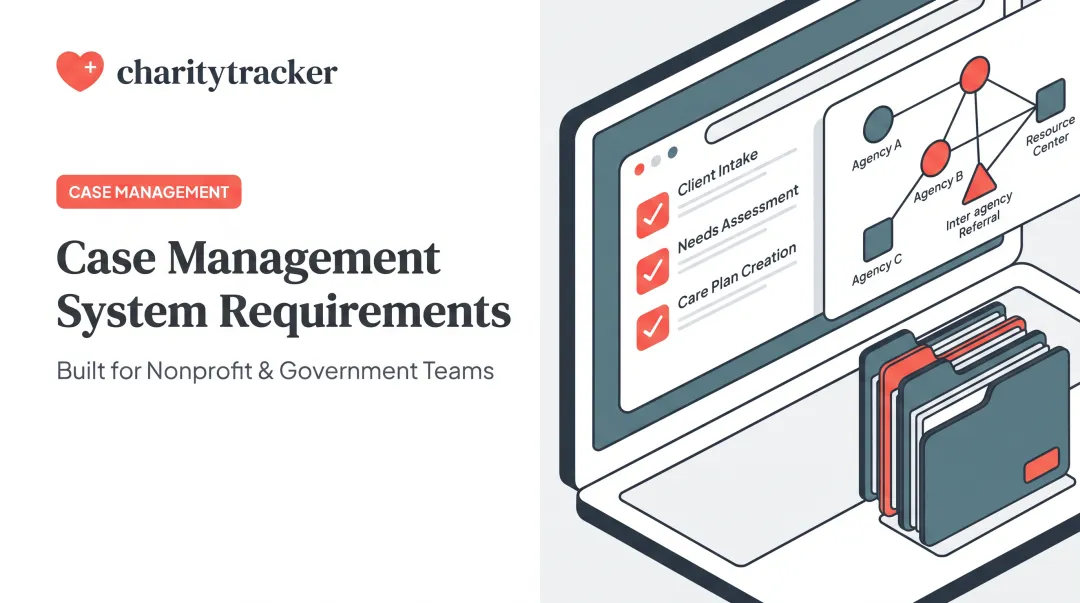
- Intake: Collect basic household information
- Needs assessment: Separate urgent needs from ongoing ones
- Consent and privacy review: Confirm how information may be used and shared
- Goal setting: Define what stability looks like with the family
- Referrals or direct services: Deliver help or connect the family elsewhere
- Follow-up and case closure: Check whether the plan worked

Why Coordinated Records Matter
When three or four providers touch the same family, disconnected records cause real damage. A family might get denied assistance twice because no one knew help had already been provided. Or worse, staff waste time re-diagnosing a problem another agency already solved.
Coordinated case records reduce duplicate assistance, preserve relevant history, and track whether referrals actually went anywhere.
Measuring What Actually Matters
Counting services delivered tells you activity, not results. Groups such as the Urban Institute urge agencies to track outcomes, not just activity:
- Progress toward the family's own stated goals
- Referral completion, not just referral issuance
- Housing stability over time
- School or employment engagement
- Fewer repeat crises for the same household
Common Operational Barriers
Most agencies aren't failing because staff don't care. They're failing because of:
- Disconnected spreadsheets and paper files
- Inconsistent intake forms across programs
- Outdated referral lists nobody's updated in years
- Limited staff capacity to follow up
- No clear owner for follow-up once a referral is made
Where Case Management Software Fits In
Those barriers are the gap secure case management platforms are built to close. CharityTracker, built by Simon Solutions, is one practical example. It grew out of Hurricane Katrina relief coordination in 2006, when tracking who had already received help made a shared digital system necessary.
The platform supports:
- Digital intake and centralized client histories
- Referral tracking across agencies
- Remote access for field case workers
- Customizable outcome reports
Its Pro Plan starts at $60 per month per user and includes HMIS integration plus customizable needs assessments, with a free trial available. Implementation and customer-success teams stay involved from setup through ongoing use—especially useful for smaller agencies without dedicated IT staff.
A Quick Data-Governance Checklist
Before adopting any platform, or trusting any organization with your family's information, check for:
- Collection limited to what's actually necessary
- Documented client consent
- Role-based access restrictions
- Clear data retention practices
- Staff training on privacy requirements
- Vendor security and compliance claims you can verify
How Can Families and Community Partners Choose or Work With an Organization?
Finding the right organization takes a bit of homework, but it beats bouncing between agencies for weeks.
A Checklist for Families
- Identify the single most urgent need first
- Ask directly about eligibility rules and current waitlists
- Confirm costs, fees, or documentation before your appointment
- Request language or accessibility accommodations upfront
- Ask whether they'll refer you elsewhere if they can't help directly
What to Expect During Intake
Staff will likely ask about household income, housing status, health, children, safety, and your own goals. Share only what's relevant to receiving help, and ask how your information will be stored, shared, and for how long. A good organization will explain this clearly without you having to press for it.
Signs of a Trustworthy Provider
Look for:
- Clear, specific program information (not vague promises)
- Respectful, judgment-free communication
- Transparent funding and service policies
- Trained staff who set realistic expectations
- Accessible complaint channels
- Follow-up that actually happens, not just intake
Criteria for Referral Partners and Funders
Organizations sending referrals or funding a provider should evaluate:
- Referral completion rates, not just referral counts
- Documentation quality and consistency
- Collaboration practices with other agencies
- Outcome reporting tied to actual client results
- Community feedback and reputation
- Ability to name their own unmet needs honestly
How Donors and Volunteers Can Help Responsibly
Not every family needs the same intervention, so flexible funding often does more good than a single earmarked program. Consider supporting:
- Transportation access
- Technology for service delivery
- Culturally responsive services
- General capacity building
One-size-fits-all solutions rarely match what families actually need.
Verifying Current Information
Requirements change often, so confirm details directly. United Way's 211 service handled 19 million requests across the U.S. in 2025 and remains free, confidential, and available 24/7, according to United Way Worldwide.

CharityTracker supports over 100 United Way organizations and 2-1-1 offices nationally, which helps those networks keep local referral data current. Beyond 211, check local government directories and always confirm eligibility directly with the provider, since availability differs across U.S. communities.
Frequently Asked Questions
What services do nonprofit family services organizations provide?
Most focus on case management, crisis response, housing navigation, employment support, youth programs, and health or wellness referrals. The mix depends on each organization’s mission, funding, and community needs.
What types of family support services are available?
Families can often get food and utility help, childcare, parenting resources, transportation, counseling referrals, domestic violence services, and job programs. Some supports are delivered in-house; others come through partner referrals.
How can a family find a nonprofit that can help?
Start with a recognized referral directory like 211, your local government's community resource line, or your child's school. Then confirm eligibility, availability, and intake requirements directly with the organization.
How do nonprofit family services organizations protect client information?
Reputable organizations require documented consent, restrict access to authorized staff, use secure systems, and train employees on confidentiality rules. Always ask a provider directly how they store and share your information.
Why do nonprofit family services organizations work with other agencies?
Families often have overlapping needs no single organization can fully address alone. Collaboration reduces duplicate assistance, strengthens referrals, and connects families with specialized services faster.